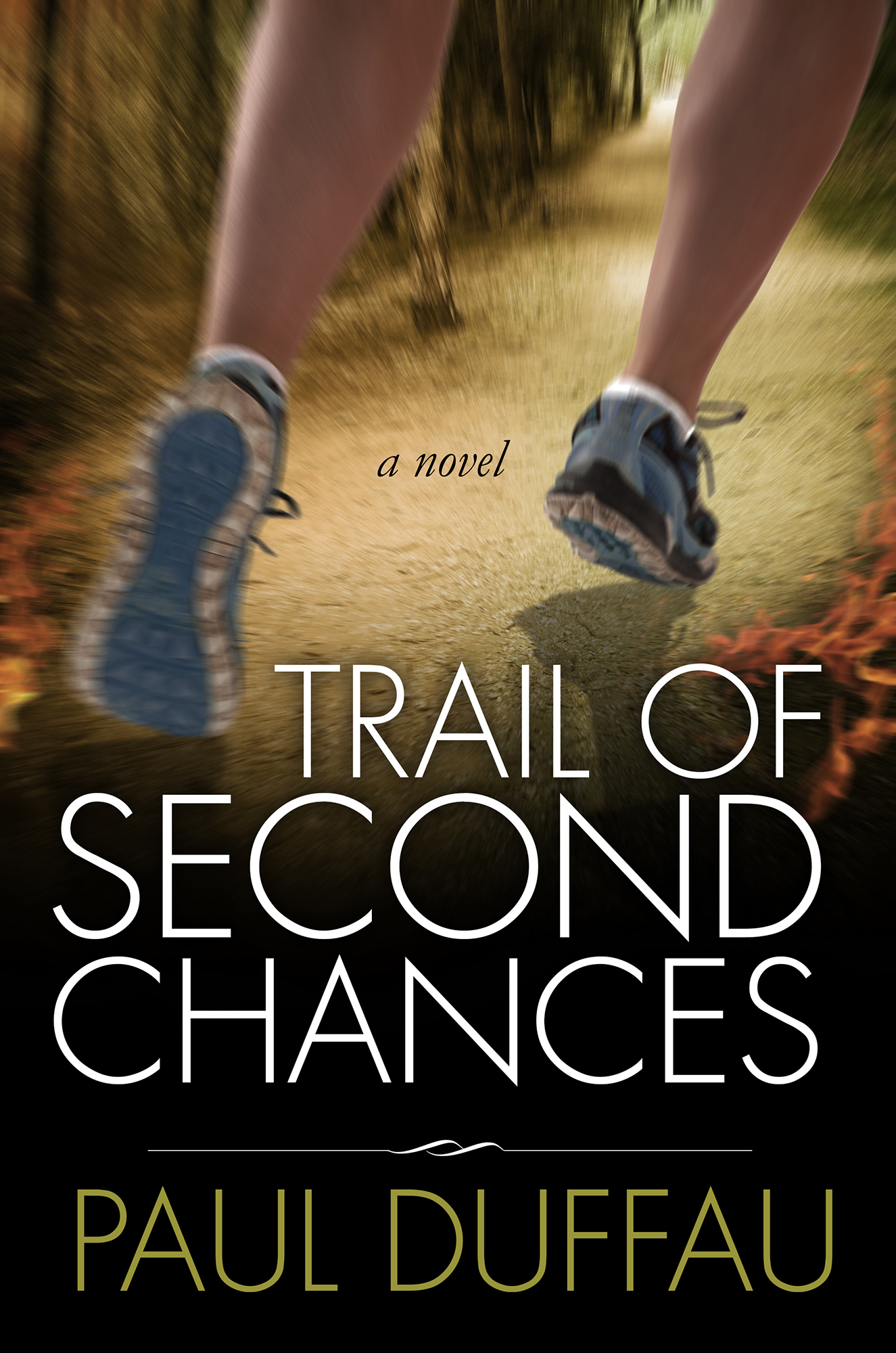
Trail of Second Chances back from the editor

Christina MacDonald, my editor, returned Trail of Second Chances early. Yay! Now I get to go back and start fixing things. On track to publish next month, provided I keep my butt in gear and get the work done. And the beta readers are growing up. Instead of "I love it!", now I'm getting that plus particular areas that bugged them. And, interestingly, it's not the same things. Lots of great feedback from several young ladies today. Thank you, thank you, thank you!

There was a meet up in Moscow, Idaho for the District 9 championship. I'll be writing up an article on that later tonight or first think tomorrow before I head to work.

Exercise more often, not longer, for bigger benefits? Blog Post from the NY Times

For some time, scientists have been intrigued by the idea that breaking up exercise into repeated, short sessions might be as beneficial as longer workouts, and most related experiments to date have been encouraging. In a 2012 study of people with symptoms of hypertension, for instance, volunteers controlled their blood pressure better throughout the day if they completed three 10-minute walks rather than one 30-minute stroll.

From the NY Times. Fitness is more generally correlated with frequency of exercise rather than duration. Intensity plays it's part but, for health, it looks like just getting out the door more often will deliver a bigger jump. Go read the whole thing.. .

Book Update

Sold more books. I try not to check too often as it stresses me out. Not the selling part, that's okay. But I do hope that the readers who have purchased the stories like them, hopefully a lot.
Trail of Second Chances is due back from the editor soon and should be on schedule for distribution next month.
Next weekend will be busy - travelling to Moscow, ID and the University of Idaho track to watch the District 9 Championships. Write-ups will follow each evening.  Very excited to watch the newcomers at the meet as well as some athletes I've been cheering for since they were in junior high.

4 Tips to Avoid Running Dry

Hot weather is back. Yay! No more layering on sixteen articles of clothing on the upper body and six on the legs to fight off winter. To celebrate, I went our on the North Asotin Creek trail in just shorts and a singlet, plus a two bottle hydration pack, and picked up a nice bit of tan on the shoulders. Since we're finally hitting the warm weather, I planned out my water needs. You should, too, even if going for a short run. I know, I know, you don't need to 'hydrate' for a short run, all the articles say so. Humor me.

You plan for water (and electrolytes) for all your runs - and your other activities. I've seen more than a few runners head out to suffer through a fifteen miler because they did a three miler the night before - with the Hash House Harriers, where beer-drinking replaces water intake.

So, four tips.

1. Make sure you start out hydrated. Drink appropriately  before your run - indeed, throughout your day. That way when you hit the roads or trails, you're tanked up and ready. Before you head out for the run, drink 8-10 ounces of water. Also start with your electrolytes charged up. Include high potassium and magnesium foods in your diet.

2. Carry water with you or have planned water stops. Since I trail run a lot, I have a Nathan hydration pack with a pair of 20 oz. bottles, plus some handhelds, plus a Camelbak. When I run on pavement, I plan out the spots where I can get water - I don't have to stop but it's important to have that dialed in ahead of time.

3. Drink frequently. Provide your body with a steady source of water in small doses so it has time to process. Sloshing while you run is unpleasant. Also, drinking too much water is potentially dangerous as you can severely dilute your electrolyte balance. There is a great article at active.com that covers this (and caffeine use, as well).

4. Self-monitor. You can do everything apparently right and still end up in a bind. That's what happened to me on the trail run up the creek. At the ten-mile point, I was down to a few ounces of water - and I had stopped sweating. No bueno. I generally need about 4oz per mile. Took 40oz with me after drinking at the start, began drinking at mile 2 - and ran out because my intake was higher than planned by 25 percent. Because I was paying attention to the signals my body sent me, I knew that I was in potential trouble and took the (for me) appropriate action.

That's when I started walking. Could I have finished the run? Yeah, probably. Could I have finished without hitting heat exhaustion? Maybe. But the next several days of training could have been disrupted. Better to take it slow and give my body time to adapt to the heat.

And the advice not to hydrate for short runs? Drink sensibly (applies to water as well!) to make sure that you are not consistently dehydrated. In 100 degree heat, I lose 6 ounces of water per mile. If I don't replace that water, even for a series of short runs, I'll soon be perpetually dehydrated.

So, hydrate - not until you are bloat but enough that you don't often feel thirsty.


Logo for InlandXC

I've been posting the race report from meets here (more will go up at the district meets - not sure I'll make it to sub-districts) but, eventually, all of this would go to a new website, InlandXC.com . It's still in design but I got someone to put together a logo. It's okay, it will do, but . . . if somebody has a better idea, and wants to play with Photoshop, go for it. You'll bragging rights that you created the logo and the pleasure of seeing your work every time you check in to see how the other races have gone.

So, this is what I have. If you think you can do better, get cracking and send it along. We might even be able to do two or three and rotate them.

InlandXC Logo
InlandXC Logo

A Day for Odds, Ends, and a Long Run

Before I roll out for a run up North Asotin Creek with my new GPS watch (so I can see how slow I really go), here's a few articles that caught my attention. First up, sent over by the Asotin JHS xc coach, an article from Runner's World on footstrike. From the blurb that the article offers, there really isn't enough information to make a call either way. I'd like to see all the data on the types of injuries experienced, types of shoes, experience of the runners, mileage between groups, etc. They don't mention a whole lot about controlling for all other factors which would be necessary to move it out of the junk science category. Also, given the forefoot strikers were faster, does that imply that they were able to exert more force creating the injuries and would their rates drop if they slowed down. I'm betting that when all the details come out, the issue still won't be definitive.

For those who would like to keep up with events on the world stage, RunBlogRun is a great aggregator of news.

And I wish I still lived in San Diego - it would take a PR effort for me to hang, but Meb Keflezighi is pacing the 1:30 half-marathoners at Rock 'n Roll on June 1st. It wouldn't take that much of a PR, either. . .  on a side note, my first marathon was the Rock 'n Roll in San Diego in 2000. It hurt so bad, I moved up to ultras a year later, clocking 65.61 miles in 12 hours.

And last up, a blog post by author Hugh Howey on goals and dreams. Go, read it, set some challenging goals - but don't forget to dream of greatness, either.

We had a gentle rain out here last night that will help my little vegetable garden grow and soften the trails. It's play time.

Run gently, friends.

Dayton JV Meet

What a contrast in meets from Undeberg last weekend to the Dayton JV Meet yesterday. Where the Undeberg was efficient and featured 36 teams with fields full of competitors, Dayton was low key, with entire events scratched due to a lack of participants. The biggest difference, though, happened again and again around the track. Coaching.

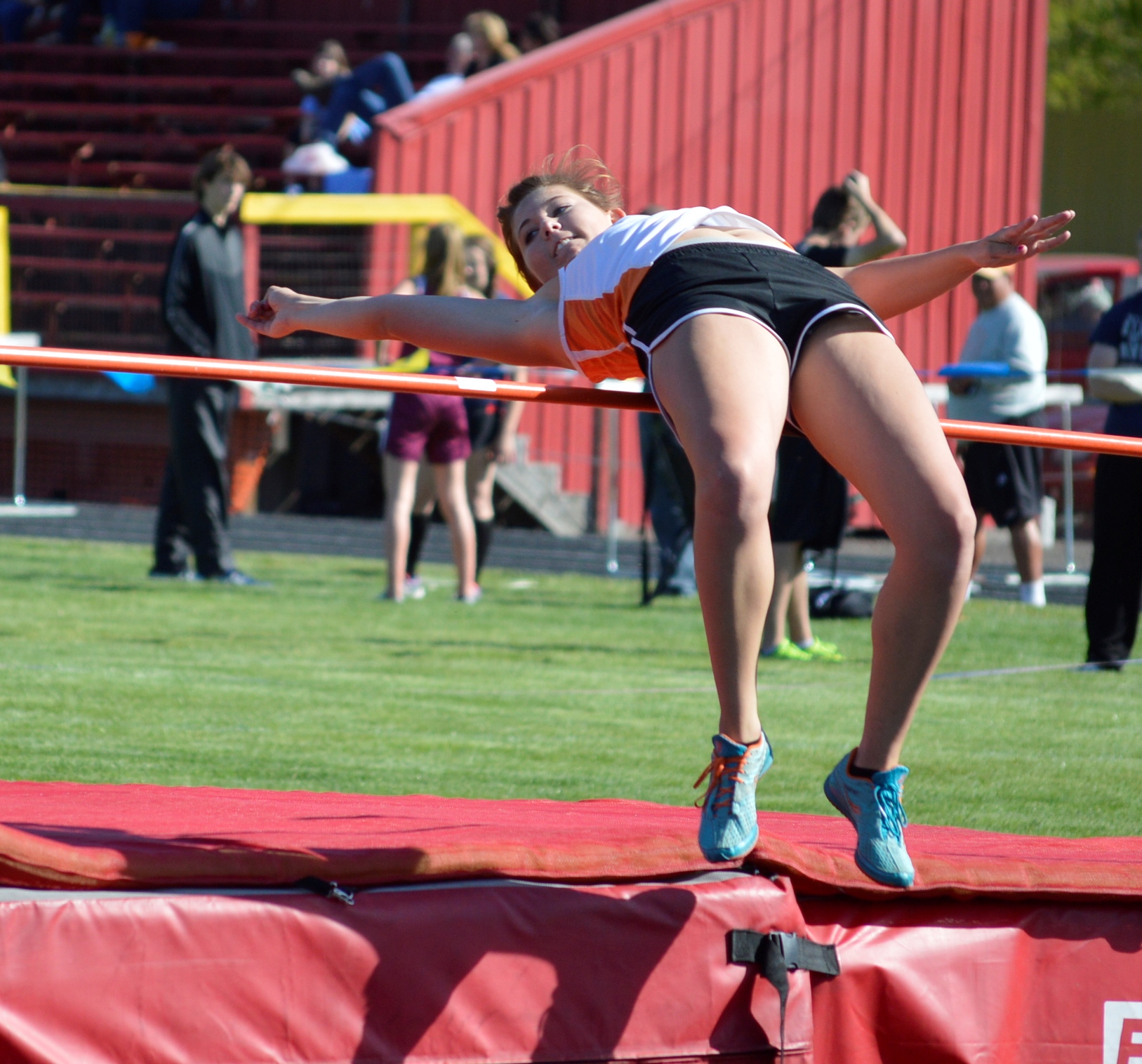
I listened in as the gentleman running the pit explain:Dayton JV Jessica McCain High Jump “You’re slowing down at the last two steps. That’s where you need to really be quick, those last three steps.”

Jessica McCain (Asotin)  listened – and PR’d at the event.

Sal Lopez: “You’re opened all the way up before you start your throw. Remember, check the time,” he demonstrated the

Photo Courtesy of S. Cowdrey

sideways scuttle that throwers use to align their bodies while holding the javelin in ready position, “and then, at the end, when you start the actual throw, that’s when you open up.”

The big meets draw some crowds. This one was sparsely attended even by family but these little meets are the ones where we get to see the athletes that will be challenging at District and State levels, especially in the throwing and jumping events.

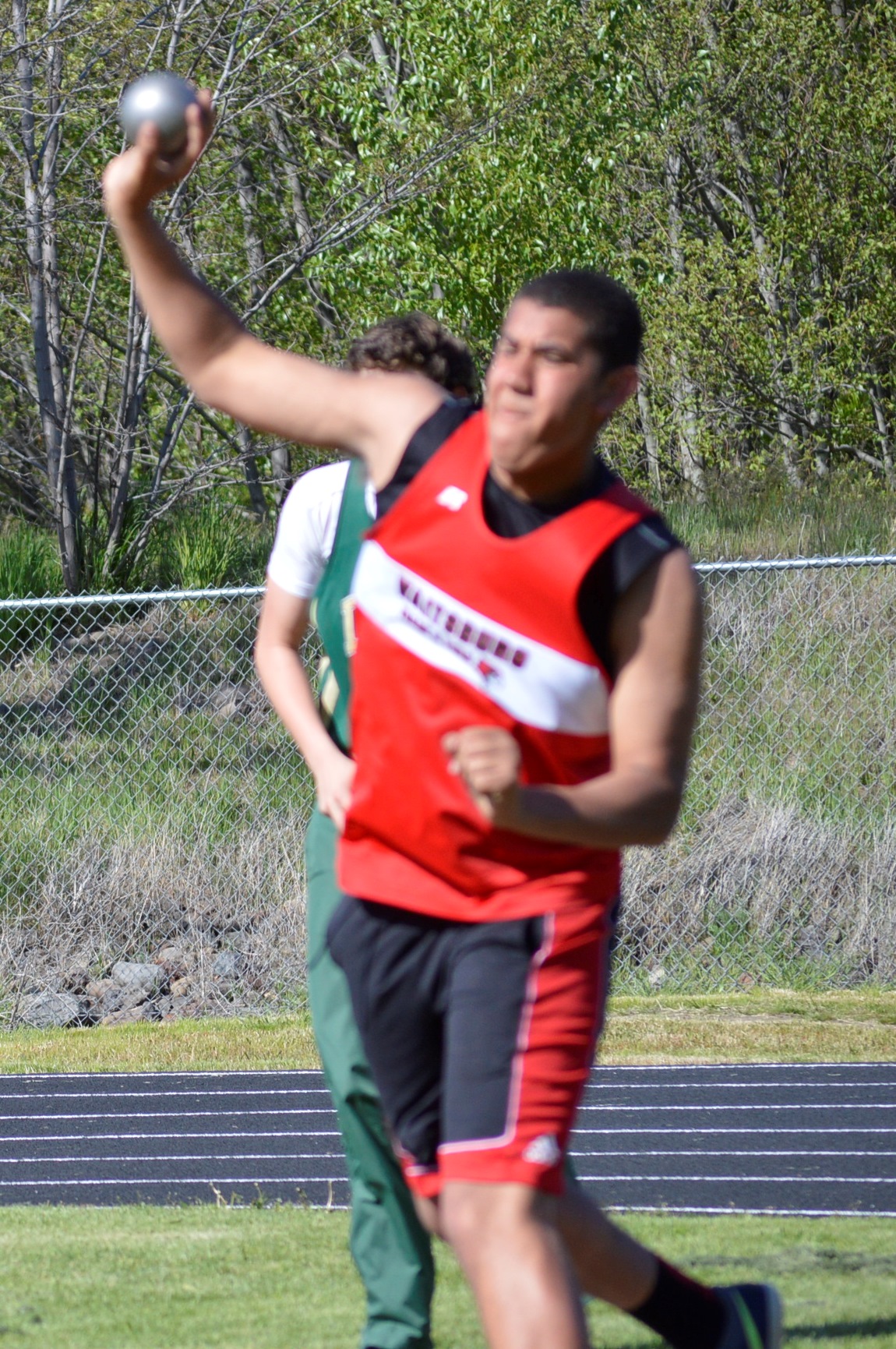
The potential is there. The shot putters need time to grow into their bodies, time in the weight room. A pair from Waitsburg-Prescott, Mark MontgomeryDayton JV WP Putter and EJ Oppelt, did very well. So did a pair from Asotin, Conor Martin and Phillip Downey. Three sophomores and a freshman. The top two on the women’s side, Skylar Olsen (DeSales) and Alyssa Hendrickson (WWVA), were freshmen.  I’m not a particularly stout individual but even I added 40 pounds of muscle from my freshman year in high school to my senior year. These youngsters will do the same, more so in the case of the men.

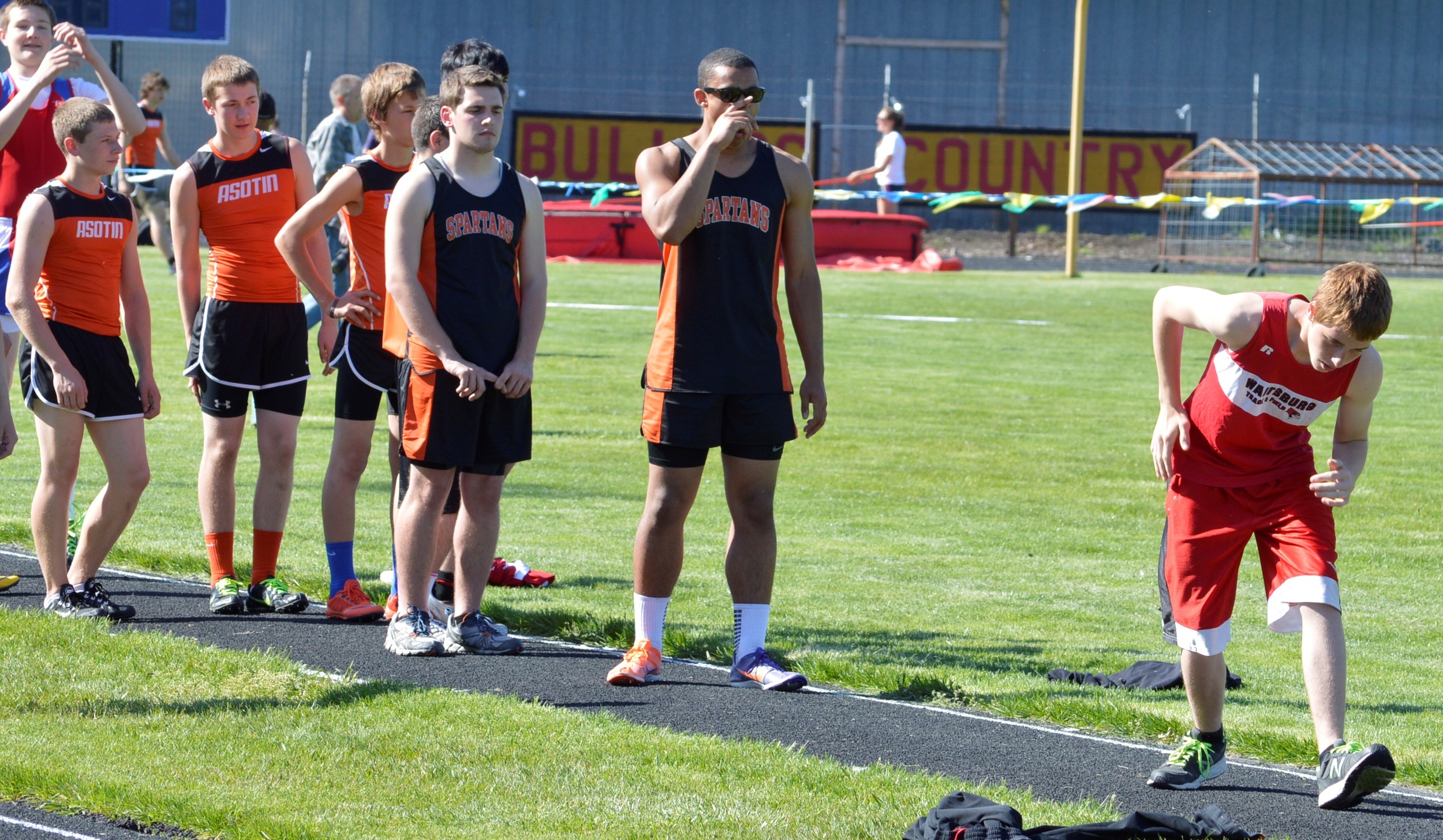
Another difference is the waiting. Undeberg moved at a relentless pace, flight after flight of athletes cycling through the events. Yesterday was more relaxed. For some events, that translated to a fair amount of standing around time. Long jump lines stretched back as the leapers tried to get all their jumps in before their running events.  Running events were slower into the blocks and, in several events, men’s and women’s races were Dayton JV Long Jump Runwaycombined.

DeSales ran well in the 1600m – one of the combined events – with Isaac Mata following up a good showing at Undeberg with a sub-5:00 minute mile. Daniel Ness(Desales) outkicked Brady Mulikin (Asotin) over the last three hundred meters to secure second. DeSales also took the top two women’s spots with Anna Ruthven wining.

In the 3200m women’s race, Jade Porubek (St. John-Endicott) won. Jade is a senior that I’ve watched on the cross country course and she isn’t often the fastest woman in the field but there are very few runners that work as hard as she does. It was nice to see her get the win at Dayton.

Jessica McCain encouraged her every time Jade went by the high jump pit – it’s easy to see why Jessica won the sportsmanship award last week at Undeberg. She’s a positive influence out there.

That’s it for the Dayton JV Meet. If I have the opportunity, I’ll be heading over to the Meet of Champions in Lewiston, ID this afternoon. At best, I’ll be late but maybe I can catch the later distance events and some of the relays.

The Union-Bulletin has a good recap.

Follow me on Facebook - I post all these to my author page.

If I trained enough, I could use these running recovery tricks

That's a fairly substantial if in my case - but Running Times has an online article on running recovery tricks that you should look over if you're in the middle of your track season. Some you probably already do, some you won't, and a couple might be worth trying. Not sure if I'm up for liquid nitrogen - and they sound a little hesitant, too. I was a little surprised at the bit about warm-ups doing more to prevent muscle soreness than cool-downs. Since my race pace is a warm-up, I should be pretty darn safe.

Undeberg Invitational, Race Report

Howdy, glad you’re back again. Settle in because a lot happened at the Undeberg Invitational yesterday. I’ve broken the meet down into two parts. I thought it was a terrifically run meet and you can find my comments on that in this post. On to athletes.

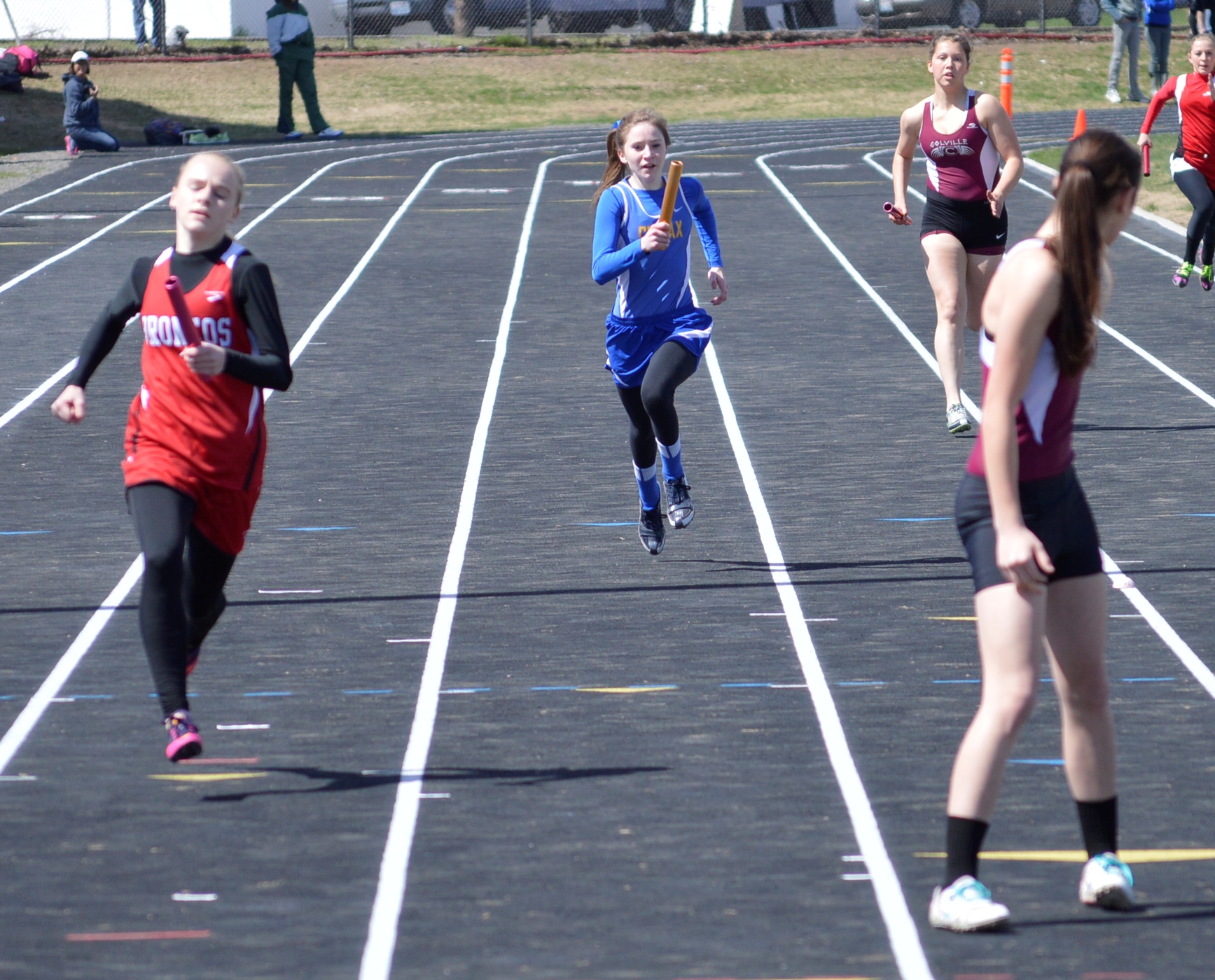
The first running event of the day was the women’s 4x200. Colfax won the event in a time of 1:50.49 with a team that has two freshmen and a sophomore. I watched from the first exchange point. The second place team from Ritzville was in the lane next to Colfax. Ever try to get a picture of perpetual motion? The two girls were practically Undeberg Invitational 4x200vibrating while they chatted, one bouncing on her toes, the Ritzville runner going side to side instead—until the gun went up and the race started. The Broncos had a lead from the starting split coming into the first exchange, but the Colfax team, with Sarah Kraut leading off, had a series of good exchanges and ran a season PR to edge Ritzville by less than a second while Colville stayed competitive, pulling in third place.
The women’s 3200m was much less competitive as freshman Shania Graham of Republic ran away from fellow freshman Mariah Pena (Medical Lake), winning with a time of 11:56. Heidi Hennings (Ling-Ritzville) stayed close on Pena’s heels, clocking in at 12:37, two seconds behind the freshman, good for third place.

The men’s 3200m, run much later in the day, finished with a terrific sprint between Colville’s Kevin Carpenter and Lakeside’s Ryan Coffman. Carpenter edged by about a half-second, 10:01.27 to 10:01.85. The field was crowded with 32 runners and several more positions were decided with hard finishing kicks. The trio of Cody Alvarez (Othello), TJ Baun (Colville), and Brady Mullikin (Asotin) finished within less than a second and a half between them.

I caught the hurdles this time and watched Ryan Whitmore (Lind-Ritzville) win both the 110m High hurdles as well as the 300m intermediates—avoiding a loss in the Undeberg Invitational 036intermediates by nearly flinging his body over the last hurdle as he got his feet out of step and missed the approach. He edged Marco Pena (Othello) in both. The longer race was decided by .05 seconds. Luke Walker (Colville) took third in the 300m and sixth in the 110m. Joe Lang (Royal), Shawn Weisner (Pomeroy), and Colton Forman (Kittitas) finished in the top five in the 110m hurdles while Owen Lanning (Waitsburg-Prescott) took fourth in the 300m hurdles with Ben Elliott (Colville) joining his teammate Walker in the top five.

Colfax ran out two women fresh from the 4x200 relay, Bailey Mackleit and Parker Warwick who placed first(16.67 seconds) and fourth respectively in the high hurdles. Allison Wujek (DeSales) was second, Karlee Maioho (Wilbur-Creston) third, and Mara Riley of Seattle Academy fifth.

Mackleit came back to post a season’s-best 48.84 to win the 300m event. Freshman Karlee Maioho moved up to second. The women’s 300m hurdles were dominated by younger athletes as sophomore Jadyn Dandreth (Reardan), freshman Allison Garza (Othello), and another skilled Colfax runner, Olivia Mellor, a sophomore, rounded out the top five.

I missed the 100m sprints as I wandered around the field events.

Pole vaulting turned out to be a bit of an adventure. The Colfax coach Jason Cooper was kind enough to answer some of my questions since I admittedly know very little about the technical aspects of vaulting.

The wind, gusting from nearly behind the vaulters, effectively shoving them more quickly into the bar as they elevated. Apparently this is preferable to a side wind which alters the direction of the pole plant and forces the athletes into off-balance, sometimes dangerous take-offs. I’ve joked for years that, over-tall and over-broad as I am, I make a good sail. It’s less funny when you’re balanced 12’ off the ground on a slender rod and hoping that you’re still over the pit.

Coach Cooper’s vaulters are probably looking for better weather, but Sam Daily tied his personal best and won with a vault of 12’00”. A pair of Davenport men tied in height, Tanner Perry tying his PR while his teammate, Undeberg Invitational 049Austin Zeller set a new one. They were followed by two Pomeroy Pirates, Memo Morfin and Cole Mayfield. All five of the top men either tied or beat their previous bests.
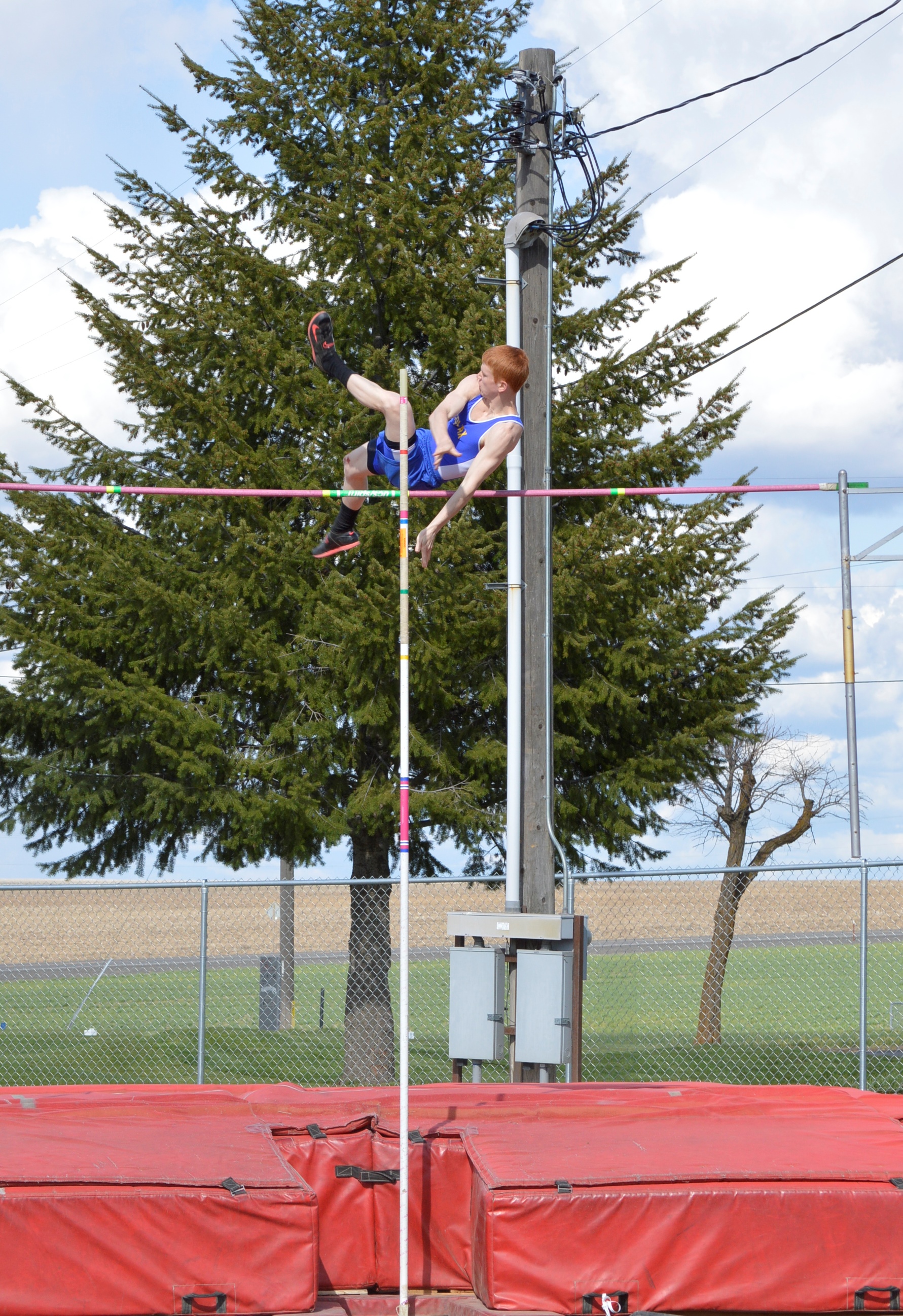
Lakeside dominated on the women’s side, taking the top two spots. Farrahn O’Hara won, clearing 10’06” while Samantha Blake cleared 10’. Scout Cai is another very promising Colfax pole vaulter. She has good speed and elevation but is still developing her technique. Both she and Blake are sophomores. With pole vault such a technical event, I expect to see some fun battles as they both become more skilled.

The women’s 1600m. Wow! Seven of the top ten spots taken by freshmen, led by Madison Ward of St. George’s as she builds on the impressive start to her high school career with a 5:29.86. Felicia Ziemer (Lind-Ritzville) Undeberg Invitational The 1600M Freshmentook second while Harley Strope (Reardan) was the only upperclassman to crack the top five. Mariah Pena backed up her strong 3200m with another good performance in this event. Kat Stephenson, running with a tender Achilles’, came close to a PR. Heather Siegel, the St. John-Endicott standout, was solid in sixth. Zoe Robertson (TO-GP) set a PR sneaking past Emily Adams (Waitsburg-Prescott) and teammate Katie Holbrook (a sophomore). Kiara Hoxie held off Robertson and the others to secure seventh. It’s an impressive group of young runners.

Domenic Rehm (Medical Lake) won convincingly with a 4:30. Ryan Coffman (Lakeside) ran a 4:34. Kevin Carpenter a 4:35 and Micah Dingfield (Medical Lake) 4:38. Unlike the women’s side, the men’s race was controlled by upperclassmen. The only freshman to get into the top ten was Thomas Weakland (Asotin) who set a PR with a 4:42.96 as he took seventh.

The head wind didn’t help any of the discus throwers.

Piper Loop (Asotin) continued her winning ways, picking up a first place finish again in discus with a toss of 117’03” and a fourth place with a season-best shot put of 35’07”. Alyssum Reno of Kittitas won the women’s shot put (39’03”).

Jacob Swearingen (Asotin) won both the shot (47’09”) and discus (146’09”) for the men. The competition in the shot put was close with Eli Richardson (Rosalia) heaving a 47’07.25 and James Hopkins (Reardan) keeping pace with a 45’06.5”. Inches separated Austin Oursland (140’09”, Kittitas) and Josh Brown (140’01”, Colfax) as they vied for second in discus.

Moving back to the running events (and no, these aren’t in order!), the men’s 800m race surprised the heck out of me and at least one runner. Brady McKay (Asotin) ran the fourth heat of the race, consistent with his previous efforts. The fastest runners went in Heat 1, the next fastest in 2, etc. Except that Brady apparently didn’t get that particular memo. He roared past me at the 100m mark already with a ten yard lead and I liked his aggression, attacking the race. When he came by again, at 500 meters,  the lead was up to thirty yards.

I talked to him after the 800m, before I realized he had blasted a 13 second PR and taken fourth place overall. He sounded a little stunned at himself and thinks it might be time for him to challenge the 4:51 plateau he’s been stuck at as a miler. I suspect his coach, Tim Gundy, will agree.

St. George’s took the top two spots in the race. Will Tender ran a 2:02 and Nathan Vanox a 2:06. Isaac Mata (DeSales) was next in 2:07.8.

Madison Ward and Felicia Zeimer sandwiched Shania Graham as freshmen lead the way again. Only one junior (Anna Cook of La Conner) and no seniors placed in the top ten. Ward, Zeimer, Katherine Meyer (Kittitas), Lily Vogt (Seattle Academy), Zoe Robertson (her second of the day), and Katie Holbrook all set personal records at the distance.

Coach Rick Riley of St. George’s took a few minutes to talk to one of the milers, going over the way that Steve Prefontaine would structure his week to build both his base and his speed. Since I was lollygagging in the area watching the high jumpers and javelin throwers, I eavesdropped. Interesting stuff and I thought it pretty neat that a running legend took time out during a busy meet to share his knowledge with the kid.

I think I could write an article on Rick but we’ll save that for the cross country season, I think.

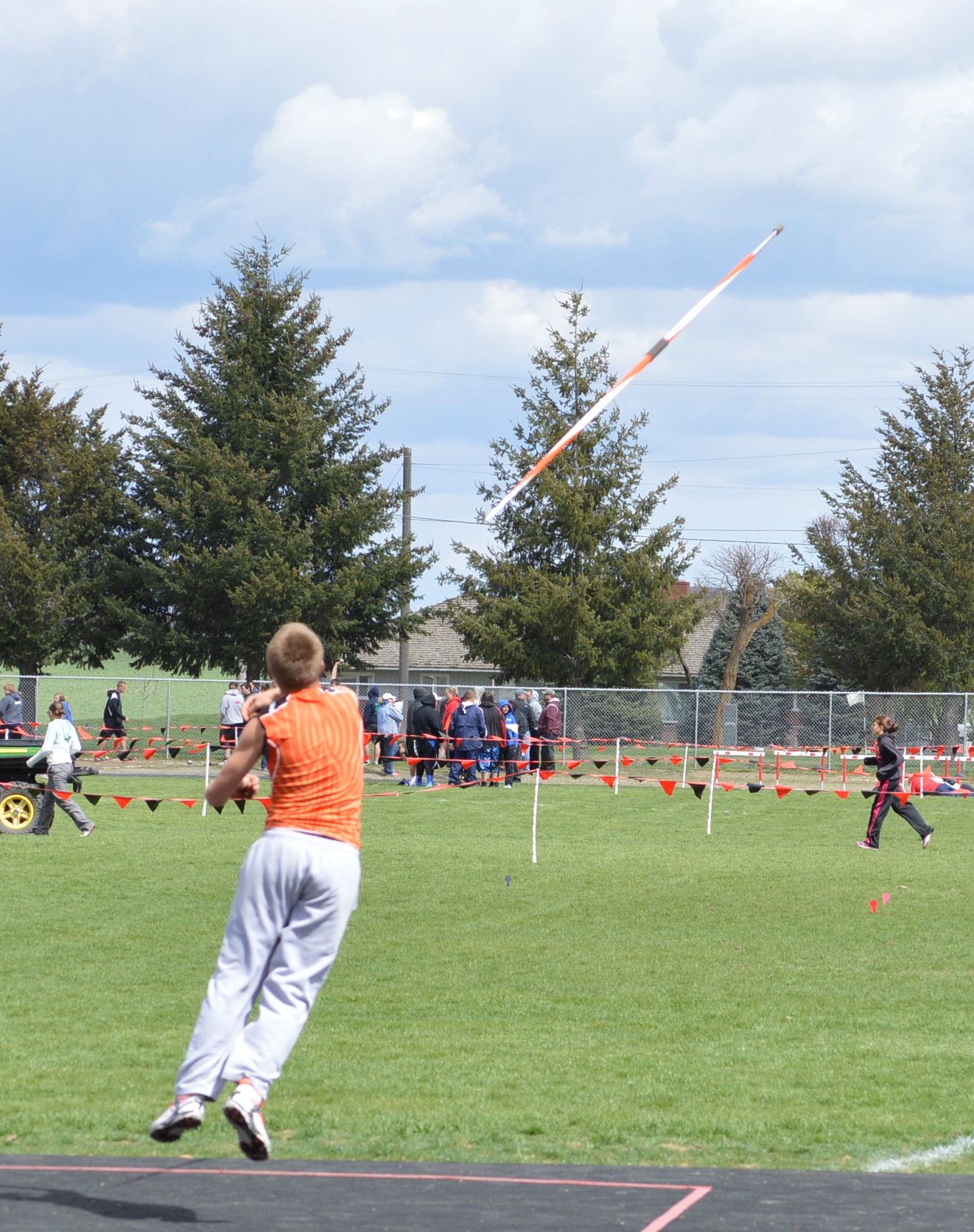
Since I mentioned javelin, did you know that a javelin can rotate 180 degrees when the Undeberg Invitational 031wind catches it? Bit wild looking. When you catch the wind just right, oh my. One of the gentlemen marking throws had to beat a hasty retreat when a Kittitas thrower, (Austin Oursland. I think) launched one and caught air. Oursland took second to Kolton Cobb of Columbia-Burbank who nailed a throw of 170'.
I went looking for more coverage of the meet but about the only thing I could find was a nice article on the DeSales team in the Union-Bulletin covering the bounty of PR’s their team had.

I caught this young man, Alex Scoggins of Seattle Academy, as he was preparing for his last attempt in the triple jump. He finished third on this attempt

Undeberg Invitational Alex Scoggins

(39'11.5"). Owen Lanning (Waitsburg-Prescott) won the event with a triple jump of 41'00.5" and Kameron Strobel (Colville) took second at 40'10.25".

That'll have to do it for today. As always, I know I didn't get to everybody and I'm sorry-doing what I can. You all are awesome!

All the results and placements for the Undeberg Invitational  were courtesy of Athletic.net. It's a truly awesome resource. And many thanks to the race director - having a program made this whole project easier.

If you want to follow me on my author page, you can find me at Facebook.


(I modified this article to correct a mistake of mine. I called Jacob Swearingen 'Josh' in error. Sorry, Jacob!)


Well-Organized: Undeberg Invitational In Ritzville

Greg Whitmore deserves to be pleased. Race Director at the Undeberg Invitational in Ritzville, his meet may have been one of the smoothest and best organized I’ve been at in years. Every track athlete and coach has a horror story—sometime an entire pantheon of stories—about meets that ran two, three, four hours long with interminable pauses between events. Undeberg proves that a race can be both well-organized and athlete-friendly.

The timing was actually done by computer run by Dennis Sakmann,with volunteers providing backup. The system worked nicely with no apparent glitches even with several Undeberg Invitational Timersvery close finishes (at least from a spectator viewpoint.) The starting crew (Bill Cox and Al McBroom were the starters with Jordan Bilodeaux the Marshall) offered clear directions to the fields of runners, mostly in the distance events where lane assignments were not rigid after the first turn or lap, to try and finish from Lane 4 or out so that camera would have the best image to work determine the finishing order. I thought this might give a slight advantage to a late finisher but, after running the numbers (high school geometry for folks interested, Pythagorean’s Theorem, using the top of the straighaway to the finish), decided the difference in distance was negligible.

The crew got runners into the blocks or to the line in good order. I only saw a single false start and, even then, the gentleman who explained it to the athlete was very sympathetic and considerate of the athlete.

Over on the field side, the volunteers kept the systems moving. Two announcers kept the flights on schedule and sounded warnings when jumper or throwers had failed to check in. A bit of observation at the long jump pit and I saw how the announcers knew what was happening in each event.

The young man running the pit would inform the announcers via radio to make the Undeberg Invitational Long Jump Volunteer“second call for Flight 4, men’s long jump.” A minute later the same would be repeated over the speakers. It kept the two announcers busy but the whole day ran smoothly as each event sent in the status reports.

The young man gave the jumpers feedback on their takeoffs, especially if they faulted. Not required of the folks at the pit but I’m sure that athletes appreciated the extra input. (The souvenir program listed Dale Anderson, Dustin Kommes, and Rob Reottger as the team there, but they were busy, and I didn’t ask names to attach to the picture.)

Another point that I thought interesting, The Undeberg Invitational meet sold sponsorships to community businesses and had giveaways by some of those. A nice idea that shows a lot about the community and the support that the Broncos (the host team) enjoys, as well as help to defray the costs to the teams and the school. The $2 entry for spectators was less than I’ve paid at other, smaller, meets this year and the $2 for the program very reasonable.

Looking forward to coming back next year.

(Next up, the race report. Patience, people, I'm typing as fast as I can. And, if you see a typo, holler and I'll fix it. And you can follow me on my author page at Facebook)

Cover for "Trail of Second Chances"

So, while I'm busy doing the rewrite on Trail of Second Chances, the cover artist that I use, Kit Foster, a bloke that hails from the UK, has out-done himself by coming up with the design for the book. Kit Foster also did the cover for Finishing Kick which earned compliments (but, alas, no awards) from The Book Designer cover design contest.

When I sent an email asking for help on this new project, I sent along the back cover blurb and gave him a rough outline of what I was looking for since this book was different from the last in that it is an adventure story involving young Becca Hawthorne.

Kit came up with a bunch of ideas but one jumped out and, with a bit of tweaking, became:

Trail of Second Chances

And the Blurb on the back?

Trail of Second Chances

A high-octane adventure on a wild Montana mountain as one girl finds herself racing for her life against a malignant fire.

 It should have been the highlight of the summer, a training camp for elite runners in the mountains of Montana. Coached by her father, and frustrated by his efforts to hold her back, Becca Hawthorne dreams of competing in the Olympics. She earned her chance to test herself against the best runners in the Pacific Northwest. But now she faces a tougher opponent than even the fastest girl.

An action-filled roller coaster ride that keeps you turning the pages as the fire creeps closer.

I'll keep working on the rewrite. The editor (the same lady that worked with me on Finishing Kick) is waiting for it. It'll take her a couple of weeks to fix all my goofs. One more round of polish, then typesetting.

Expect it July 1, 2014.

PS. The next novel, The Lonesome Mile is started. It'll be done when it's done. No promises on dates until I get way farther along the path.

Odds, Ends, and Happy Easter

First, Happy Easter. For those that don't celebrate Easter, Happy Day. I'll be heading out to Kamiah to watch the junior high meet there on Tuesday. Report will follow. Not sure that I'll be able to put in times - I dig them out of Athletic.net but the JHS scores and results don't always seem to show up. Not sure why. Anyhow, we'll do what we can.

Also on Tuesday, I'll be putting up the cover for the latest book, Trail of Second Chances. Could I do that today? Sure, but it's Easter. And the County Fair. And a dozen other things. Tuesday is soon enough.

Saturday I'll be headed to the Mooberry Relays in Spokane. Looking forward to it. Mooberry is a little different and a lot of fun to watch. Probably miss a lot of the Asotin kids since a goodly number of them participate in FFA stuff for the fair. (The Asotin County Fair fair spans two weekends - don't ask be why 'cuz it doesn't make much sense to me either.)

I've put the designers to work on a logo for InlandXC.com. I'll put it up when it's done. Website is coming along - slowly, true, but progress nonetheless. A couple of people have asked how I expect to make money from the site. Funny enough that I laugh. If there were money in it, someone would have done it a while ago. It's part of my clever plot to reduce my taxes by losing money at something I love.

That's it. Got stuff to do and it's a beautiful day out there.

Enjoy it and run gently, friends, those that run.

Why are there so few novels about running?

I was muddling along thinking while sleeping - I do that a lot - when it occurred to me that there was a reason there were so few novels about running. You could spend the next ten years reading books and manuals on every aspect of running from foot strike to hat attire for winter weather and still not exhaust the material available. New books on how to run, how to avoid injury, which shoes (if any) are best, VO2 Max, and the Daniel's Running Formula, which I consider to be the running 'bible' for performance. For us old school runners, Dr. George Sheehan is the runner's philosopher.

The common thread on all those books is an interest in running faster, better, longer, stronger. It's about the act of running rather than runners and, even when we move into biographical territory, as Christopher McDougall did with Born to Run, we tend to follow the running exploits of the runner instead of looking at the whole runner. Mostly, though, people want to run better, so the technical books sell and nobody tries to write novels around running or running themes.

Even John L. Parker's classic Once a Runner is focused on the training and racing aspects. The hero of the story, Quentin Cassidy, stays a one-dimensional character throughout. What Parker does nicely is show the inevitable blowing off of steam by the track team through the goofiness of their indoor Olympics, showing the touch of humanity that the book needed to stay interesting between the bits of running.

Parker originally had to self-publish Once a Runner, long before it was fashionable to do so. For all the success he's had with the novel and the follow-up, Again to Carthage, they've never been blockbuster hits. They're cult favorites for a self-selecting tribe of people that would rather run in the rain than veg on the couch. Or, at least, run first, then veg.

Novels about running are never going to be blockbusters like the Harry Potter series or Twilight. Those are about escapism, slipping into a mythical world. Running is grittier and more real in the sense that they reflect a different choice in this world, instead of offering a different world altogether. (Though I'm open to arguments that our feet can take us to places so pristine and pretty that it feels surrealistic.)

And publishers know that fantasy (not the genre, the concept) sells. Want to take on the Mob as a young lawyer? Read Grisham's The Firm. Want to play Quidditch? Off to Hogwarts you go. Want to know what it's like to love a vampire? Stephanie Meyers has an answer.

All those books were best sellers and made millions of dollars for the publisher. Novels about running would be lucky to break even in the traditional world of publishing.

Fortunately for us, that world is turning upside down right now and all the loose change from the pockets is dropping to the ground. And by loose change, I mean all those ideas and stories that are cool and inspiring and un-mass-marketable that still have an appeal to a core group of people, what Seth Godin calls a 'tribe.'

The barriers to self-publishing are gone and the stigmatism that accompanies it is fading. John L. Parker hand sold his books to running shoe stores and at meets, one book at a time. Today, we have Amazon and Smashwords and a dozen other ways of getting our stories  out to the public.

So, why are there so few novels about running? Because until now, there was no money to be made and, like it or not, that determines what got published. But it's early in a new age of publishing and storytellers have more options.

A some of those storytellers will see their tribe and want to tell its story, all the little facets of it.

And, now they can.