Done Coaching, So Now I Can Cheer

GSL (Greater Spokane League - 3A) Mead/Ferris/SP/MSHS

The junior high season at Asotin ended on the 13th, so I had some time to go watch the older kids racing. I was at Mead in Spokane on Wednesday and at Clarkston for the District 9 meet Saturday.
DSC_0158.JPG

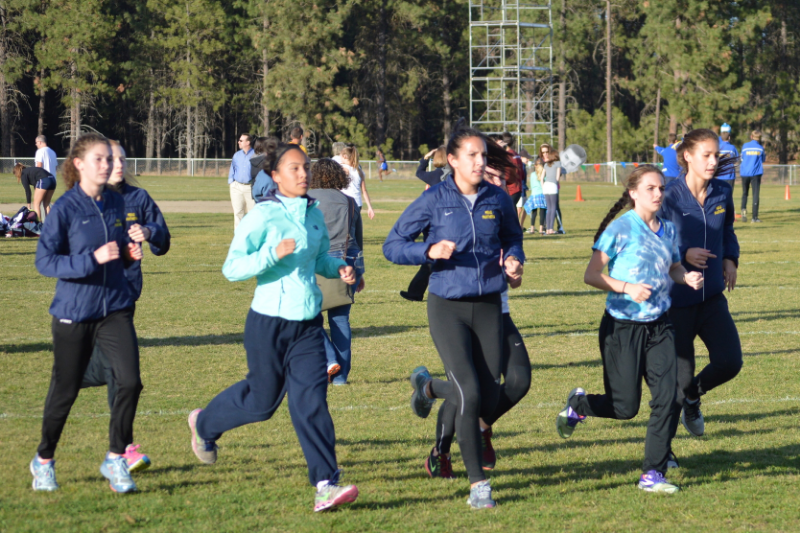
The Mead meet was right after school and the GSL women's championship was on the line, with the hosts in contention. Last year it rained, a slow cold drizzle. The sunshine and sixty degrees temps were a substantial improvement.

After the JV races, the women took to the line. The emotional leader of the team, Rayanna, kept the ladies focused on getting ready for the race. Once it started, a cold bug kept her from having the race she hoped for. She ran with a lot of guts

Teammate Hannah Tomeo went out with the Mt. Spokane ladies at Coach Dori Whitford's direction. As Dori said, she "wanted to give her more than one way to race." To often, the coaches aren't teaching racing strategy, turning a foot race into a horse race. Yet, as Rono and Lindgren proved, strategy has a place in cross country and forcing your opponent into mistakes can lead to satisfying victories.
In the end, the top three Mt. Spokane ran away from the Mead ladies. Mead took the next four spots. A pretty good dose of dominance by both programs. Something that should cheer the Mead ladies - Mt. Spokane graduates two of those top three. Mead has their top six back and several JV girls nearly ready to step up to help the squad.

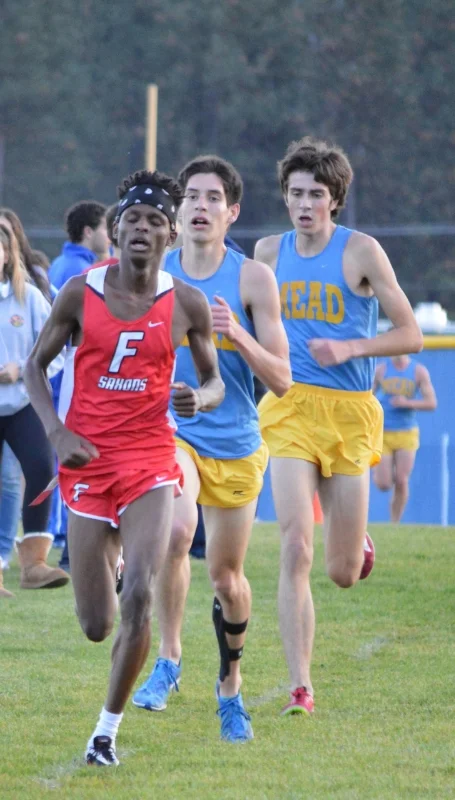
The men's race was more balanced, but Ferris edged Mead. Mt. Spokane runner Hayden Dressel took the lead from the start, but his team was never in serious contention. The real battle occurred in the 2-5 positions with a pair of Ferris runners, Erik Holm and Amir Ado, running stride for stride with a pair of Mead men, Will Medellin and Cameron Dean. Will, who was also in the creative writing class I taught earlier in the day, pushed against the Ferris pair, holding onto them for the entire race, with Cameron a few steps back. Behind them, a trio of Mead men tried to close on a quartet from Ferris.

The race at the front came down to a hard chase and kick. Will Medellin managed to get past Ado and Dean did as well. Into the final stretch, Holm led those two, and then launched a kick. Dean unleashed a huge kick of his own, caught Holm and captured the number two spot. Medellin didn't have quite the same finishing speed but fought like heck anyway. I love watching athletes leave it on the course.

District 9 - 2B Meet

Back on home turf, I got to cheer for kids that I coached and some that ran with my daughters. I think this is the last year I can say that. Time moves quickly - the Asotin assistant coach, Jessie Johnson, was a teammate of my middle daughter.

Photo courtesy of Suzy Cowdrey

Photo courtesy of Suzy Cowdrey

Girls raced first and Asotin was expected to win the team title. A pack of four ran away from the rest of the field, led by Anna Ruthven of DeSales. Emily Adams stayed hard on her heels, and Carmen Eggleston and Maia Dykstra maintained contact. Mykayla Miller from Pomeroy, Celeste Davis of TCP, and Kat Stephenson (Asotin) formed the next group. Lauren Ruthven (DeSales) and Adriana Bernal (TCP) held position, and then a wave of orange crested as the rest of the Asotin Panthers flew by on the outbound leg of the course.

On the return part of that leg, before the big hill, Ruthven held the lead on Adams by about 20 meters. The Asotin freshman pair had split apart (Maia Dykstra was running with a lingering cold) with Eggleston in front. Forty meters behind them were Davis and Miller. Another gap appeared before Stephenson, running strong, popped into view. It would be nearly a minute before the next runner showed up.

Photo courtesy of Suzy Cowdrey

Photo courtesy of Suzy Cowdrey

By the bottom of the hill Adams had closed the gap on Ruthven to a few seconds. Midway up the hill, she through on a hard surge topass the DeSales lady. The change in Emily Adams over the course of the season has been impressive. She's learned to race, and when to take chances to bust open a lead. Ruthven took second with Eggleston locking in third place. Dykstra, despite the cold, battled her way up the hill on guts to hang onto fourth, holding off another freshman, Mykayla Miller. Freshman Celeste Davis trailed in Miller.

Samantha Nicholas stirred the local crowd with a terrific kick and Paiton Vargas, in a bit of a surprise, was the number five runner for Asotin as she seems to be figuring out the whole racing part of running. All eight Asotin ladies placed in the top fifteen.

In all, freshmen captured four of the top six placements. Something that should worry other teams is that Asotin does not have a senior in their top eight. Four are freshmen, four are juniors. The Panthers appear poised for an extended run at the podium. Pomeroy also has a very young team and a growing tradition.

The men's race didn't resolve itself so quickly. Asotin and TCP were in the mix for the team title. The strength of the TCP program under Scott Larsen has always been the quality of the runners, top to bottom. He does a really nice job of bringing them along, and in good numbers, so that the middle of his pack never has a hole that a competing team can take advantage of. TCP put seven runners in the top sixteen to win the race, but only by a point as Asotin did a nice job of scoring.

Kenneth Rooks was the overall winner, and Thomas Weakland led the Panther squad. Third went to DeSales Daniel Ness, fourth to TCP's Phillip Geist, and fifth to Asotin freshman Eli Engledow. Landon Callas of Waitsburg-Prescott finished in sixth. TCP began to flex the mid-pack muscle with Cesar Robles and Thomas Mercer leading the way, Spencer Williams of Asotin in pursuit. Senior Nate Prior would be the next Asotin finisher, in twelfth place. TCP put four consecutive harriers across the line to seal the race. Thomas Martin, another promising Asotin freshman, closed out the scoring for the Panthers.  

Photo courtesy of Suzy Cowdrey

Photo courtesy of Suzy Cowdrey

Next week, and presumably at State, these team will meet again. Podium spots and bragging rights will be on the line.
Riverside State Park, Spokane

In what is becoming a personal tradition, I am in Spokane today to visit the creative writing class taught by Dori Whitford at Mead High School. Dori, who doubles as the women's cross country coach, became a fan when Finishing Kick first came out in Running Times. She sent an email to let me know what she thought of the novel, one thing led to the next, and now I come up on a regular basis to talk to the students.

As always, they, the kids, are interesting. They had some questions pre-written for me to work with and some were really interesting. One, what is my favorite thing to write about, actually put me on the spot, mostly because I told them the truth. I like writing about teenagers. I think they were expecting me to say 'about running.' Understandable.  I think the age is fascinating - NOT that I want to go back and repeat it. I told them that, too.

About half of the class would like to write in the future and, to a person, would like to write fiction. My kind of kids. They did split on whether they prefer pen and paper or typing right into the computer. Advantages to both but it was interesting to see how they broke down. It seemed most of the pen and paper kids also liked plotting out the stories. Most are into fantasy with a smattering of thriller and mystery readers, too.

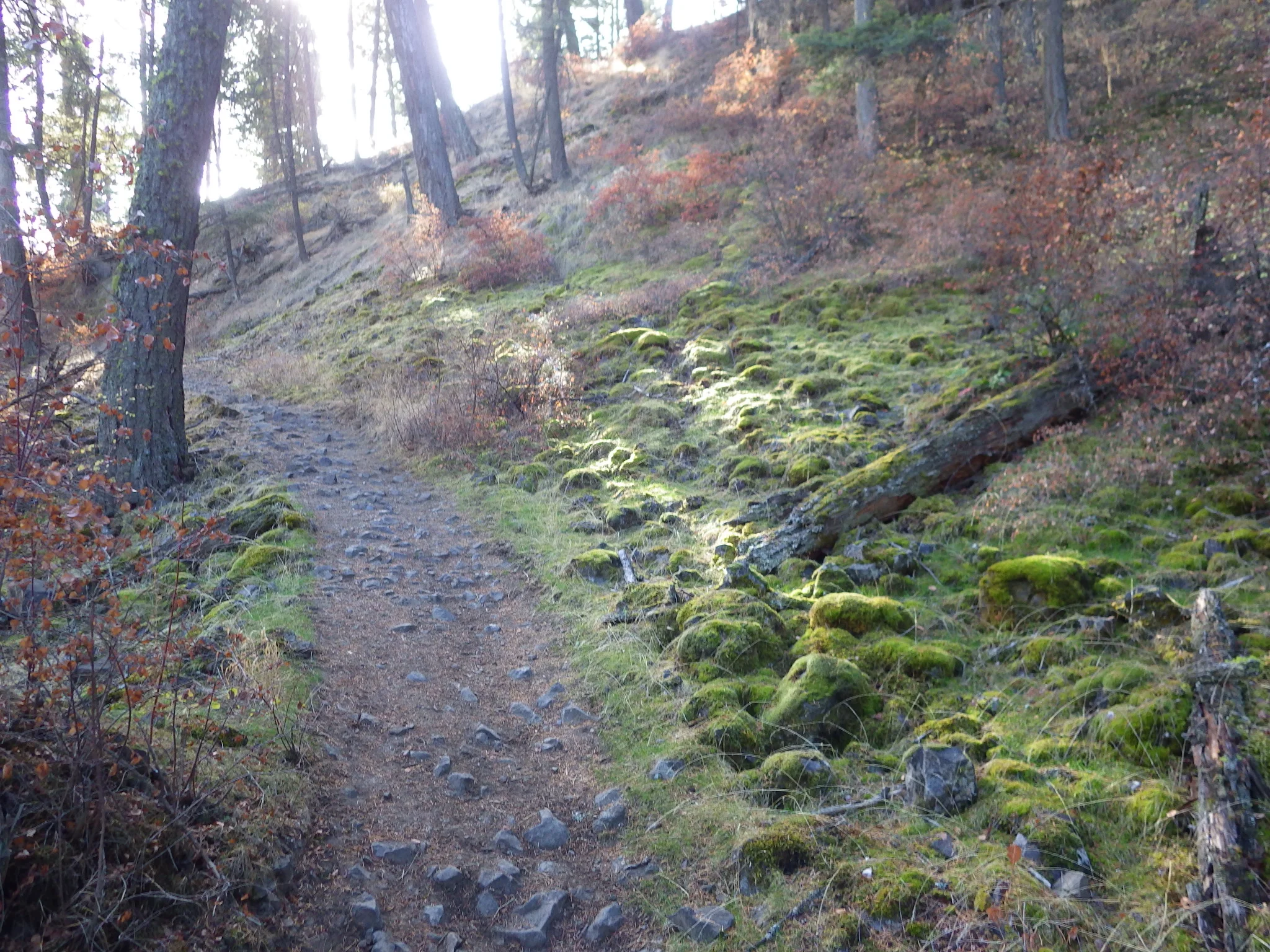
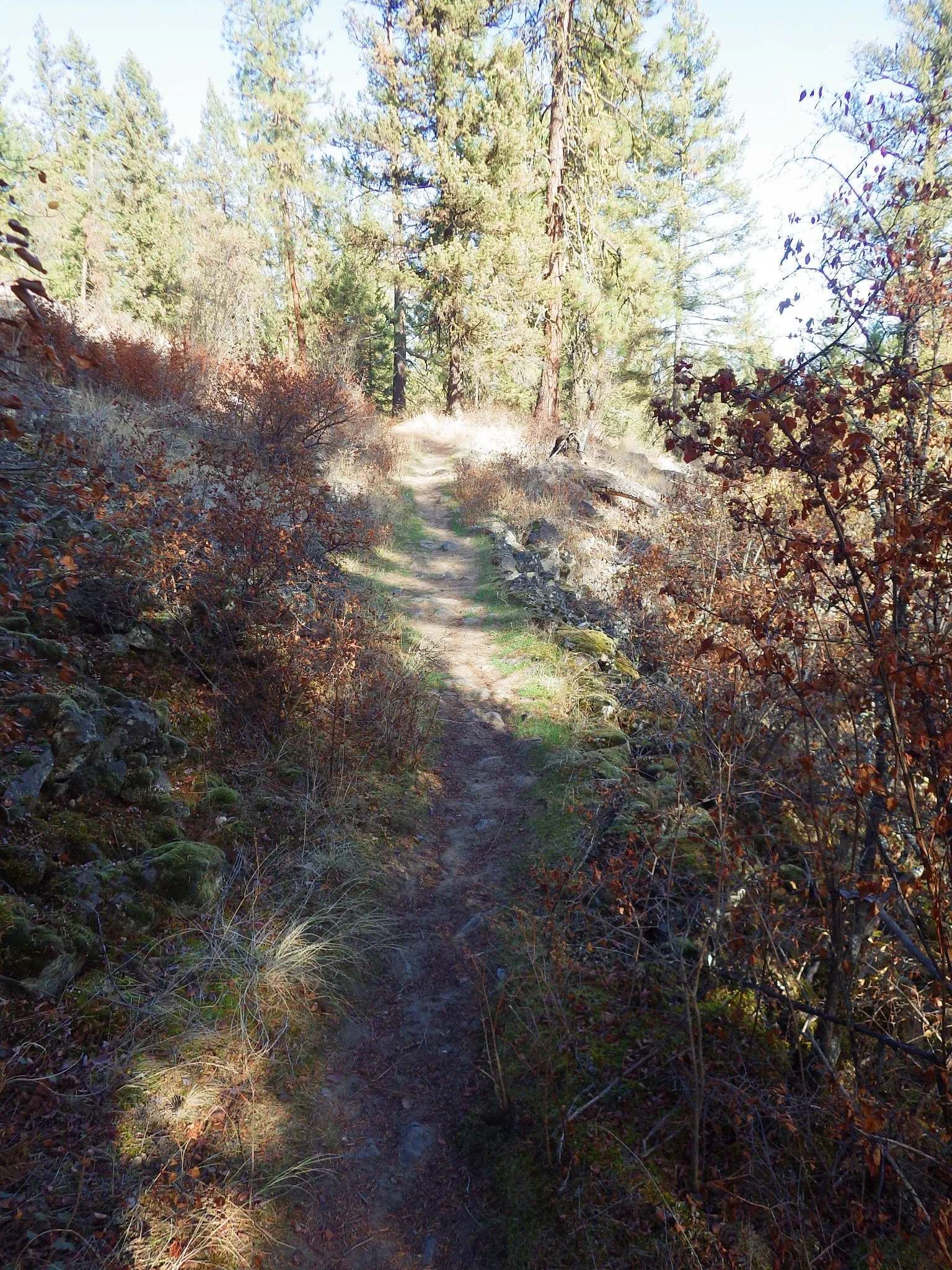
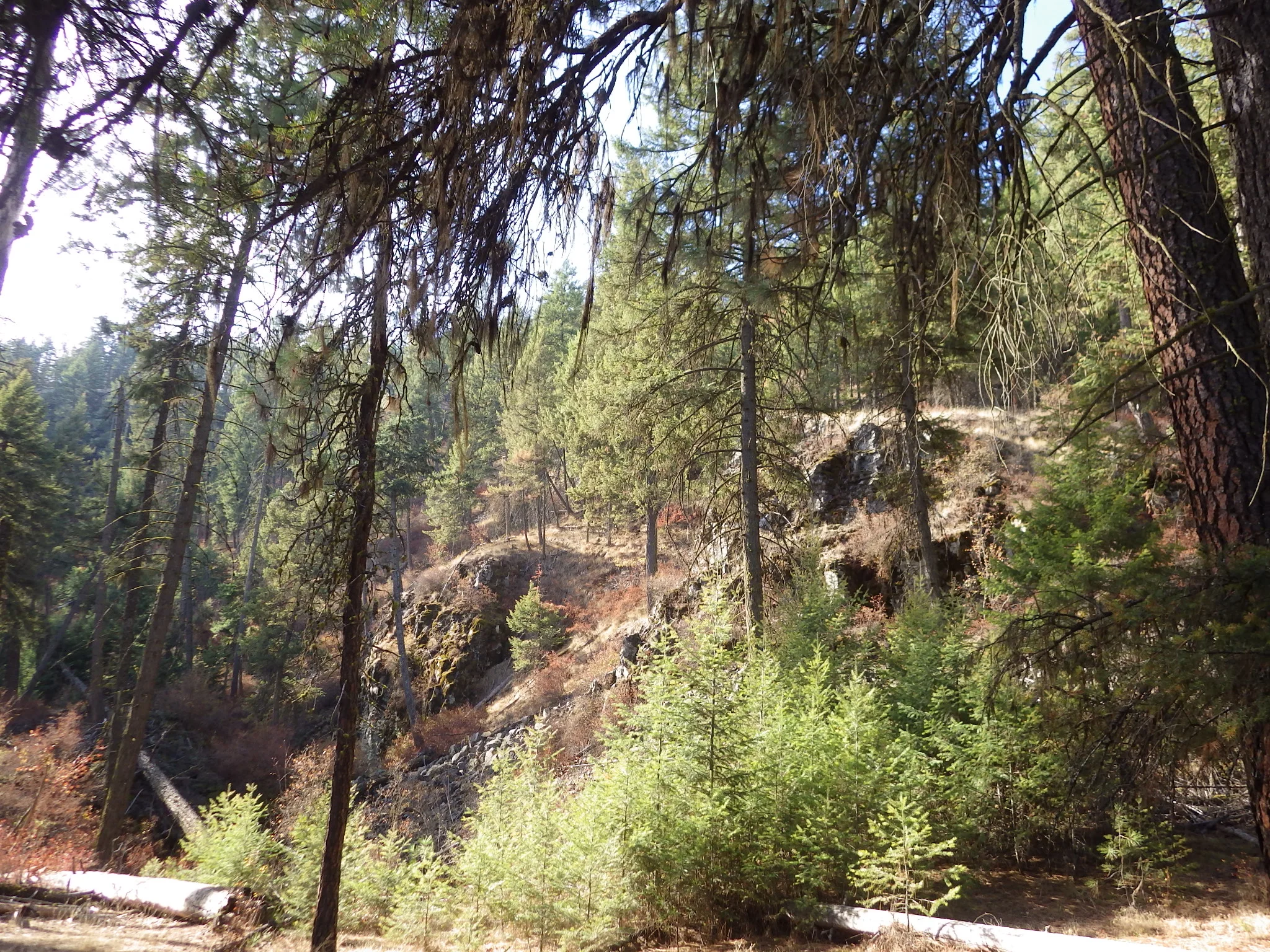
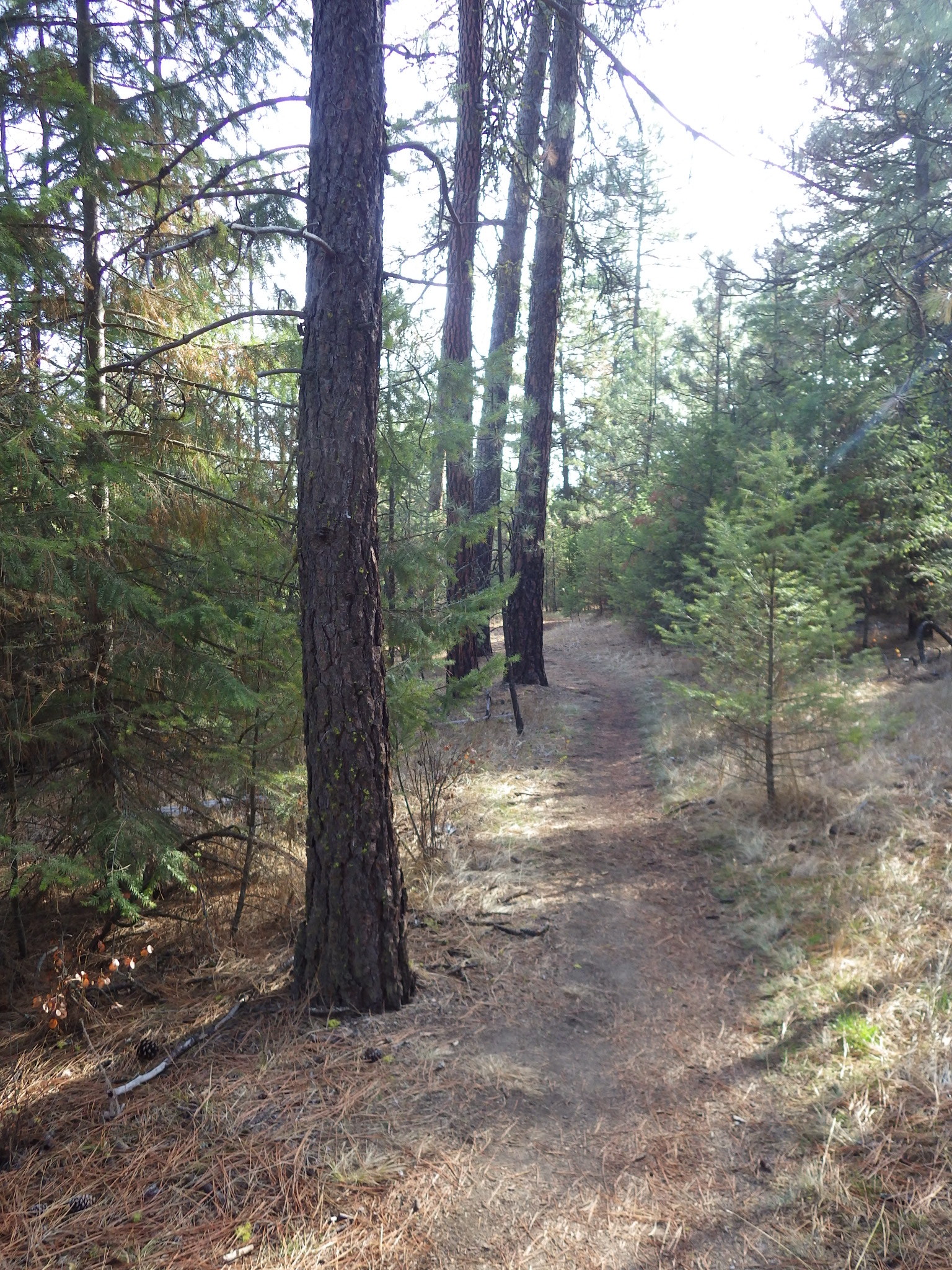
Afterwards, I went traipsing around Riverside State Park, taking off on a five mile run from the Carlson Road Trailhead. Absolutely gorgeous.

The day was a little crisper than I had prepped for - 42 degrees and I had geared out for about ten degrees warmer. Oops. Ran with what I had and figured it was good for triggering my brown fat. Not too bad once I got moving.

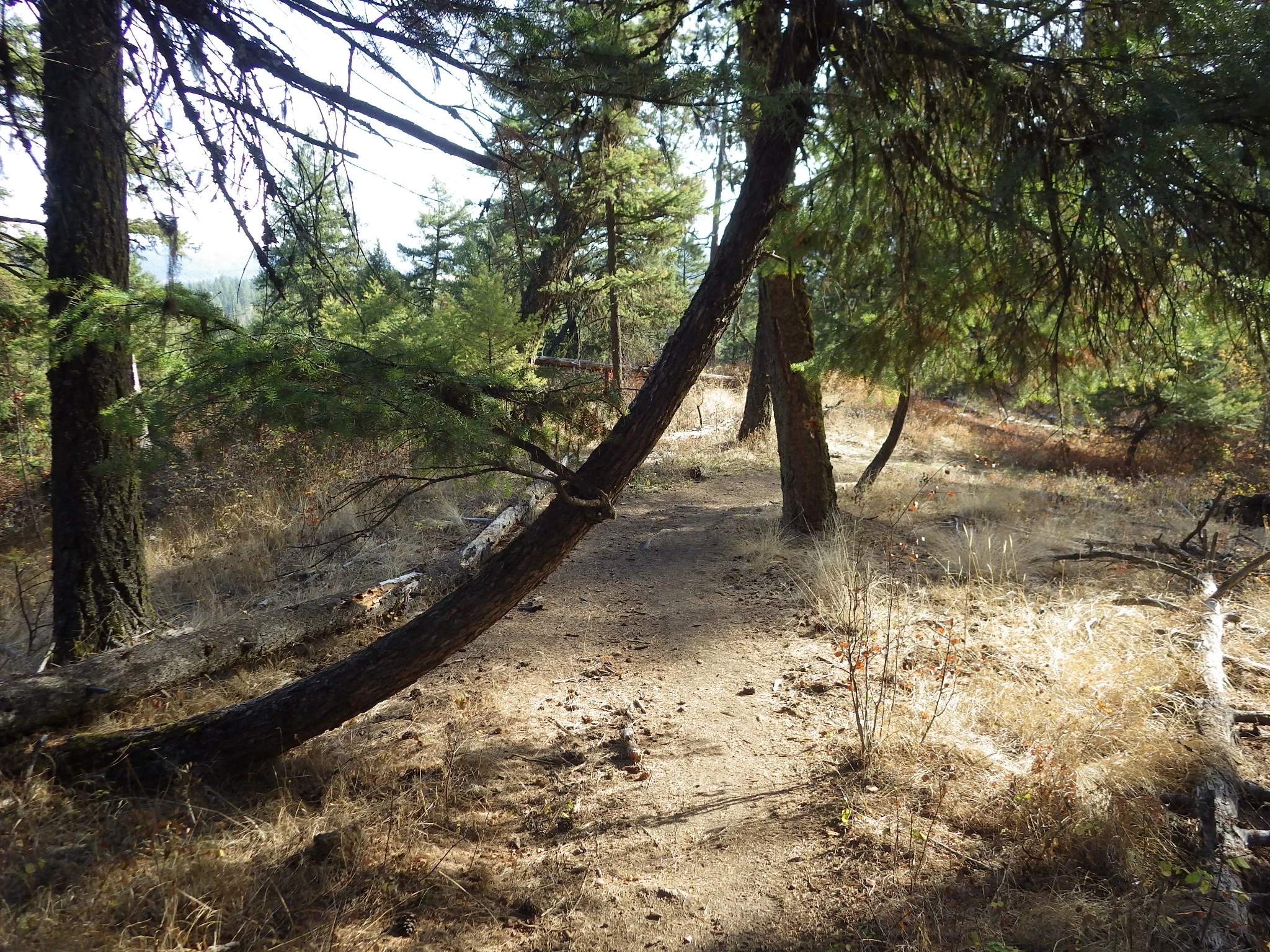
I had a choice of dropping down and running by the Spokane River or hill-running. Being a glutton for work, I ground my way up. There's a whole network of trails, mostly well marked. All the ones I hit had good footing though a couple of stretches had enough rock that I paid attention, lest I land in the emergency room. The pictures are from today's run.

Mother Nature's way of taking out over-tall, and inattentive, runners.

Mother Nature's way of taking out over-tall, and inattentive, runners.

Asotin Bird Sanctuary

No running today. Instead, I got in a four mile hike with a son-in-law, traipsing through the Asotin Bird Sanctuary. Technically named the inelegant Asotin Slough, the locals call it the Bird Sanctuary and it's part of the runs we do with the junior high kids a couple of times a year.

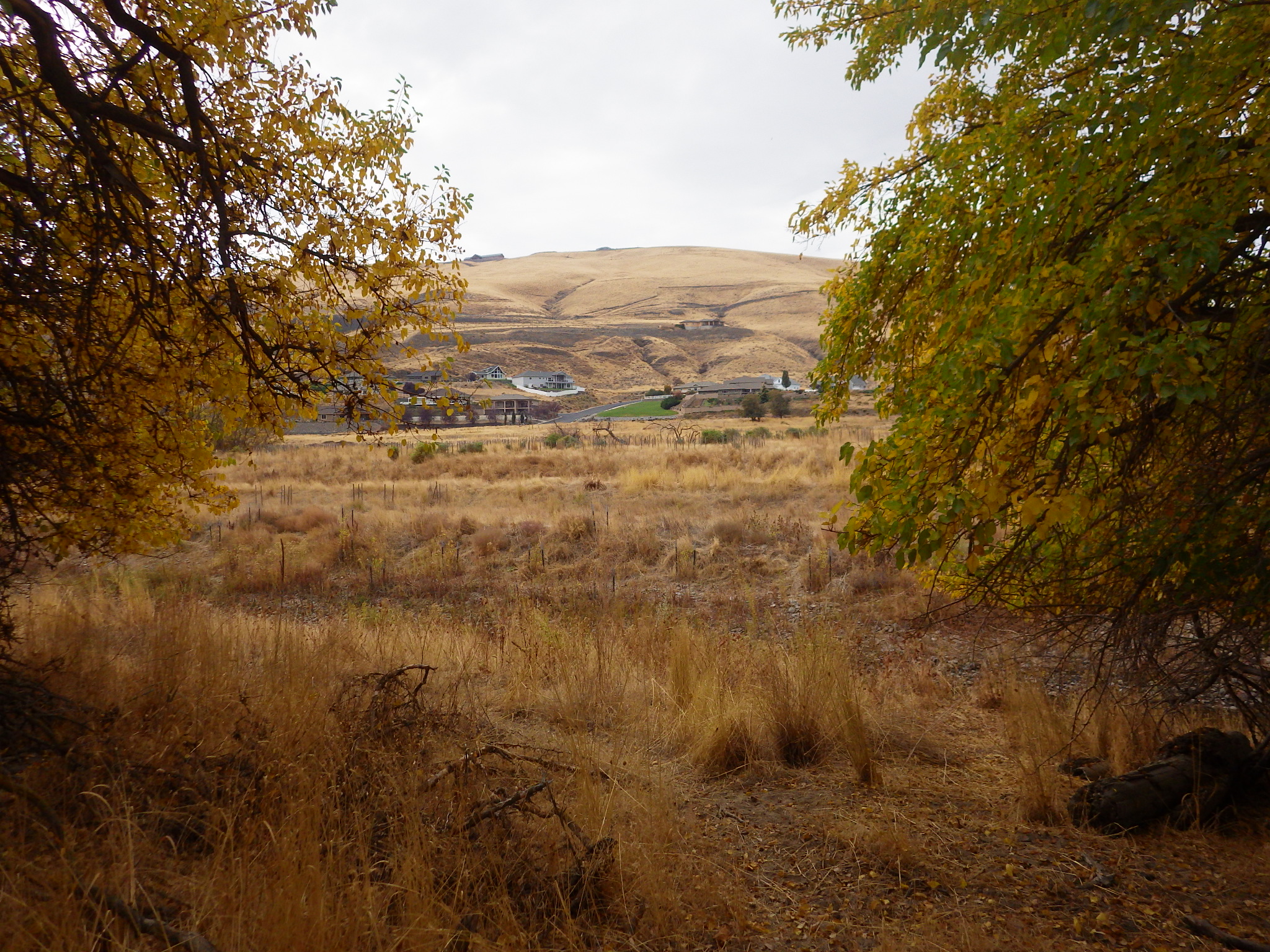
Looking south to Riverpointe, one of the higher end communities in town. I don't live there. My abode is more modest, and leans a bit to one side.

Looking south to Riverpointe, one of the higher end communities in town. I don't live there. My abode is more modest, and leans a bit to one side.

From Chief Looking Glass Park, you can follow Corps of Engineer land east along the river to get to there. (If you are, please remember that you're traversing people's backyards.) When you get to the osprey nest (tall pole, big nest, can't miss it,) drop down to the river to pick up some single track.

 Not being in a hurry, we chatted along the way. None of my son-in-laws are runners, though all three are outdoorsmen. The pace was conducive to a relaxing vent. I had a few (they were going to frame today's post, but life interfered, in the pleasant way.) Will, the son-in-law that was with me today, used to work for me long before me married my middle daughter, and he's used to some of my peculiarities, like adding running commentary to audiobooks.

Looking up the Snake River from the SE corner of Asotin. Hells Canyon lay that direction, the deepest step canyon in North America.

Looking up the Snake River from the SE corner of Asotin. Hells Canyon lay that direction, the deepest step canyon in North America.

We spotted - Will spotted - a pair of deer, does, as we left the boat launch area and entered a lightly wooded section. A couple had already bounded past with their graceful and bouncy gait. These watched us and then slowly sauntered away, mostly unconcerned. This trail is the same one that I brought the kids on a couple of weeks ago. At the start of the season, only four could run that far and get back at the end of practice. At the end of the season, it was more than a dozen. 

We broke out from under cover and stuck to the faded trails. Before the Corps had put in a bypass for the river to ensure that the flow, well, flowed correctly and that stagnate water was minimized, this used to be a favorite running route. With the channel, it's more challenging. summers aren't bad as the channel they built is dry, but winters see bank to bank water that necessitates fording in icy currents. I usually find other runs.

The single track follows along the river bank for another half-mile before it peters out in a mix of deer trails near a couple of white sandy beaches. The Corps tried planting (I'm assuming) native trees. The soils here lack nutrients and the annual rainfall matches that of a desert. The trees, shall we say, failed to thrive. Now, they look like random twigs stuck in the ground, marked by square red flags on wire sticks to mark their passing.

We looped over the far end of the new channel, working our way down the river rubble embankments and crossing to the side of the sanctuary that borders the highway. Once upon a time, the cross country team would head out to Snake River Road. A couple of close calls from speeding drivers who approach the road as though it were Le Mans, and that adventure got cut short. It's a shame we can't trust the drivers as the views up the river are spectacular.

Will and I came back along the trail I used the one -only!- time I swam the Snake River. Along with a few bruises from hitting unseen boulders, I got a first-hand appreciation of the power of the river that I used in my book, Trail of Second Chances. (an aside - I am offering free Kindle copies of Trail in return for honest reviews.)  The path wound its way past the basalt formations, and ducked through a low smattering of trees. 

In the shade of the trees, we came across a box bolted into the basalt rock. Narrow in depth, but wide, it took me a second to recognize it. Will, trained as a biologist, was much quicker. "For bats," he said. It made sense and was preferably to having the bats establish residence in the attics of local homes.

I come across bats on an infrequent basis, and almost always as a surprise. The town that I've found them in most, locally, would be Potlatch, Idaho, about 25 minutes north of Moscow. In one year, I found bats in four separate homes. They typically don't bother the inspectors, but homeowners are not fans of these particular types of freeloaders. Still, I find them preferable to termites, and in their own way, kind of cute. Definitely interesting.  . .

The trail came back into open ground as we head back to my house. We had some warning, seeing the head of a doe rising, dropping in front of us. I slowed up to see if maybe I could get a clear picture (I was using the great-grandson of the Indestructible Camera.) Luck was with me, plus I think the deer, understanding Will and I were unarmed, posed.


In all, a pleasant walk. I think the ratio ran to three deer per mile, with assorted birdlife (jay, magpies, sparrows) sprinkled in for seasoning. No snakes, which was fine with me, and a sun that came out and made me sweat the last mile.

Over the Weekend . . .

Deena Kastor, a favorite of mine, went out and broke the American Women’s marathon record, taking nearly a minute off of Colleen DeReuck’s ten-year-old standard with a sterling 2:27:47. More surprising, she was the first American female finisher. Makes you wonder what’s wrong with the ‘kids’.

I spent Saturday with the folks at the Spokane Marathon, hand-selling and signing books. Not a surprise, I sold a bunch. These are my people. The staff was fun to hang with and treat to talk to. I had a table next to Niki Sibley, who was handing out free coffee from Chamokane Creek Trading Company, a business that she owns with her husband.(Yes, I got some coffee. A Brazilian. Will sip and savor when I get a little down time, then report back.) Niki, an ultrarunner who’s run across the state of Washington, is an incredibly upbeat young lady. I learned a lot from chatting with her. She doubled as the RD of the 10K.

Pay attention! Here's some wonderful advice from Mel. The Spokane Marathon was his 453rd marathon!!!! He started competing in marathons in his 50's. #NoExcuses #AcceptTheChallenge

Posted by The Spokane Marathon on Sunday, October 11, 2015

A gentleman named Mel was the final finisher in Spokane. It was his 453rd marathon. His advice? “When the ol’ rocking chair’s got you, get up and go for a run.”

I met Lori Shauvin. She introduced herself as the "Grandmother of Spokane Cross Country." For more than two decades, she's been taking teams to the Footlocker Cross Country meet in San Diego. Lori's been so dedicated to the kids, and for so long, that she was inducted into the FootlockerXC Hall of Fame. If you don't think that's a big deal, go look at who else is in there. Very neat lady, very strong-willed. Behave or the 'Grandmother' will set you right.

Chicago ran without pacesetters. The reaction on the LetsRun board is mixed. Some love the racing, others think anything less than a world record (or at least the attempt) is worthless. Put me down in the "I love racing" category.

After spending so much time with the race staff and the competitors, I thinking that I should actually train for something. Just don't know what.

Run gently, friends, while I figure it out.


Some racing taking place in District 9 XC - And Chicago drops pacers

Once upon a time when running in the US was just starting to boom, they held races. By today's standards, they were odd little events. The participants numbered in the hundreds, not the thousands, and pacers were unheard-of.

That changed, first with Bannister's brilliant run to finally break the barrier of 4 minutes with the help of teammates Brashear and Caraway. From then, a steady evolution led to almost all major races having a pacer or a 'rabbit.'

In the opinion of many old-timers (who undoubtedly hate being called that), it's retarded the development of the sport, making it a boring affair of sit-and-kick. Gone from the racing world were the major breaks and tactical pace changes that forced the opposition to compensate.

This hit home last week as I watched the women's race at the Bulldog Invite, held at Big Cross in Pasco. For the second week in a row, I watched Emily Adams (Waitsburg-Prescott) hide for the first mile, before launching an attack and cracking open the front of the pack. The break she made at Pasco won the district race for her. Once she gained that lead, she never relinquished it. By the same token, she didn't increase it in the last mile.

Rather than sit-and-kick, Emily made a transition to a racer, broke the lead pack and dared them to match or catch her. Moves like that, reminiscent of the wild pace changes that Henry Reno used to utilized to break his competitors,  make for exciting racing. The Asotin girls are going to need to learn to cover that break out to be close enough at the end to challenge Emily.

Now Chicago is breaking with modern tradition and telling the lead pack they're on their own. It's their race, to win, to lose, on the strength of their legs, lungs, and tactics.

We'll see who still remembers how to really race.

An Apt Metaphor for Running in an Engaging Style

Shawn Hacking writes from the heart in his book, Running: A Long Distance Love Affair. The affair he describes is no longer the hot and urgent passion of the young, but mellower with the acquisition of age and, perhaps, a touch of wisdom.

Running: A Long Distance Love Affair is a quick read, humorous at times, questioning at others, with the strong voice of an author who can tell a story. Built as a series of short chapters, mostly in chronological order, Hacking takes time to anchor each piece in time, both as a runner and in the calendar. The latter he does with a nifty decision to provide a sound track for his book, building a music list a new addition for each chapter. As someone who grew up in nearly the same generation, the memories evoked brought more than one smile.

Funny enough, my daughters would recognize a lot of the tracks and own some of the music.

As with other runners, Hacking came to it from another sport. He first began to run to get into shape for football. He doesn’t mention if he ever played—I know several folks who did both in high school. He did, however, excel right from the start as a runner. By his junior season, he was breaking meet records, and aiming for state records, no mean feat.

Running: A Long Distance Love Affair alternates from the biographical to the reflective. Stories of Henry Rono get offset by a look at the late George Sheehan. As Hacking readily admits, Rono’s belief in the strength gained against the hill held more sway to him than Sheehan’s admonitions to find the play in running. I remember, imperfectly I’m sure, Sheehan commenting on beginning to run to get fit, and then to race. And when the races were over, he discovered that he was a runner again, before asking, in his final days, “Was it enough?”

Younger runners don’t have these questions, but Hacking’s book nudges up to some of these same thoughts. Yet, he manages to capture the beauty of running young and strong, when glory seems possible and the body is indestructible, at the same time. This juxtaposition, intentional or not, brings out the nature of the love affair and how apt the metaphor of running to a love affair truly is.

KenSAP

Research seems to lead me in funny directions. In the midst of tackling something totally different, I came across KenSAP, a project put together by Olympian and Professor at Kenyatta University, Mike Boit, and John Manners, formerly a journalist with Time magazine.

The organization, the Kenya Scholar-Athlete Program, started by finding a half-dozen students in the Rift Valley with promising academic credentials. Mike Boit identified them and John Manners gave them the preparation to deal with the SAT and the application process. Of that first six, five went on to attend top-notch American universities, including three to Harvard, the men realized they had found a means of making large and positive life-altering changes for their charges.

Since 2004 when they first started, they have put 117 students into the American university system. Unlike American athletes who often are given a soft glide into college (and sometimes, it extends in college, as recent revelations of massive fraud at UNC demonstrates), the Kenyan students must score in the top one percent on the tests that the country uses for students to successfully exit high school. Unsurprisingly, their success rate in the United States soars above that of the general populations of the various school. In fact, 114 of 117 students so far have earned a sheepskin, or are making timely progress to doing so.

As Caitlyn Hurley documents in her Boston Globe feature from 2013, the students were not primarily selected for running ability, though the region was. Boit and Manners headed to Western Kenya, home of the Kalenjin tribe. It is from here that Boit, and Rono, and so many of the great runners came. The presumption, born out as true, that the people of the area would be better than average directed them to search for the applicants there.

The early success of KenSAP caught the eye of Canadian Charles Field-Marsham. Field-Marsham has extensive business interests in Kenya, dating from a decade-long residence there with his Kenyan wife. His business instincts proved solid as he started what became Kenya's large stock brokerage, Kestrel Capital. He imported Komatsu equipment, helping to revolutionize the industrial sector, and then saw potential in mining. Purchasing a failed site from the government and implementing new processes, the mine is now a world-leader in the production of fluorspar. In short, Field-Marsham qualifies for the title of financial genius.

Less well known are his extensive philanthropic activities. In 2005, he began to provide assistance to the students, helping with the numerous fees involved. With the disparity of wealth between the US and Kenya, what seems annoyingly high in fees here can appear an insurmountable mountain from Eldoret. Field-Marsham extends the effort to funding two residential training sessions with the prospective scholars and a measure of support for them in the United States.

The Kenyans have a word, harambee, which means pull together. In a uniquely Kenyan way, the High Altitude Training Center and Lornah Kiplagat offered the use of the HATC for the a secure and safe environment for the program. It has since become the Kenyan home for KenSAP.

Lest I give the wrong impression, the Kenya Scholar-Athlete Program does not promote athletes. They do administer a 1500m test race as part of the qualifications. Of those tested, approximately 20 percent show the kind of promise that attract additional attention from a US university. Essentially, this is the opposite of the US system which admits less academically qualified athletes who have high athletic ability.

I'm hoping that I'll have a chance to meet and talk to both John Manners and Mike Boit when I get to Kenya to learn more about their program. I'll keep you posted.

Honest, the money is for a friend in Kenya!

I think the folks at MoneyGram, nice as they are, have too much experience with Nigerian bankers looking to give me $6,100,000 US as a favor. Certainly, when I tried to send money to Kenya, they were very nice when they said they didn't want the business.

The money was earmarked for Justin Lagat. He and I have become FB buddie over the last several months and has provided all sorts of help to me in getting ready for my trip. One dilemma that I hadn't fully resolved was transportation. The original plan was to make extensive use of matatus and taxis, depending on the length of the trip.

The drawback to that plan is the lack of flexibility. Justin contacted me about acting as my guide for about 30 days (it's 35 now) and providing the transportation. I had already made arrangements to stay at Justin's house in Kapkeringon Village for two weeks to get a feel for the region before I moved on to Iten. I took a couple of days to think it over and decided that I really like the idea of having Justin to assist me. For my family, it was a relief as they've been worrying. Actually, they still are, but a bit less understanding that I'll have someone close by to help.

So, Justin and I negotiated a fee that made sense for both of us and I went online to MoneyGram to send the funds. Set up the account at MoneyGram, hit the send button, and went about my day.

Thirty minutes later, MoneyGram declined the transaction. So I called. Apparently they are quite conscious of security issues and worried that I might be falling for a phishing scam. Fair enough. They told me that I could show up in person at one of their facilities.

No problem, as I quickly located three in Lewiston.

Turns out that you can't use a credit card, either - found that out when I arrived and filled out the paperwork. Tried a debit card and forgot that they have limits, so the poor young lady at the counter had to refund everything. It's amazing how comfortably I am using plastic in the place of paper money and how little I pay attention to the limitations.

I eventually went to the bank and withdrew the cash. The teller had the some look on her face that I imagined my mom had when I told her about my trip. A touch of humor with slightly stunned amazement conveys it nicely.

With cash in hand, I finally sent the funds to Justin. He confirmed that he had received them, so we are all set. This is one of those "I'm really glad it did it before I left" experiences since I planned on MoneyGram as my back up if I got low on cash. Now that I know what the process is, I can write up a cheat sheet for my sweetie.

With Justin as my guide, I'll have a tremendous amount of flexibility to travel and explore. From a book research standpoint, I have a knowledgeable man to direct my questions and who will know where to go to look for the answers. From a running standpoint, I can get away from the masses as Justin shows me some of the lesser known running routes.

If you are interested in visiting Kenya, give Justin a thought. You can find him online at Kenyan Athlete or Facebook.

And yes, I'll be posting from Kenya. Less than 100 days to wheel's up!


Tuesday Mash-up

USATF - New Plan to Reward Athletes

The USATF came out with a plan to share with athletes. Color me unimpressed. U.S. track and field: a ‘monumental’ step forward Based on the numbers, the USAFT is sharing ten percent of the revenue it gets annually with the athletes. Compare that to basketball, where the split is 49 percent for the owners, 51 percent for the athletes.

The second issue is that the program is explicitly designed to reward the upper tier of athletes, plus offers bonuses for medals. You're an up-and-coming sprinter? Too bad, no money for you, but Justin Gatlin, sprinter, drug cheat, gets endorsements and USATF loot.


Why Do Schools Abuse a Third of Their Students?

As an introvert myself, and with kids and grandkids that are introverts, this article read like a horror story. For all the talk in the education system of teaching to the child, the truth is that education is dogma-driven. The current dogma insists on open classrooms, group projects, and collaborative learning.

Shoot me now.

I like working by myself. For the ninnies who say the real world doesn't work like that, too bad. My world does, because that's the way I designed it.

The Dartmouth Institute for Writing and Rhetoric states students must “forego passivity in favor of contribution and participation...students must overcome isolation in order to learn to write.” Want to see me forgo passivity? Interrupt me while I'm writing. Better, ask my girls what the reaction is.


Adventure Deficit Disorder?

I like the term. I don't live it, but I can understand it. Stephanie Cohen asks whether the modern lifestyle has robbed people of their sense of adventure. Do We Suffer From Adventure Deficit Disorder?  A good and quick read on an interesting subject.

Personally, I think most people don't seek adventure. Adventures have a tendency to introduce risk into life and most people are hard-wired to avoid risk.

Some of us, though . . .


I've moved my two novels over to Kindle Unlimited. If you have a membership, you can read them for free. It's a weird (but pleasant) experience to watch the page counts as people read the books.

Book Reading

If you're free on Friday evening, October 9th, I'd be delighted to host you (well, technically Auntie's Bookstore would be hosting) for a book reading. The shindig starts at 7pm.

Or, if you're in marathoning shape, I'll be at the Spokane Marathon packet pickup on Saturday, October 10th to sign books. That runs (a pun? Me?) from 11am to 5pm. I plan on hanging out for the whole thing.

Hanging out at the Inland Empire Classic XC Meet

WIAA - Bless Their Little Hearts

The WIAA has seen fit to break apart middle school cross country squads, because their rules were built around the junior high concept. As a practical matter, that meant that we ended up with 7th-8th-grade runners, all young men, at the meet yesterday while the other nineteen runners took the day off.

Picture courtesy of Suzy Cowdrey.

Picture courtesy of Suzy Cowdrey.

As to why we had no girls, we ran into (again) the small school problem of facilities. Because we don't have adequate gym space for six basketball squads in the winter, the middle school plays b-ball in the fall. We see a goodly number migrate back once they reach high school and the schedule normalizes.

For those not familiar with the changes in the organizing structure of most schools, the old junior high system of 7th- through 9th-grade with single subject instruction (similar to high school) has been supplanted by the middle school system which incorporates 6th-through 8th-grades that focuses on team teaching. The WIAA, rather than revise the scope of activities they oversee to reflect the very real changes in school organization, created clunky rules that sometimes allow younger students to participate with their friends a year older. Mostly, though, the rules exclude student participation and split a third of a middle school team from the rest of the program. Foolish.

Inland Empire Classic Meet

LCSC Coach Mike Collins and all of his athletes that volunteer to work the event again put on a terrific meet. My four, all young men, ran a 3,000 meter course - the longest they'll face this year. All of them did well, with three of them PR'ing. More importantly, I loved the effort I saw from all of them.

I'm beginning to think that Mike Collins is an organizational genius. All the races started right on time and a total of 566 athletes raced the Lewis-Clark home course. The biggest race was the junior varsity men with 170 participants. Eleven middle school teams ran, from Waitsburg-Prescott from Washington to Timberline from Weippe. Twenty-eight high school teams made the trek, coming down from Spokane and Sandpoint, up from Grangeville, and over from Kennewick. The event continues to grow.

Koby Harris was the solitary runner for W-P and he joined our kids for the start, even doing a little final bit of warming up with them. He ended up right in the thick of things, a little ahead of one Asotin runner, a little behind another.

One point that I emphasized with the youngsters yesterday was the final kick. I made them two promises about that kick. First, it would hurt. Second, it wouldn't kill them. As they mature, I'm watching them accept that they can do more than they expected. Saw a lot of nice efforts at the end of the race. None of them died, so I didn't have to worry about having lied to them.

My coaching day finished at eleven, but I stuck around to play cheerleader. It's been a while since I yelled myself hoarse. Managed it while logging a pretty good fartlek workout, trying to get to the various points on the course. The way that Coach Collins laid it out makes the xc course very spectator-friendly.

During the women's varsity race, I got to encourage two freshman that I had last year. Carmen Eggleston and Maia Dykstra are off to nice starts for the their high school careers. The best race of the day for the Asotin women got turned in by Maria Eggleston, the only Eggleston girl that I didn't have the privilege of coaching. Maria just kept moving steadily through the pack to eventually finish with another PR. I'm not sure she realizes it, but she's run three different distances so far this year and PR'd at each one.

Kat Stephenson is another lady PR-ing every race right now and took third. Christina Vantrease scored in the fifth spot.

The best moment of the meet, from a coach and dad's perspective, was watching Adrienne Washington of Asotin fighting her way to the finish line and getting a huge hug from Maria. The young lady is running with a tweaked ankle from last week's meet and a broken wrist that she's dealt with all season. She's a gutsy kid, but she's digging deep into her reserves. Maria saw it, I think intuitively, and reacted. The folks of both have reason to be proud.

The men's race watched locals grab the top four spots, with Lewiston's Austin Byrer and Joey Perez taking first and fourth, Thomas Weakland of Asotin taking second, and Logo's Josiah Anderson snagging third with a nice tactical run. Eli Engledow and Thomas Martin, both freshman, seem to be getting the hang of the running thing. Nate Prior and Zack Sokoloski continue to improve.

I think the chip timing got a mite goofy as it has Samantha Nicholas running in the men's race - pretty sure I saw her in the women's race. When the final results go out, Asotin will drop one place as the inadvertent chip-reading gets removed.

The inland Pacific Northwest has some excellent high school running right now, men and women, much of it on display yesterday. Now, on to Tuesday when the sixth-graders get to show their chops.


Adding to my schedule - I'm doing a book reading in Spokane at Auntie's Bookstore for those that can make it. That's Friday, October 9th at 7:00PM. The next day, I'm going to be selling and signing books at the Spokane Marathon packet pickup.

Rhythms

A missed Skype session turned out to be exactly what I needed this week to improve my running consistency.

To beat the heat of summer, I had also shifted most of my runs to early morning hours - an experiment that worked better than expected. Lately, though, I started finding excuses to not go out the door.

Also, since cross country started, my schedule went a little out-of-kilter. Pretty normal as I adjust to the different time for the runs and the odd nature of running with youngsters, some of whom can kick my butt in a mile, who can't hang for three. I do believe I've mentioned previously I'm slow. I end up running shorter but faster than normal with them. Laughing a lot, too - yesterday we did a hill grinding session, wore them out. Until we told them they could, as a one-time-offer-good-for-today-only,  run up the thirty-foot high dirt mounds. Amazing how fast junior high kids recover as they laughed and shouted and climbed the loose rock and sand.

Anyhow, I was supposed to Skype on Monday with Jack Welch. Not the GE CEO guy. Jackdog. Awesome dude who's become a friend over the last couple of years. (Has a great book, too!) Got up a couple minutes before the main alarm - we use three alarms in the house. The first is the snuggle alarm, plays positive music. The second is the main alarm a raucous get-your-buns-out-of-bed alarm. That's the one my sweetie gets up to. The last is my alarm and the voice of Enya tries to coax me into the day.

Rose on the first alarm, set up the computer in the near-dark because the season is shifting and what was bright sunlight a month ago is pre-dawn now. Made coffee. Logged into Skype - and discovered their network was down. No chat that day for Paul and Jackdog. Sadness.

Standing there as the edge of the sky brightened, the change of season finally struck. Motivation for the morning run was getting hard, not because I was getting lazier, though that's a frequent possibility.

Nope, I was out of rhythm.

My best (and most creative) sleep comes in the hour before dawn. When I used to drive truck for a living, I'd have to pull over to nap or risk putting the trailer in a ditch. As soon as the sun was fully up, I'd shift gears and get back on the road.

I spent about an hour yesterday rearranging my schedule, tweaking the writing time, the work time, and deciding where running would find its place. Turns out, back in the evening after work. A consistent time every day and the variability of my courses will improve because I don't have to worry about getting back to the house on time for work.

I woke up today, and lollygagged. Made the coffee, and started writing. Right in rhythm.

Tonight, I have a six-miler planned and, instead of a gotta-run attitude, I'm looking forward to it with a get-to-run smile.

Now I just need to reschedule with the Jackdog.

Run gently, friends. Find your rhythm and go.

Fitness Advice from the 1 Percent

Occasionally I find myself annoyed by people who decide that they need to proselytize to the rest of us. In this case, it's an article that someone recently tweeted about from Time magazine. Before that, it showed up in Entrepreneur magazine. Here's the article: Why Exercising Is a Higher Priority Than My Business. Go read it, or just move onto my cantankerous take.

As with most reformed individuals, Josh Steimle starts with a "once I was fallen" paragraph, talking about the early days of building his business and how he fell into the trap of valuing it above other things, including his health. He then moves on to talk about how the changes he made, how much more effective he is now that he is exercising ten hours a week, and finishes about watching his employees fall into the same trap that he did.

What he leaves out of his narrative are two critical features. First, when you are building a business, it's an all-or-nothing proposition. If the business doesn't succeed, you don't eat. Your family doesn't eat. You end up sleeping in a Hugo in the warehouse district and listening to hobos singing around a fire in a barrel. Of course he worked like mad and ignored things not directly related to building his business.

No sensible person goes into business with an intention to fail. The ones that make it are single-mindedly focused on whatever legally, morally, and ethically it takes to reach their definition of success. (I separate out those that don't operate legally, morally, and ethically as they aren't businesspeople - they're crooks.)

The second point where Steimle takes a disingenuous tack occurs when he talks about setting up incentive programs for his employees. While he freely states that he'll put off a meeting with a major client to get a run in, he doesn't go so far to say that he'd permit his employees to do the same. Instead, they get an incentive program - which the cynical among us might suggest also lowers the insurance rates for his company.

The difference in the way he treats himself and the way that I suspect he treats his employees mirrors the difference in their relationship to work. He has full control of his schedule. Most people do not. If you are working at Arby's and tell the shift manager that you have to check out for an hour for your noon run, he or she will escort you to the time clock to bid you a firm and final adieu.

I'm not picking on Arby's. Teachers can't just bomb off the job for a trail run unless it lands on their lunch hour - assuming that they're not busy then, too. Factory work? The same. Construction? The same. The hospital? The same. Patients don't care for themselves.

Josh Steimle recognizes the value of exercise, so much so that he pays his employees to cover his absences. His advice, to place exercise above work, sounds great - if you are part of the five percent of the population that works for themselves or has reached the upper reaches of a company that allows you to dictate and delegate down to free your time. I'm fortunate enough to be in that category (working for myself) with Steimle. I schedule my runs and yes, they make me more productive and happier. I also recognize that I'm an outlier.

I'll agree with the mantra that all people control how they use their time, but offer these amendments. If you need to put food on the table, you acquiesce to the boss and work the hours demanded. A stay-at-home mom has a choice, and the control, between running and consoling a crying infant. Which is the higher calling, exercise or your responsibilities to others?

There are many events that justifiably move exercise down the priority ladder. It shouldn't be that hard to acknowledge them and, instead preaching down, find a way to lift up.

Run gently, friends.

If you're in Spokane at 7pm on October 9th, I'm doing a book reading at Auntie's Bookstore. It would be great to meet some of you in person. 

Vaccinating for Kenya

My grandkids and I share a similarity of late: we’ve all been getting shots. In their case, the vaccinations are the usual battery of childhood immunizations while I get to play with the more exotic ones as a reward to traveling to Kenya.

I need HOW many shots!?Photo Courtesy of George Hodan

I need HOW many shots!?

Photo Courtesy of George Hodan

The Centers for Disease Control (CDC) recommendations form an impressively long list of diseases to guard against in Kenya. None are strictly mandatory for travel to the nation (the exception is yellow fever if you are coming from an area where it is prevalent, which the United States is not), but most are recommended.

The CDC presumes that you’ve had all the normal childhood immunizations. If you haven’t, add them to the list. I’m not going to take time to go over them except for the ones that I needed boosters for.

The List:

Yellow Fever – a viral disease, yellow fever kills about 30,000 people per year, mostly in Africa. It’s spread by mosquitos, and once the disease starts, there are no effective treatment options except to let it run its course. The disease runs through a primary course of symptoms that read like flu: headaches, fever, chill, muscle weakness, nausea, and vomiting. The second phase, affecting about 15 percent of cases involves liver damage, bleeding from the eyes and mouth, as well as vomiting blood. Some 20 percent of these cases result in death. I opted to get the vaccine. Not required, but it seems prudent.

Hepatitis A  – Hep A and B are strongly recommended. I love the comment I came across on one site – “If you are an adventurous eater . . . “ Seriously, I am not traveling all the way to Eldoret to eat at McDonald’s. Most of the time, I will be eating locally. Hep A covers the food and water issues. I’ll take my chances with the food. Andrea Kaitany with Simbolei Academy has already sent information on where to get drinking water along with a ton of other great advice and Justin Lagat will be helping to keep me out of trouble, too.

Hepatitis B - The CDC recommends Hep B if you might have sex with a new partner, get a tattoo or piercing, or have any medical procedures. Nope on the new partner (still in love with the one I got), and I don’t believe in self-mutilation, so that covers the first two. The third one, medical procedures, isn’t planned, nor is any activity that involves contact with someone else’s blood. OF course, getting mauled by a lion isn’t on the agenda, either. I got the Hep B as insurance, just in case things go bad.

Typhoid – Another viral disease, typhoid kills about 160,000 people per year worldwide. For folks in the United States, don’t get too complacent. Four hundred cases per year are reported here, with the CDC estimating that there are about 6,000 cases annually. With proper treatment, the survival rates are very high. I would rather not test the proposition, so I followed the recommendations.

Diphtheria, tetanus, and pertussis – I flung these together because the same TDAP vaccine covers them all. For adults who travel to Kenya, the CDC recommends getting this if you haven’t had a booster since childhood. Count me in that group.

Polio – Thanks to Jonas Salk, the idea of an outbreak of polio in the United States seems farfetched. Still, such an outbreak did occur in Kenya in 2013, likely a result of a fatwa in Nigeria which declared the polio vaccine an evil American plot to sterilize the true believers of Allah. If weren’t for the negative impact on herd immunity, I’d let the chuckleheads live (or not) with their decision. I got the booster.

Meningitis – The Kenyans in the North live smack-dab in the middle of the meningitis belt of sub-Saharan Africa. The CDC recommends getting this if you’re planning on being in the country during the dry season, December to June. Better safe than sorry.

Rabies – One of the few vaccines that opted out on, rabies is prevalent in most undeveloped countries. I’m figuring that if I get bit by a rabid rhino, I’m going to need other attention and will get the post-exposure vaccine. Interestingly enough, if you have the pre-exposure vaccine, you still need the post-exposure shots if infected.

Malaria – If, as Ben Franklin famously didn’t say, beer is proof that God loves us, I want to know what’s up with mosquitos. It’s not just malaria. They also carry yellow fever, encephalitis, dengue fever, and Rift Valley fever. Probably more, but that’s a goodly list to worry about. There are several medications available to guard against malaria, taken orally. Because it is located above 2500 meters, Nairobi isn’t considered a risk area. At 2400m, Iten is. I’ll be taking the meds because I don’t know all the places that I’ll be going. It is quite possible that I will be in malaria-prone zones.  Two options exist (different areas need different medications), Malarone and Doxycycline. I’m opting for the Malarone. Doxycycline can lead to increased sensitivity to sunlight and sunburns.

Optional Medications

Much of Kenya and the Great Rift Valley is above 7,000 feet. Iten is at 7,900’ (2400m as previously mentioned.) If you are prone to altitude sickness, consider getting a prescription for it. Fortunately for me, I’ve camped, run, and stayed with friends above that altitude without issues (except I run even slower.)

One of the items that the doctor recommended for me was medicine for traveler’s diarrhea. I declined these. If it becomes a problem, I’ll take care of it there. Your comfort level might be different and it’s something to consider, especially if you only have a short visit planned.

The Cost of Travel Vaccines

The good news is that the shots, for the most part, don’t hurt. Not so the cost of getting the shots.

Most healthcare plans in the United States do not cover the cost of travel vaccines, considering them to be an elective process. The best review of costs that I found was here. Remember that the figures for malaria meds need to be adjusted for your actual time in-country. In my case, they’re going to run to about $350. This is one that I want to see if the in-country costs might be lower.

I strongly advise shopping around for your providers. I ended up getting my yellow fever vaccine at the local health district while getting the rest at the Safeway Travel Pharmacy in Pullman.

If you’re budgeting for the trip, plan on $1,000 for the base course of vaccinations and another $200 per month of travel for the malaria medications. It sounds expensive, and to a degree is, but if you’re planning a trip you’ll remember forever, the shots are worth it. Let’s remember the trip for all the right reasons.