Reader Friday: What would you ask a Kenyan runner?

Yes, this is a cheap trick to get somebody -even family - to comment on the blog. Not that a lack of comments will stop me from writing it, but I'm feeling a need for human interaction. Normally when such a feeling hits, I go for a run but I did another eight miles with 2000' of gain yesterday. Today's a gym day . . .

So, to the point.

If you could go to Kenya and ask someone there any one question, what would it be? Would it be a particular Kenyan? Or would the man/woman in the street do?

A Calvin & Hobbes Life and A Far Side Death

One of those chain emails came around, this time about old age - which, sadly, is sitting on the horizon waiting expectantly and, hopefully, patiently.

In this email's case, it was a clump of nine sayings about getting older.

I objected a bit to #4 -

Health nuts are going to feel stupid someday, lying in the hospital, dying of nothing.

Nonsense! None of the health nuts I know (and I might be considered one myself) have any intention of dying in bed.

Nope. We plan on going places, doing things, spitting into the wind. When you treat as many moments as possible as an opportunity to play Calvinball, a game with no rules except those you make up on the spot, you actually get to live life, not merely shift along from day to day, hoping not to get yelled at. Newsflash: somebody is gonna to yell at you, it won't be fair, and why are you listening to that ninny anyway?

I was conversing with my mom a while back, talking about passing, and made the comment that I'd probably get eaten by a bear and was hoping to get some great pictures.

A Bear! click

Charging! click

Bear Close-up, plus bonus bad breath! click

Fearsome Fangs, Powerful Paws, Ouch, those Claws! click

Maybe one last picture, of the ground, for dramatic impact.

That bug you? Why?

At least, on my way out the door, I'm living. Beats waiting around, never taking a chance, hoping good stuff happens instead to trying to make it happen.

You've got a finite amount of time on this here earth. YOU get to be in charge of how you spend it - unless you really want that bossy person, whoever he/she is, to be in charge. I guarantee you, though, it won't be nearly as fun, not nearly as productive, and hey, that bed you're dying in at 107? Great place to think about the chances you passed up, greatness that you didn't go for.

That's not for me, or anybody I care for.

Give me a Calvin and Hobbes life, a Far Side death, and Peanuts in between.

That'll be five cents, please.


Tim Tays, the Interview

Tim Tays sat down and wrote an unflinching look at his running life, Wannabe Distance God: The Thirst, Angst, and Passion of Running in the Chase Pack. Covering his evolution as a school boy phenom, to his years as a Kansas Jayhawk, and beyond, to the injury that derailed his hopes of cracking that last upper elite, Wannabe Distance God touches poignantly on the desire, disappointment, and acceptance of young man's struggle to match his own expectations.

After reading his book, I wanted to sit down and talk with Tim. I reached out to Tim and he graciously agreed to be interviewed. Distance presented a problem, the internet provides the solution, and we did the interview by email. (I love technology when it works.)


Paul  I love the title of your book, “Wannabe Distance God.” I know that some great runners - Bill Rodgers, for example – have read your book and been favorable. How are the more everyday runners reacting? Are you getting some feedback from them and what kind? A lot of us are wannabes, too. . .

Tim Tays - I got feedback from everyday runners as well as elite runners. Because this was my first published book (and my first attempt at marketing a book), I learned that distance runners are not a homogeneous population. While writing WDG I thought anyone who ran would want to read about the running experience. But I discovered that weight-cutting joggers are very different from mileage-piling distance runners, who are very different from time-dropping competitive distance runners, who are very different from T&F News-reading distance running fanatics. I guess I thought everyone who ran was a distance running fanatic like me.

So to directly answer your question, it wasn't name dropping elite runners from the Golden Era that resonates the most with everyday runners. It wasn't even how fast I was or was not. It was about my personal psychodynamics that led me to hardcore distance running the everyday runner enjoyed the most. They also enjoyed our shared experiences regardless of the level we eventually attained or how badly we wanted it. It was about the shared struggle, the shared feelings. I also wanted to give the chase-pack runner a voice, because I certainly couldn't write from the perspective of an elite runner.

I researched the market, and took stock of what I wanted to write about, and decided that the voice of a chase-pack runner was missing. Everyday runners are somewhat aghast at the commitment, work, and struggle involved to try to become elite. Elite runners enjoyed the interpersonal camaraderie and rivalries we all experience on a team and in races.

Paul - In Chapter 16, War Paint, you talk about Alberto Salazar – mostly favorably – but you take him to task a bit for his comment “It certainly wasn’t due to physical talent . . .” A lot of runners will agree with you that talent is inbred. You were a worker, and also talk about his other point, that running well is incredibly hard work, long before you hit the track. How frustrated did you, or do you, get when you see people with true talent that won’t do the work? Has that attitude changed over the years? 

 Tim Tays - When I strove for distance god status I saw many people more talented than me who wasted it by getting distracted or lazy. I liked it. It meant I had a chance to outwork them and maybe beat them. After my running career ended and I became a high school coach, I continued to see very talented runners, some of whom wasted their gift. All I could do was pull them aside and inform them about the consequences of their action (or inaction). Some boys did what I recommended and their times dropped. Other boys did not make the commitment and their performances reflected that. But being in my 30's by then, I knew the life lessons they learned were more important than how fast they ran in high school.

Paul I joke that writing and publishing a book is like parading down Main Street naked, that the best authors strip themselves bare emotionally. In Wannabe Distance God, you’ve done exactly that. How painful was that and what part was the hardest to open up about?

Tim Tays - It was not a painful process for me at all, despite my "nakedness." It was joyous. I loved revisiting my years on the track and roads. I mean, sure, I felt loss and grief remembering my limits, failures, mistakes, and losses, but emotional trauma is treated by going through it again. On the other side of the telling it feels just a bit better.

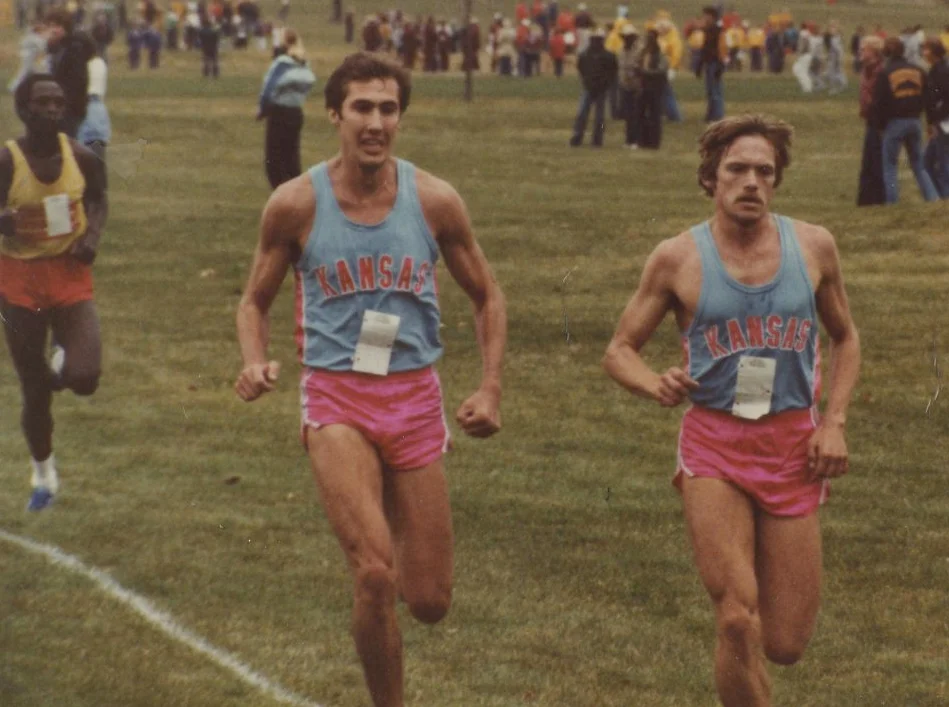
Tim Tays (Left Kansas racer) and Paul Schultz (right)

Tim Tays (Left Kansas racer) and Paul Schultz (right)

Also, keep in mind that I got to relive the wonderfulness of the whole running scene. To have people enjoy and empathize with my journey is very validating, something most people don't get to have because they don't write memoir. Some of the hardest things to tell about were my youthful mistakes (e.g., pissing in an elevator, abusing alcohol, holding grudges, overly competitive, etc.). But I decided that the only original story I had to offer was my unique story, to include the victories and defeats, the awesomeness and the stupidity. If I was less than authentic readers would see right through it and set it down.

An advantage I had as a clinical psychologist was I knew it was our vulnerability that endears us, that bonds us, that builds trust. So I took a risk to tell the truth so that my readers would trust me. Only one person—out of the hundreds who have read my story thus far—has attacked me for telling my truth. I like those odds enough to write another book.

(Virtual interruption from Paul – Please do!)


Paul - The stories today about performance enhancing drugs are nearly non-stop. During your most competitive years, did you ever have to worry about your competitors having an unfair advantage?

Tim Tays - I worried about it, sure. Back in the 1970's and '80's we worried that blood doping would put us at a disadvantage, but I never knew anybody that did it. In fact, my impression of distance runners was scrupulous honesty around everything regarding training and racing. Maybe I was naive or just lucky, but I never knew any cheaters. Me? I always took pride in my integrity as a distance runner, and I perhaps projected that onto my teammates and competition. Didn't we all love distance running and would never do anything to hurt our sport or spoil our effort? Today when I hear about runners (usually sprinters) using PEDs my blood boils. How dare they?!

Paul - You explain at length about your early OCD behavior. I found it interesting that you use the experience to assist in helping others in your practice. Normally, when the general public considers true OCD behavior patterns, it is with a very strong negative connotation. What other areas have you noticed that it helps in, where it might serve a positive purpose?

Tim Tays - Everyone has anxiety because that's what's normal for humans. However, when we have too much anxiety it may take the form of an anxiety disorder such as OCD. In my case I channeled my compulsiveness (holding my breath, stretching my mouth, etc.) into something more socially acceptable and productive (i.e., distance running). Lots of people do that. Maybe it manifests as straight A's in graduate school, or a super clean house.

The problem is the person is not in control, the OCD is. In my case it led to lots of mileage, but with occasions of over training and injury. A better approach would've been to train smarter, not just more and harder.

I no longer suffer from OCD, but I still need to be vigilant. One of the best things about my past struggle with OCD was not only getting more high-mileage weeks in, but today in my practice I understand on a gut level what my clients are going through—how crazy it is but you still need to do it—and I know there's a way through it. 

Paul - You took a year off from Kansas after the tragedy of losing your mother. You worked at a metals supplier and ran in the mountains. Do you think that the year off from structured competition helped you gain perspective on the relationship you had with her? With running?

Tim Tays - This was a very difficult question for me to answer. In fact, I skipped it and left it for last. I had to think about it. Hmm.... Thirty-four years has given me perspective, but you ask about a single year, 1980, the year of her death, when I was twenty. I was devastated. I was liberated. I adored my mother. I left home at seventeen to escape her. She gave me God and my world view...and then she took it away when she became a martyr. So no, I guess in the year she died I gained zero perspective, I just ran my ass off as usual. In the decades after, yeah, I've had to decide what my personal world view is, how it is different from hers, how disappointed she would be that I am not a Christian Scientist, and how proud she would be of how I've found my own healthy path in life. 

Paul - Tim Gundy, a friend of mine, a heck of a runner, and an even nicer person, was a teammate of yours at Kansas during your senior year when you held the captaincy and considers you one of his running idols, someone for whom he has tremendous respect for. He wasn’t aware of the issues you bring out in your book. How important was it to you to keep the focus on the team and not on yourself? Was that part of your recovery process, even if you didn’t realize it?  

Tim Tays - I didn't realize I hid myself. I just wanted to kick ass. Cross country and track were such individualized sports that, as a young man, I generally lost sight of what the team did. I wanted to do well, and if the team also did well that was great, but the absolute minimum was me whupping bags of Big 8 butt. My attitude was the better I ran the better it was for the team, so I focused on myself.

Tim Tays, racing indoors at Kansas, date unknown.

Tim Tays, racing indoors at Kansas, date unknown.

That said, I was too self-centered and could've been a much better captain than I was. I didn't receive much guidance as a kid, and so I assumed others didn't expect it from me. I led by example. I showed up, tried to lead the workout, and went to the library to study. It was simple in college, right?

In retrospect I should've reached out to the younger runners, encouraged them. But I feared other runners would beat me and prevent my success. I was afraid that I wouldn't be somebody. I wish I had been more mature, but I've mostly forgiven myself for my immaturity as a late-adolescent. Also, realistically, in a hyper-macho environment like DI athletics I shared very few of my vulnerabilities.

Certainly today, I'd let in someone safe like Tim Gundy, but at the time, I felt intimidated and competitive. Gundy would end up a sub-4 miler, which could easily have bumped me from the mile lineup or off a relay. I'd enjoy my teammates and the experience more if I could do it over again. As a coach I encouraged my runners to enjoy each other and the short shelf-life of high school and collegiate distance running careers. 


Paul - After the tale of the All Military Track and Field Championships and your injury, you flash forward to the 49 year-old version of you. The intervening years you didn’t run. When you started to run again, was the running this time more precious because you hadn’t been run for so long?

Tim Tays - Oh, yes, I savored it. I thought I would never run again. But as I rounded into shape, "Timmy Two-Mile" returned, just as immature and driven as before. I so enjoyed racing again and returning to the Boston Marathon. I learned that putting me back in a similar situation I responded as I had 25 years before because that part of me hadn't grown. That part of me still wanted to kick ass and take names, to be a distance god. So I reevaluated my expectations and learned to enjoy being a distance runner even if I'd never be a distance god.


Paul - You’re a wannabe distance god. Which distance god did you wannabe? (For me, it’s Emil Zatopek, btw)

Tim Tays - That's such an easy question for me: Jim Ryun. I guess he's technically a middle-distance god, but he was a distance runner to me because I became aware of him in junior high and high school, when running the mile was considered a long way to run. I went to Kansas University to be like Ryun and train under Coach Bob Timmons. It was a dream come true for me at seventeen years old. Thirty-five years later I sent a promotional copy of my book to Ryun, which he read but told me he could not endorse it and hoped I would understand. I'm sure he had good reasons, but still I was crushed.

So even well into my fifties I'm still getting reality checks. It's probably good for me. It's probably building my character in some way I don't even know that I need. Anyway, nowadays my answer is still Jim Ryun, but I need to add Billy Mills, whose graciousness blows me away, and Bill Rodgers, the most ego-less celebrity I've ever met (online). They are incredible ambassadors for distance running. 


Paul - Last question: You have a metaphysical hotline to young Timmie Two-Mile and a lifetime of perspective to share with him. What could you say to him that he might listen to? Would you?

Tim Tays

Tim Tays - Listen up, Timmy Two-Mile, you don't need to run to be a good person. That said, if you choose to run, then run smart. Keep the drive and the passion, but rest when you should, eat a healthy diet, find a running club for support (the lone wolf thing is too hard), invest in friendly relationships, draft more instead of impulsively moving to the front, and enjoy the ride.

Would Timmy Two-Mile listen to me? He would probably listen respectfully, nodding and smiling, and then surge to the front of a hot race, try to burn and bury runners way better than him, get into oxygen debt, fade, finish in the chase pack, get pissed off, up his weekly mileage, and then do it all over again next week in another city.


My thanks to Tim Tays for the opportunity to interview him. The book cover image at the top will take you to Amazon to purchase the book - though I expect you can find it elsewhere, too. My thanks to Tim Gundy for pointing out the book to me - as runners turned writers, we don't have big publisher marketing budgets. A lot happens by word of mouth, so when you're done with Wannabe Distance God, I'm sure that Tim Tays would appreciate you passing on the word.

Thanks everybody. Run gently out there.

Paul Duffau

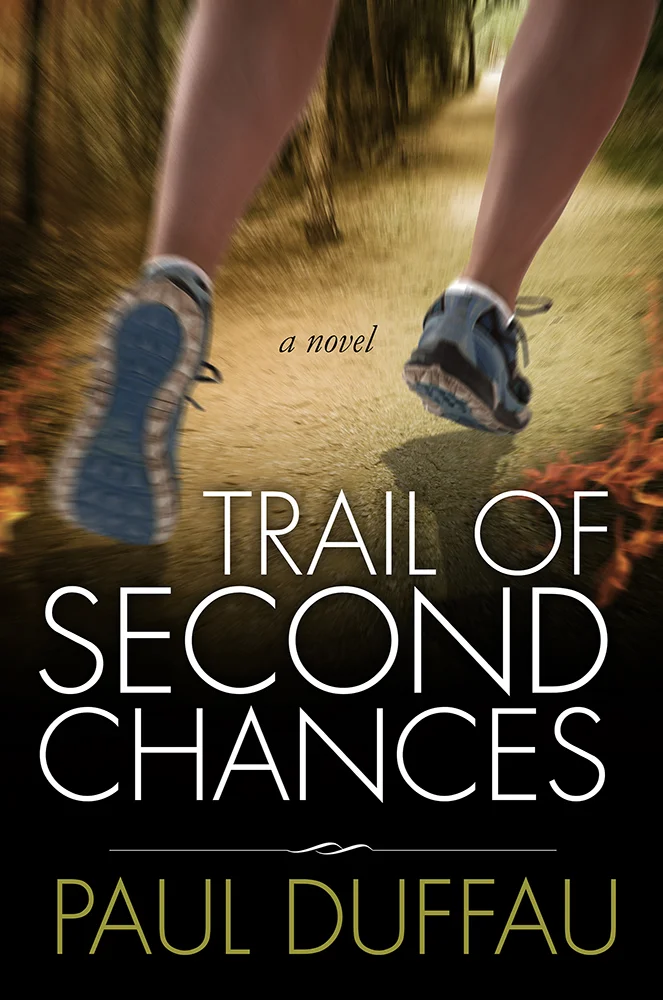
Paul is the author of two fictional tales of runners: Finishing Kick (recognized by Running Times in their Summer Reading list July, 2014); and his newest novel, Trail of Second Chances. He blogs on the running life and interviews people that he finds interesting.

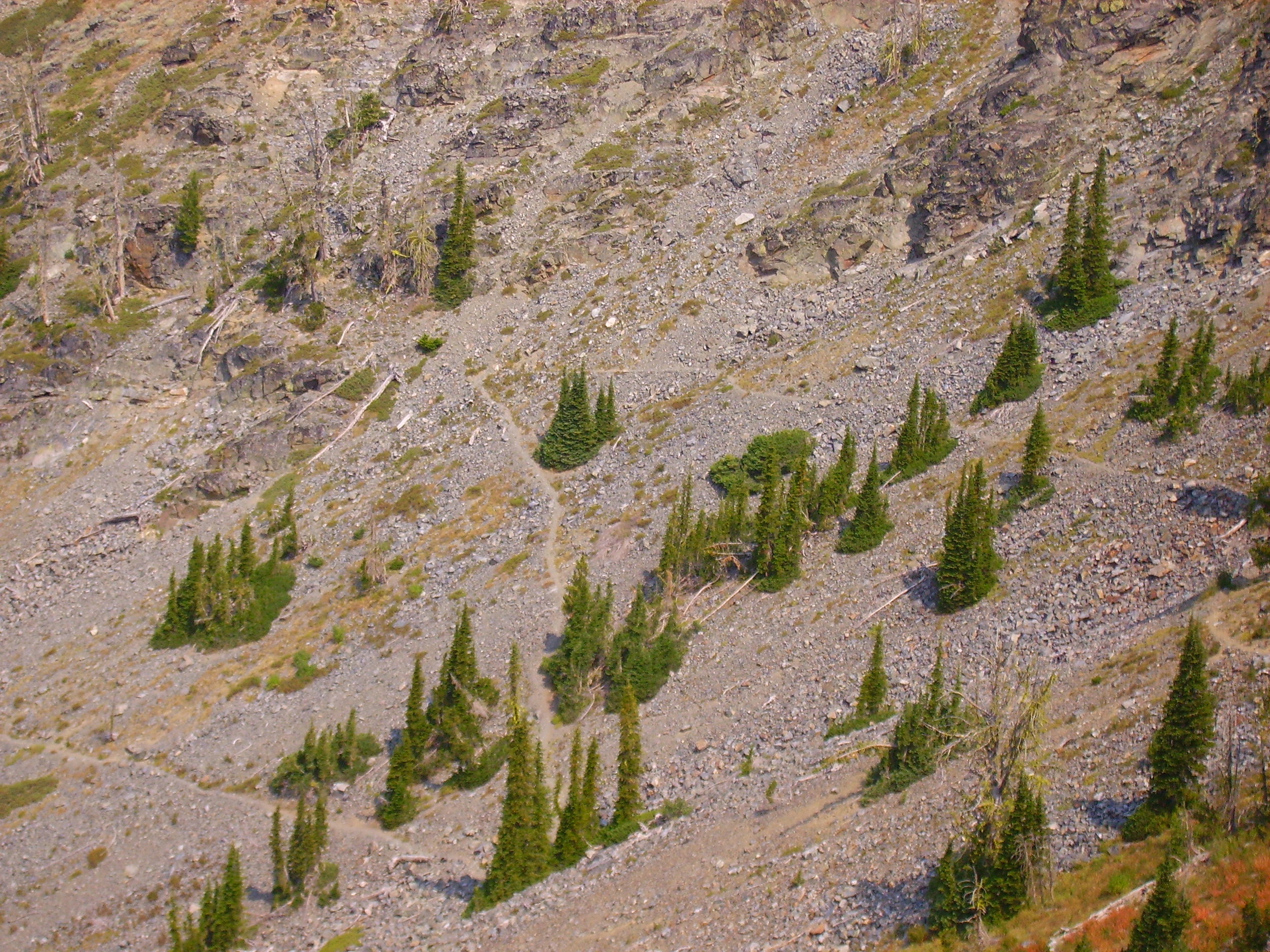
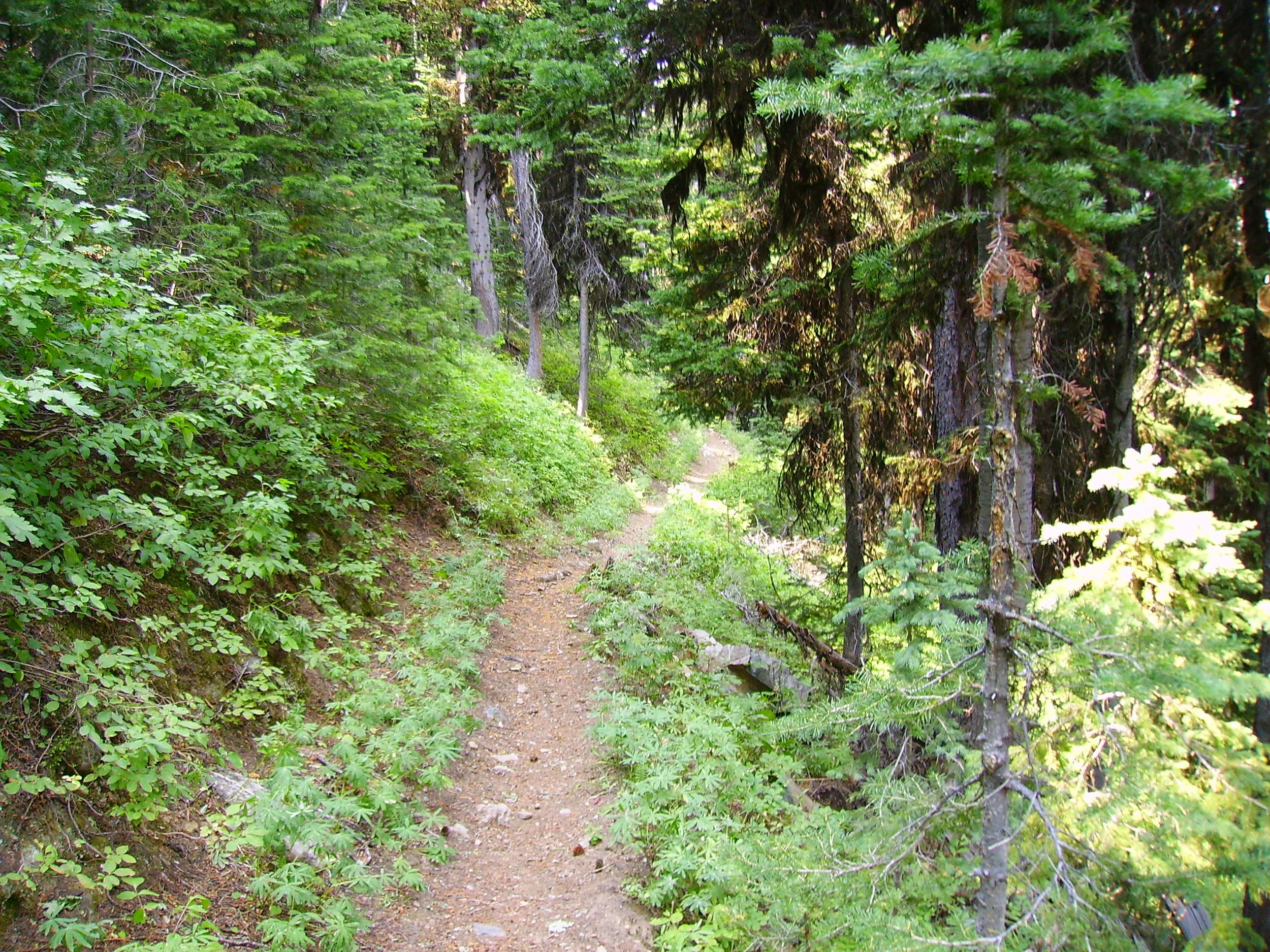
Trip To Bald Mountain Trail Pictures

I posted a picture of what my shoes looked like when I was done yesterday but thought folks might like to see the trail itself, so today is more photo essay than usually. Don't miss tomorrow where I'll have an interview I conducted with former Kansas standout Tim Tays about his book, Wannabe Distance God.

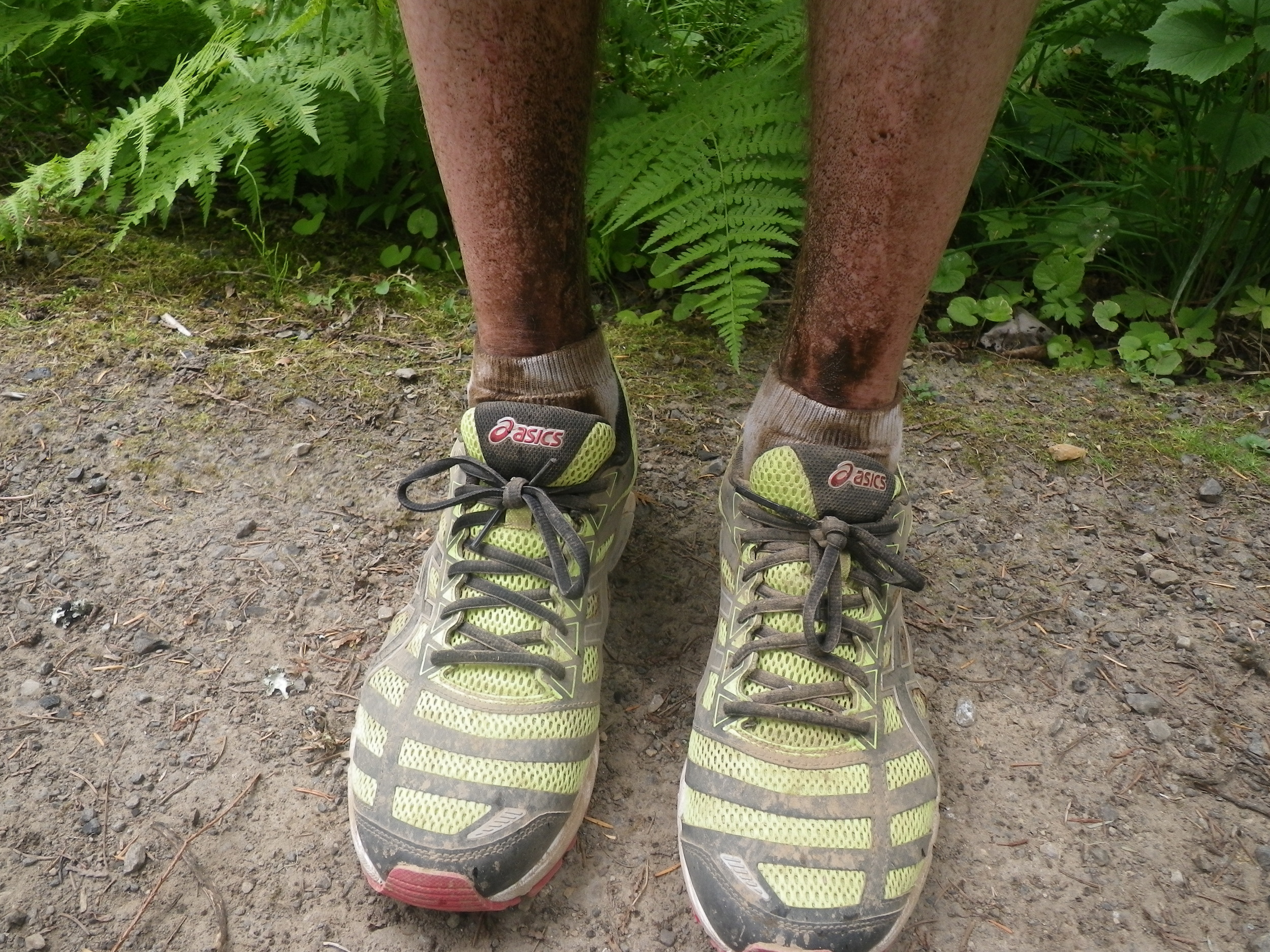
First, the stats again. 17 miles, 4642 feet of elevation gain, 5 pounds of water loss, two very dirty legs, 1 happy trail runner. Here's the start . . .

Giant White Pines trail head.jpg

A couple pulled into the parking lot behind me and unloaded their bikes as I headed out. The first uphill, which starts just past the above picture, is a grunt. There's no easy warmup on this trail but it's certainly pretty. I discovered pretty quick that the ankle I was worried about wasn't a problem - it was the calf. Almost turned back, which would have been sensible. It also would have been out-of-character. I pressed on . . .

Giant White Pine, Trail 228, first hill

It levels out as it reaches the first top - this isn't a straight uphill climb - you climb and drop several times.

When the sun broke through, the forest nearly glowed. The day stayed mostly overcast and in the 70's - perfect running weather and a relief from the triple digit heat of the past two weeks.

Bald Mountain Lookout 5 miles signs

Welcome to the Forest Service. It goes thataway. Might be 5 miles to the lookout. Or not, since none of the signs are accurate - and they span a mile and a half of trail. Dispiriting my first time on the trail a decade ago when it was 100 degrees out. Now I laugh. Silly Forest Service!

Stop sign in the woods Trail 228

This sign just flat pissed me off. Want me to pack it in, pack it out? No problem. Could I ask you not to visually pollute the trail? Put the stop sign on the road - yeah, the drivers will ignore. So did I. Stupid Forest Service!

HURDLE!

Some very runnable trails. Not nearly as flat as it looks here, though.

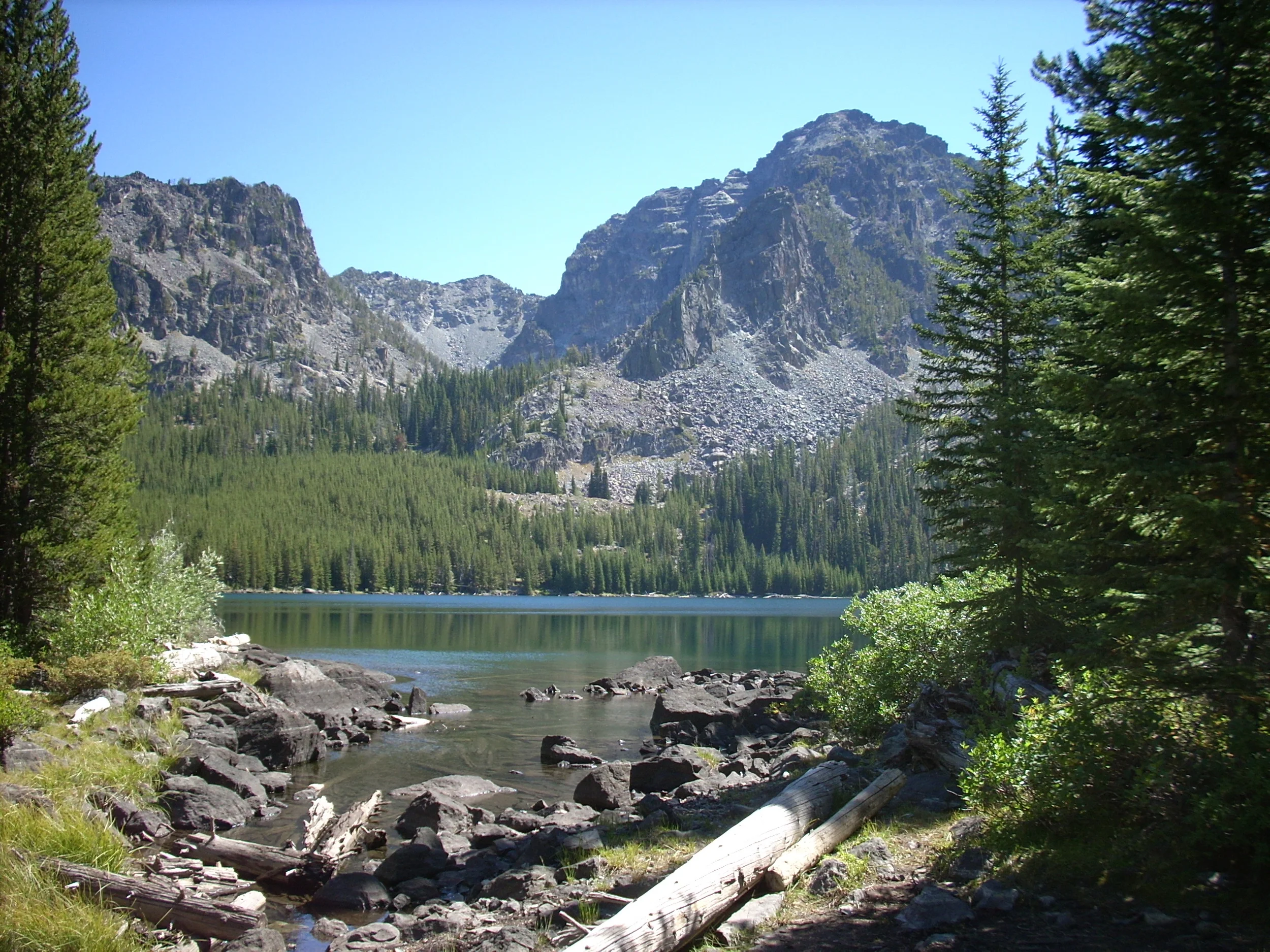
The two pictures above look out over the Palouse and Palouse Divide. There was still some smoke in the air - a couple of times I've been up here, standing on the lookout and it feels as though you could almost touch the fields in the distance they're so clear.

It occurred to me that those clouds had rain in them, and maybe a little lightning. Since Mother Nature loves her little ironies - and a writer who just wrote a novel about runners nearly hit by lightning actually getting hit by lightning certainly fits - and since I was standing on literally the highest point for many miles, I took my pics and climbed down.

I stowed the camera in the Camelbak for the return trip, taking it out to catch a shot of happy feet as I exited the trail.

Giant White Pines 022 Thumbnail.jpg

News Updates

The World Junior Olympic Track and Field Championships kick off in Eugene on the 22nd. Teams from around the world are sending contingents.

 This is a nice article on 14 year-old runner Brain Hastings of Oroville who will be competing in the 1500m and 3000m. His PR’s of 4:25 and 9:50 qualified him.

I caught this on the Alice Springs Running & Walking Club Facebook page. Courtney Geraghty will be travelling a heck of long way to compete in the hurdles. If you’re building a club, you need to check out the Alice club. They do a great job of reaching out to their community. Everything they put out is a positive testament to their club and sport. I also like the fact they include walkers. We could learn a few things.

OregonLive has an article with a ton of links, well worth perusing. This headline amused me. Kenya is out to conquer the U.S. in Oregon. That’s not news, folks – that’s the status quo. We’ve been getting our butts kicked for a while.

Wonder how the English team is getting ready? Like this. . . .

Men’s and Women’s All-USA prep teams have been announced. I know most of the distance folks but it’s nice to see the other events. I’ll have to do some reading up . . .

That’s it for today. If you’re running in my neck of the woods, mind the smoke of the fire. Slow down and make it an easy day. Tomorrow, I plan on heading up to Giant White Pine campground and running the trail to the Bald Mountain Lookout. I’ll take some pics along the way. It’s a pretty trail, a mite challenging. This will be the first time I’ve used my GPS on it so I’ll finally get an idea of the total elevation gain.

Tuesday will be an interview with former Kansas standout and author of Wannabe Distance God, Tim Tays.

Tim was gracious enough to answer questions that I had after reading his book. You can find him on Twitter (@timothytays) if you want to follow him.

Run gently, friends.


The Lonesome Mile, Chapter Two

As I've done with my other books, I'm putting up the early chapters of my current work in progress. This one is titled The Lonesome Mile. With the others, it was a single chapter. This one I've opted to put up a little more as there are a few more characters to meet

In Chapter Two, we get introduced to Nick Capelletti, an Olympic miler, living in Colorado Springs. Chapter One was here if you missed it. . .

Chapter 2

A brightly shining crescent of the moon showed like a crack between curtains, the thin sliver too slender to illuminate the lonely runner speeding through the night while everyone else folded for the night. Nick Capelletti’s eyes had adapted to the nearly nonexistent light early in the run. He followed the recreation path from the house and turned left off the trail that paralleled Monument Creek. He had no difficulty navigating the transition from the recreation path to pavement, the feet sensing the change is surface and making the minute adjustments to compensate. He jogged away from the gurgling water and into the dark past the El Pomar Athletic Center.

The black metal gate to the track was open and he eased out to the outside lane, running clockwise. A shadow flitted against the pale concrete of the spectator stands on the far side of the track and Nick focused. He had expected—wanted—to have the track to himself. He came around the far turn, down by the soccer field, and saw he was catching the other runner. He was used to running up behind other runners. There were a few dozen in the world that were hard to catch. Everybody else was road kill.

At least he’s got some manners, thought Nick, observing the runner sticking to lane six, the farthest outside lane on the track. As he closed almost silently on the other guy, Nick saw that he was local-5K-fast, someone that probably was training consistently. It didn’t occur to him to note that he had made the judgment on nothing more that the motion of the shadowy runner.

When he was ten yards away, Nick called out to him, keeping his voice low.

“Runner on your left.”

Nick watched the guy jerk at his voice, clearly surprised and twisting at the waist to search around him. A pale face, youngish, showed before the man turned back to continue his run. Nick heard the swishing sound of tech fabric as he came up beside the man.

“Thanks,” said the guy.

Nick passed him and shifted gears. The three mile run to the track had loosened tight muscles and ligaments, warmed them in preparation for the hard work ahead. He had a week of worry to the time trial itself. Tonight’s test only meant something for him, an opportunity, away from the eyes of coaches and competitors, to measure whether he healed. Nick took a couple of deep calming breaths, focusing his eyes on the white lines of the track.

Nick swept into the turn and leaned, speeding up again and his legs responded with a surge of power but he felt out of balance. His coach and the trainer had put him into an intense rehab after the injury and the accident. Four times a week, Nick was in the training center in downtown Colorado Springs, hitting the weights in specifically targeted exercises. Levi, the trainer, a short, impossibly wide man, designed the program and was there cajoling him to do one more rep, drive the knee again, until Nick hit exhaustion with quivering legs and arms.

“We can make you better than before,” said Levi, only half-joking.

Nick pushed himself as hard as Levi did, attacking the lifts. His power output increased and the physical therapist manipulated the ankles and knees, working all the way up to the hips, to restore the range of motion an elite miler needed.

 A year.

That’s how long the double rehabilitation took. A year without racing, four months without running a step.

Nick hit the backstretch sitting at a comfortable 5:00 pace, breathing easily still. He flashed past the other runner who had stopped by the gate and was watching him. He eased the pace back down and finished another lap. He slowed to a stop and steam lifted from the sweat on his skin. He loved the vapors, a sign of  his muscles working hard, the physical manifestation of the heat inside. It was like a powerful engine at idle, the thin tendrils of perspiration rising in warning of impending flight.

He didn’t do any striders or stretches and he skipped the rest of his pre-race ritual except the focus, finding the source of heat deep inside. His breath quickened as he walked towards the start line, anticipation flowing down his chest, to his gut. There, all the anger at being a frickin’ invalid ignited and he molded it. He paused at the start, hand hovering over the watch on his left wrist, then launched from the line, the watch beeping once as he punched the button that started an inexorable count of the seconds that would tell him if he still was Nick Capelletti, Olympic miler or . . .

He shied away from the ‘or’ and dropped his gaze to a point 15 meters down the polyurethane surface of the track, white lines stark against the red-black. He leaned into the first turn, exhilarating  in the raw power of the start.

This, he thought, recognition of how much he missed the pure animal joy of running.

A shadow crossed the infield of the track. The guy was sprinting to the start line.

I’ll run his ass over! thought Nick and the anger of another runner interfering with him added to the heat.

He looked up the track coming out of the second turn. The guy was just standing there, along the grass verge.

The first lap was all juice and the initial burst of excitement faded as he finished the first lap, his body remembering the shock of a hard mile.

“59, 60, 61, 62 . . . ”

The doofus was calling splits for him.

Nick buckled down to the second lap. The sensation of running like he was on bowling pins with all the new muscle disturbed him. Months of lifting, through sequences of progressive overload, to rebuild the joints and tissues and now he out of sync, form shot, with a surplus of power. In the back of his mind, he worried and monitored his left ankle and knee. No pain . . . but they didn’t feel right. Nothing felt right.

“2:03, 2:04, 2:05 . . .”

Chest tight, Nick flew into the lap three and fought the urge to accelerate.

Too soon.

The sweat dripped off him. He churned his way through the turn and the familiar pain began low against his ribs as he gathered air as deeply as he could in his powerful lungs. The base of his neck ached from tension and molten lead infiltrated the thighs.

He had been here before, knew worse would come, and welcomed it. His focus narrowed to just the track ahead of him and he surged, tried to surge, but, detachedly noted that he barely held pace. A hot fire lit in his chest, from the burning effort but not from deeper, from the place that gave him his edge.  The violent energy of that buried anger unleashed was missing,

The kid was shouting but Nick didn’t hear him. The pain was everywhere, calves, thighs, heaving chest, thumping heart. A single lap.

Exiting the next-to-last turn, a twinge struck, left knee, outside plane and behind the joint. Involuntarily, he slowed for a stride. Frustration fraught with fear fueled another attempt to surge and this time Nick felt the slight acceleration and leaned into the next turn.

Nick grimaced, though the knee held. The twinge faded on the straightaway but a residual fear lingered, that after all the fricking work, the hours in the gym, easing back into running trying to minimize the limp . . .

Focus!

Cursing internally, Nick looked down the track. The kid stood there, shouting either splits or encouragement. His white blob of a face floated in and out of Nick’s vision as the miler burst into a full sprint. He fought to maintain control the legs, all that power, don’t forget to use the arms. Drive, everything right now . . .

He punched the button on the watch, stumbled two steps past the line, and caught himself before he toppled. He wobbled to a halt.

Nick was breathing hard and the sweat drenched his shirt. He turned his wrist but the face of the watch was too dim to read. The heaviness in the quadriceps faded in seconds, replaced by a sense of weariness. It wasn’t the quivering weakness that lifting weights induced. Instead, his legs possessed a welcome twitchy tiredness. He began to walk it off, transitioning to a slow jog.

Behind him he heard footsteps.

The doofus.

The kid caught up to him, dropping beside Nick and matching him stride for stride. Neither of spoke.

The strength returned to his legs fast, too fast. He twisted his arm, reaching to hit the button to illuminate the time. He needed to know that number but inside, he sagged, knowing that it would be slow. A good mile never felt this easy afterward.

The kid saw the motion and said, “4:06.” His voice was quiet in the darkness. Nick could hear awe in the undertones.

The sagging feeling became a rock of discouragement. He shook his head.

“Your last lap was a 58.” Awe and reverence.

Started too slow and sucked on the third lap. A recipe for a crappy mile. He sighed and looked at the kid. With a start, he saw that the other runner was struggling so he throttled back.

“What are you doing out here, kid?”

“Just running to blow off some pressure,” said the kid, with a shrug. “Some of the classes are kicking my ass and this is about the only time I can get out the door.”

The sound of their shoes on the track surface filled a short silence.

“I’m Matt,” said the kid.

“Nick.” He didn’t elaborate.

“You always been able to run like that?” Matt asked the question hesitantly, like a parishioner seeking an audience with a cardinal.

Hero worship bothered Nick but he couldn’t see way to deflect Matt without coming off like a jerk.

“Used to be faster,” Nick said. Like in high school, he thought but didn’t add.

“You a student here?” asked Nick, pointing up to the lights of the nearby residence halls with jerk of his head.

“Grad student.”

They keep getting younger, thought Nick. The uncomfortable truth, that they weren’t getting younger, he ignored. He had come to the Springs seven years ago, at the behest of his coach, Burt McAllister. Living and training at altitude had long been considered on the major advantages that enabled the Kenyans to so thoroughly dominate the distance running events.

“Are with the OTC?” asked Matt, referring to the Olympic Training Center.

The kid aint’ bashful, Nick thought. He sighed and deflected.

“What’s your thesis?”

“I’m in the neuroscience program. I’ve got a study that I designed that we’re just starting—” Matt sounded apologetic and a bit out of breath, so Nick slowed some more, “—it’ll take a couple of years. I was planning on getting it done faster but they keep adding more crap on top of what I have, it’s killing me.”

Nick smiled in the dark.

“Yeah, I hear it can be like that.”

“Yeah.” Matt was quiet, then said, “It’s just kicking my ass, setting up the study . . . the classes are cake. Trying to maintain all the privacy standards and permissions . . .” He left the rest off in a frustrated sounding exhalation of breath.

“What’s your advisor say?”

Nick sensed a shrug from Matt.

“Thinks the thesis premise is interesting, really challenging. She’s pretty good, actually, intelligent as hell,” he hesitated, and added as an afterthought, “kinda cute, too.”

Nick grinned as Matt paused, embarrassed at the non-PC admission.

Matt talked faster. “I get that she’s trying to get me to set everything up right now so I don’t have trouble later. She thinks of crap that never occurred to me, how to remove influences that’ll skew the results.”

They reached the gate and passed through. Nick came to rest, feeling the relaxation that came from running, the temporary taming of the internal demons. He rolled his shoulders to release the remaining tension. Matt stopped next to him, looking uncertainly up Cache La Poudre Street as though he should leave but was reluctant.  

 The lone street light shed enough light that Nick was able to see Matt clearly for the first time. The kid stood an inch or so taller than Nick, maybe 6’1”, with a slender frame that seemed to slope downhill from the point of the left shoulder to the point on the right. The academic effect was enhanced by the rimless glasses and an unruly mop of dark hair.

“Want some advice,” asked Nick, “on running, that is?”

“Sure.”

“Stop trying to fight your body. You’re messing up your form trying to keep everything lined up. You’ve got a short right leg but you’re pulling in your left elbow to keep it from floating and it’s knocking you off balance.”

Matt looked a little stunned.

“I do?”

“Yeah. My undergrad was kinesiology. Handy thing for a runner.”

“I guess.” Doubt clouded Matt’s eyes and they narrowed. “Is that what you do, coach?”

Nick laughed.

“No, got other things to do.” He paused. “Want another piece of advice?”

“As long as you’re not going to tell me something else is short, sure.”

Nick laughed again and stuck out his hand. Matt took it.

“Trust that advisor of yours,” he said as he delivered a firm handshake “Dr. Capelletti is a tough woman to please but she’ll make sure you get where you want to go.”

Nick released Matt’s hand and turned to leave, already shifting his weight forward to run. Behind him, he heard a fast intake of breath.

“How did you know my advisor was . . . ?”

Nick passed beneath the light, watching the shadow shrink below him and then lengthen to a fast-moving dark silhouette slipping into the night. Matt was a bright kid, he thought and almost laughed again. He’ll get it. As he reached the path and turned right for home, he heard Matt shouting.

Capelletti?  You’re Nick Capelletti?

God, I hope so, thought Nick, and a sick feeling returned, that the fire was gone. Instead, ache sat in his chest.  Like a recovering addict eyeing the alley where he bought his fix, the images of championship races, all speed and fire, played in his head, a needy remembrance of succumbing to the rage. He shook it off with a quick shake of his head and kicked it up another gear, headed home to his wife, Dr. Ashling Capelletti.
If you want to follow the progress on this book, or see what adventure I plan next, you can sign up for my newsletter, or follow me on twitter and facebook. All the buttons are on the sidebar.

A Few Running Stories You Might Have Missed

First up, I'd like to buy two runners, Bob Mobach and John Davies, a beer. These two men, who don't know each other, stepped up to do what men are supposed to do. Here's the story so you can see what I mean.

Running Times has a great article on getting ready for running camp. An Insider’s Guide to Running Camp. Only thing they forgot to mention was to bring a great attitude. It's playing outside, people, just faster.

Do you get cramps while you're running? (or playing other sports/) Have you considered drinking pickle juice? Me neither . . . (I'm not telling you if it works or not - go read the article!)

Too old to run cross country? Nonsense! Competitor magazine, a favorite of mine when I lived in San Diego, gives you pointers on how to get ready, even if you're a geezer. (Technical definition of geezer is five years older than me.)

How did we ever survive?

Minor rant today. First, read the story . . .

Okay, done? Let's discuss. Mom lets the nine year old play at the park while she's at work. Child knows where mom is, knows how to get to mom. The child is playing in a public park, at the playground. She had a cellphone with her so she could, if necessary, get hold of her mother almost immediately. Other parents were there. That might have been a problem.

At least one mother found a child left to play unsupervised reprehensible and dangerous.


Lamback said, "you cannot just leave your child alone at a public place, especially. This day and time, you never know who's around. Good, bad, it's just not safe."

This lady would have had a heart attack if she had seen how my brother and I (and our sister!) were raised. My goodness, we were allowed to disappear with a vague "we're going to play in the woods" or "play some ball in the park." On occasion, we'd even go alone. Quelle horreur.

Mind you, we're were probably at least six years old. That's about my earliest memory of 'independent activities' - what we used to call play. Before then, we'd pull jailbreaks, some of which ended badly like the time I got caught stealing eggs off the delivery truck and lobbing them like grenades when I was four. (might have been earlier - I'll check with Mom. Her memory for such things is unfailing.) Discipline followed, though I don't remember exactly what. I do remember that a lesson was learned; don't get caught stealing eggs off the truck.

Also, plan a better getaway.

Later, we lived in Maryland, near a creek and the woods. Soggy shoes were constants in summer, we learned to pick ticks off our skin (usually to throw at the nearest companion,) and I still remember seeing my first water moccasin. Scared the crud out of me.

In winter, we walked out onto the frozen creek to test how far we could get before it started cracking. It was a rite of passage, the same as swinging out on the rope to drop into the 'lagoon' during summer. If it snowed, we bailed out the door with our sleds, headed for the biggest hills. We sledded between the trees, diving off before the big oak. Or sometimes not, depending on whether someone dared us to stay on.

While we're discussing sledding, I would like to point out that none of the children ever broke their arm sledding unsupervised. That was an adult, at the night time sledding party. Male, naturally. Believe the story was that he bet he could ride the sled standing up.

By the time we got to Alice Springs (when I was ten), my brother and I were pretty comfortable doing things without the adults around and mostly, despite the stories my folks tell my kids, stayed out of real trouble. We played War with fingers for guns, baseball with real bats (and the time I hit my brother in the head with a bat, it was accidental. Uh. . . . so was/were the time(s) with the ball - and he started it anyway), and raced bikes across the Outback. We dug for lizards in a country known for poisonous critters, climbed Mt. Gillen or any handy protrusion that arose from the desert floor, and went camping with a vague wave of the hand to indicate our general direction in a fairly vast desert. We were usually required to be home some time the next day. Standard equipment included a can of beans for dinner, something for breakfast, matches, a flashlight, and our BB guns. Actually, the other guys BB guns. We didn't get out ours until we came back to the States.

I'm pleased that my daughter, eldest variety, is raising her son and first daughter pretty much the same way. (Other grandkids are too young yet, not even two.) She's caught hell for letting her son go to the other grandparents house - walking, no less. Mind you, they literally live around the corner so it's a little tough to get lost.  When his sister was big enough to go with him, he was given the responsibility to escort her to nanna's house.

The non-paranoid, anti-helicopter parents keep an eye out, just as my daughter does with the other kids. Still, there's a couple of ninnies in the neighborhood and they cause an outsized amount of irritation.

He started school this past year. My daughter walked him there until he asked to be able to walk with his buddies. Now she let's him walk to school, the entire half mile, all by himself. He's six, plenty big enough.

I don't know if it's because families are smaller or people don't pay attention to complex things like facts (violent crime is down 12.3 percent since 2003,) but children in 2014 are not an endangered class. Childhood, that time of unstructured exploration of the world, might be an endangered state, though.

I feel a bit sorry for this working mom in the story we started with. She's now branded a criminal for nothing more than allowing her daughter to be separate from her at the park, to grow and learn to be an independent individual.

You may disagree (and if so, feel free to present your case in the comments) but until the child was seized from her mother's care and placed in the indifferent hands of Child Protective Services, it sounds like they were working together pretty well. Mom knew where the kid was generally, kid knew where mom was, and there was a means of communication.

But if you want to make the argument that children can never be left alone, I have a question for you. How are they ever to learn responsibility and become adults? Do we just shove them out the door when they're 18 or 26 or whatever and tell them, tough, kiddo, welcome to the real world.

 We might consider starting early, in small doses. Maybe at the park, with us at first. Then, by themselves. Might even let them drink out of the hose instead of buying designer bottled water. It's not nearly as reckless as it sounds.

Freshmen Girls and Senior Women

freshman girls

I was doing the write-up for the Undeberg Invitational this past April when it dawned on me - of the top ten finishers in the women's 1600m, seven were freshmen. One was a sophomore.

The opposite held true in the men's 1600m which was dominated by the upperclassmen.

I was standing next to one of the coaches at the end of the women's race and complimented him on the way his runner finished. She ran hard and shows tremendous upside. I commented on this, too.

He shrugged, almost apologetically. "She's running great . . . but she's a freshman. We'll have to see  . . . "

And there lies a big question that confronts every young female runner, one that the guys will never need to deal with to the same extent. My youngest daughter had her fastest season and showed the most progress as a freshman. That partly was due to injuries that she got in the weight room, but also because she grew. Already 5'9" as a freshman, she kept growing to a slender 6' woman. Along the way, she put on about 25 extra pounds. Some of it was muscle, but most of it was necessary fat for a healthy female.

And there lays the issue for young female runners. In many cases, their bodies haven't yet finished developing. Until they do, there is no way to definitively determine their ceiling in racing (not running!) a given distance. Hence the uncertainty from the coach.

It's not just a series of physiological changes that take place. Many of these women have invested enormous effort and emotion in getting to the upper ranks of the running hierarchy. To them, the weight gains, the widening of the hips, and other changes can almost seem a betrayal of their bodies against them.

Runners are consistent. I constantly reminder the youngsters that I coach that most runner's injuries come from three primary causes - too much distance, too much speed, too much stretching. To the list for women, you can add too much diet modification. The psychological need to perform well can trigger behavior issues that parents and coaches can be slow to catch but should be alert to, among them, eating disorders and amenorrhea (a lack of a regular period, often due to low body fat.)

This isn't a new problem or evenly newly noticed. The Seattle Times ran an article (Growing Pains . . . ) about this same issue in 1998. The Washington Post did a similar one in 2006.

As parents and coaches, we fight a battle to let our kids know that the effort is more important than the finish order. One thing I insisted on with my daughters was that they give me their best effort and support their teammates. I ask the same of the junior high kids I help coach.

I exchanged emails with one young lady I know who has the potential to be a very good runner except . . . yeah, she's young and we simply don't know how things will work out. In the conversation we had, I pointed out that she and her friend would have done well in that group of freshmen girls. Then I add this advice:

". . . things change over time and both of you ladies may as well. It may make you faster, it may make you slower. Ya do the best ya can with what ya got. So, focus on the process, have as much fun as you can squeeze out of the running, and let the results take care of themselves."

We can't change biology - if we could, I'd be six inches shorter and a heck of a lot faster. It's more pronounced with the women. There is some resignation there. I recall listening to one girl who just got beat by a freshman at the State Championship during her junior campaign state, "Yeah, just wait 'til you grow some boobs."

The girls around her nodded. They're not stupid - they know the score even if they can't change it.  Most of them accept it, even if it's a bit reluctantly.

I would love to watch all these ladies go on to be top-notch runners but here is a truth - I'll be cheering for them, and their teammates, and the young men regardless of how fast they are or where they finish. So will their parents and their friends.

I also have a perspective that these young women don't have, not yet. They see themselves getting slower instead of faster, at the same time the sport is getting faster at the top end. The perspective I have is watching these young ladies come back to running, post-high school, and running as well as ever, and with the stress of competition gone, enjoying it more than ever, too.

I know that their best years are almost certainly ahead of them if they will just trust the process. Now we have to make them believe that. 

Too hot to run today. . . ?

So I'm going to run tonight.

I don't have a specific plan, more of a "launch from the house around 2AM and try to avoid the drunks" intention. After that, go wherever inspiration takes me until I rack up a couple/three hours of easy running for my long run.

I remember my first night time runs. I was fifteen and trying to get in shape for football. Skinny me needed every advantage I could get so I lift like a fiend and started running, three times around the circle that formed the community park.

Barefoot. I was, apparently, ahead of my time.

The cool kids, juniors and seniors, hung out at the park in the pines, smoking and drinking. I'd turn the corner, headed towards the playground area. A couple of the cool ones would cheer me on - genuinely encouraging, not the "Run, Forrest" crap we catch now - but most would watch and toke or take a slug from a bottle of Lowenbrau.

Three laps equaled two miles, that's what I figured, good enough for a football player. Despite all the lifting and running, I came into the season at about 6'3" and 140 pounds.

Might have been nice if someone had noted that I wasn't going to get too much bigger and maybe I should stick to running. Oh, well. Lots of lessons to be learned on a football field, even for skinny guys a half-step slow but whose motor ran all the time. What I couldn't do in talent, I made up for in effort. A runner's mentality.

I've put in a fair number of night runs since then. Swept the trail at night for the Smuggler's 50 outside San Diego. Trained at night for my first 24, turning 40 miles around Mission Bay. Just barely dodged a skunk on another night run at a local track and again on the trail along the Snake River. Obviously, all the relays (Hood to Coast, Rainier to Pacific, Spokane to Sandpoint) had night legs

My favorite moment of my 24 hour ultra at the track on the Cuyamaca College campus was laying on my back, looking at the stars at 3AM. My wife was helping me stretch my hamstrings - I was so tight, my stride was about eight inches long. The stars were dazzling and the temps cool and I told her "I could go to sleep right here."

My leg hit the ground with a thump and she told me to get my ass back on the track. I laughed because she couldn't have said "I love you" any more clearly.

A couple of winters ago, I began going over to Hells Gate State Park and running the trails there in the dark. I am sure they have regulations against it - they're in the process of shutting down nearly all the single track while continuing to bring in concrete mixers for "site improvements." They also have posted billboards on keeping the trail natural looking.

I ignore a lot of that and just run the single track using a headlamp and bundled because it was cold. When youngest daughter said running wasn't fun anymore, I took her there. She discovered that doing the same type of running, day in, day out, training for cross country wasn't fun.

The trail at night was and she climbed out of her rut.

Tonight, I'm climbing out of the rut. I'm going to go out to play in the dark. I'll take a phone so my wife doesn't worry and water bottles. Other than that, I don't know where I'll end up. Hells Gate is reachable from here - but rattlesnakes come out at night.

Not sure I want to play with them.

I could run in Normal Hill, past all the beautiful old houses, lit by the full moon.

I could stay along the river, hear the occasional fish pop the surface and listen to the gentle sound of waves.

Run gold course. Three are in easy range.

I don't know. It's a full moon, though - or near enough - and the daytime is hot. It's time to get reacquainted with the night and run where the mood takes me.


I Love the Smell of a Freshly Printed Book

The first set of Trail of Second Chances has arrived! Yay! Now I have a bunch of beta reader to track down so I can give them their signed copy.

On a related note for signing parties, apparently Barnes and Noble still hasn't adapted to the current realities of the publishing marketplace.  For about a day, it looked like we could have a signing party in their Columbia Mall store in the Tri-Cities.  Went south over returnability. I offered to guarantee returns if they ordered directly from the publisher but that was a no-go - they only order through the major distributor - which leaves the publisher completely at the mercy of the bookstores. They can literally order a thousand copies, then return them for a full refund at my cost - plus I get tagged with the shipping.

I'm satisfied with my online sales, which represent 41 percent of the total book selling market - and is growing.

Local stores are easier to work with.

No running today - did a double workout yesterday and I want to do a long run tomorrow night - just head out and meander in the dark for three or four hours. It's nice to live in an area where that is an alternative.

Have a great weekend. I'll be posting a couple of articles but you can grab those Monday. If the weather is nice, listen to your mom - go outside and play.