The Pre-PRE

The Pre PRE      


A day before the opening ceremonies of the Prefontaine Classic in Eugene, many of the volunteers gathered for the pre PRE at Lewis and Clark Catering on the riverfront, along with a writer or two, and athletes such as former world record holder and marathoner Jacki Hansen and Olympic steeplechaser Mike Manley.

The event was kept low key as everyone seemed to be catching their breath with the meet set to start on Friday night. Jack Anderson, a board member for the Oregon Track Club, and his wife Kathy acted as the hosts. They both managed to be everywhere, easing people into the event without ever looking harried.  

Tom Jordan, the meet director, made an appearance looking surprisingly relaxed after months of hard work to set up the PRE for another great year. He made the usual and as always, sincere, comments to the volunteers.

As usual with runners, even when they’re in volunteer mode, the conversations turned to running. I chatted with Barry Jahn about high school and junior high runners and then met a fellow ultrarunner with fifty races under his belt. We compared notes on the folks that we had raced against and where. With a lot of the older runners, the question of what happened to the 2:40 marathoner kept coming up.

The elites are running as well as ever and participation levels are at record highs but there’s a hole in the results where the dedicated, but not quite as talented, used to chase after the elite runners. No one knows why.

Jack Welch, the TAFWA award winning author, made the rounds, meeting old friends. He wrote, in an article about the Honolulu Marathon, that his finishing time in 1978 which was good for 169th place then would have placed him 63rd now. The times didn’t change but the field seemed to suddenly grow discontinuous. Perplexing.

That won’t be an issue at the PRE. The fields are stacked. With a little luck and a break in the weather, a couple of new world records are possible. The volunteers got some rest and their night. Friday they go to work and, knowing the Hayward crew, we won’t even notice them as things run as easy as water downhill.

Instead, we’ll watch world class athletes running, jumping, and throwing, all looking to score the win.

Sitting down with running history

Not that my lunch mates were history, just a part of it. Jack Welch set up the lunch with his friends, Joe Henderson and Jacki Hansen, both acclaimed, for different reasons, in the running world. Joe wrote extensively about running, on everything from running form to his adventure with an ultra to an insightful piece on the late, great George Sheehan as Sheehan moved from the front of the pack to the back during his battle with cancer. Joe was also a middling good runner, by his own admission.

Jacki Hansen was more than middling. The lady set the World Record not once, but twice in the marathon. She joked during the lunch that she was all "lungs and legs" though I suspect a mighty heart rests in her diminutive frame. She also has a book out - Jack mentioned it to me when I asked whether there was a full-fledged running museum.

Both are friends of Jack's and watching the interactions brings a swathe of the running world to life. Behind the stories in the press of world record efforts and training programs, these are warm and inviting people striving to reach the pinnacle of their sport (in Jacki's case) or the best in a challenging genre (in Joe's case.) Both do a tremendous amount for the sport.

Me, I didn't have much to add.  I listened a lot, and recognized names, but I don't have the backstory to contribute to the conversation. Instead, I watched as friends, for their friendship spans the better part of four different decades and still going strong, caught up after too long apart.

The subject of Boston came up and I found that Jacki had been there, coaching. She was the first to say that she had been safe and hadn't been at risk behind the finish line barriers. Still, my eyes got a little damp as she showed me her pictures from the marathon, showing me the pictures from her phone. The teary eyed part happened first when she recounted having a runner still on the course while Jacki was in lock-down and unable to go find her runner.

The second time was when I flipped to a picture of an American flag at half mast. The picture was from L.A. ,from when she got back from and immediately went to find a tribute, to find "something that was good" about the event.  She found it in her fellow runners.

As I said earlier, I think that there's a pretty big heart that went with the legs and lungs.

Joe has an impish side, something I didn't realize from his writing. His comments were on the money, though he deflected attention from himself and toward Jacki. He's written a dozen books (I brought my favorite with me to get signed - yes, it's a  total fanboy move but he wrote some great stuff.). He told me to stick with Jack if I wanted to learn a thing or two.

Seemed like good advice. Bet I could learn a lot from Joe too, but his dance card is full this weekend.  

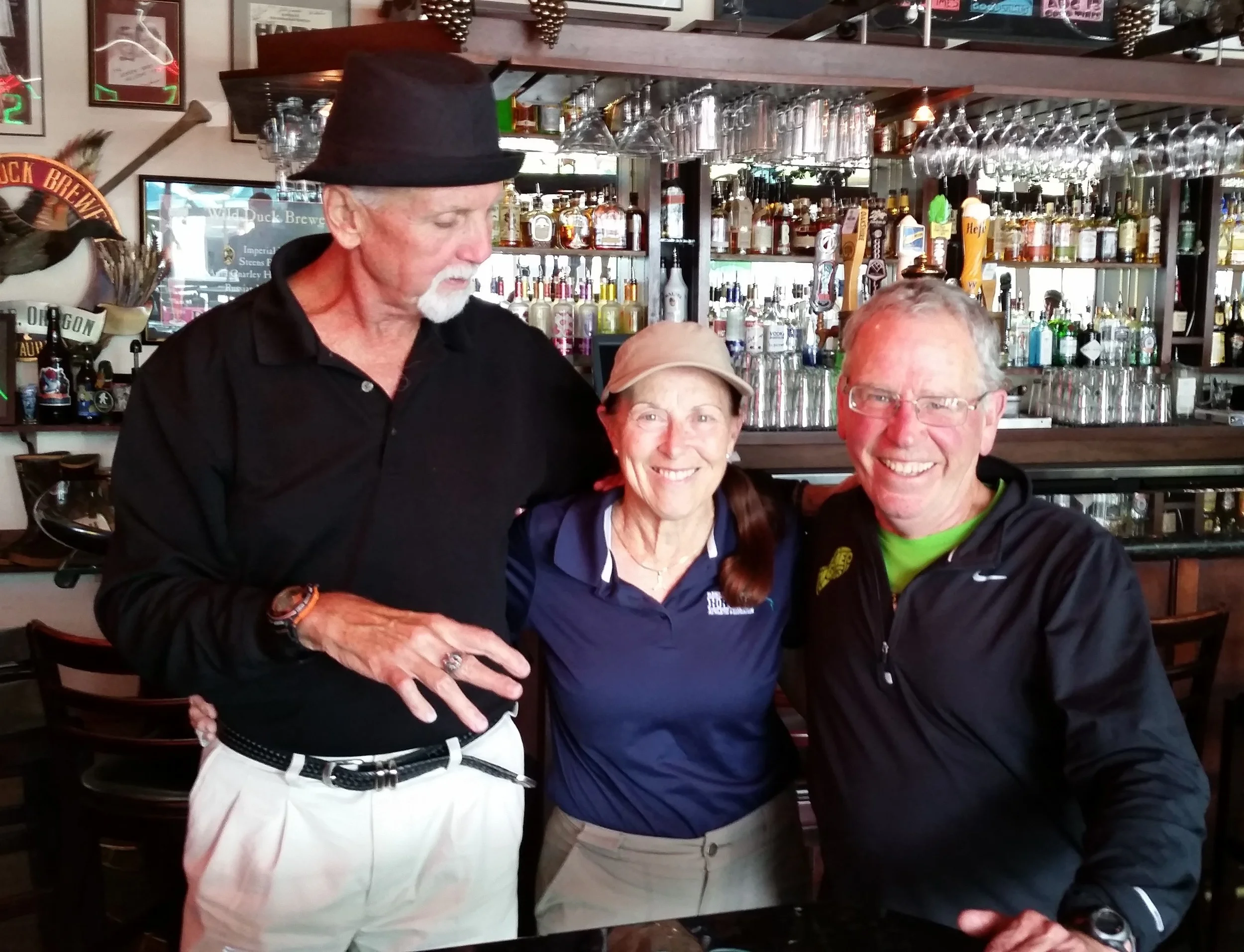
Jack Welch on the left (in full ready-to-joke mode), Jacki Hansen front and center, and Joe Henderson with the big grin on the right.

Jack Welch on the left (in full ready-to-joke mode), Jacki Hansen front and center, and Joe Henderson with the big grin on the right.

Pioneer Square with Jackdog

Drove into Portland to meet Jack Welch yesterday afternoon and my small town habits had a minor run-in with the big city streets. Forgot that half of downtown Portland is one way streets,. A single wrong turn and I was headed in the direction of Beaverton.  Which would be fine if I want to interview Phil Knight. Wanted to meet Jack Welch, so I got turned around and circled his hotel until I found some parking.

Everything after that got easier. Portland is hosting the 2016 Indoor Championships. The unveiling of the countdown clock was held in Pioneer Square. Jack and I walked down. A pretty good cast of athletes attended, including Bernard Lagat. I wanted an autograph but had a hard time catching up to Mr. Lagat. Jack rode to the rescue and snagged it for me while I got Silas Kiplagat to sign the little program the media tent handed me. A two-fer on that score.

I also had a chance to meet Ian Dobson, a coach now with Team Run Eugene. The Olympian looked fit and is an incredibly pleasant man to chat with. I also had a chance to talk to Bob Williams, who is a distance coach with Portland State, another cool dude.

Also met author Rod Schumacher, a Canadian who is visiting the region. The meeting was accidental as Rod and his wife were enjoying a cappuccino while Jack and I indulged in a beer. Jack and I were kvetching about marketing our books and Rod overheard.  We chatted for thirty minutes comparing notes, and decided that writing was hard, regardless of genre.

Now, onto today. Planning on meeting Joe Henderson. (newbie tip - hang with a guy that knows everybody. That, in my case, means Jack, who's a character in his own right.)

Pictures from the District 7 and 9 Meet at Central Valley

Madison Ward, St. George Academy, in the lead of the 4x400 relay.

Madison Ward, St. George Academy, in the lead of the 4x400 relay.

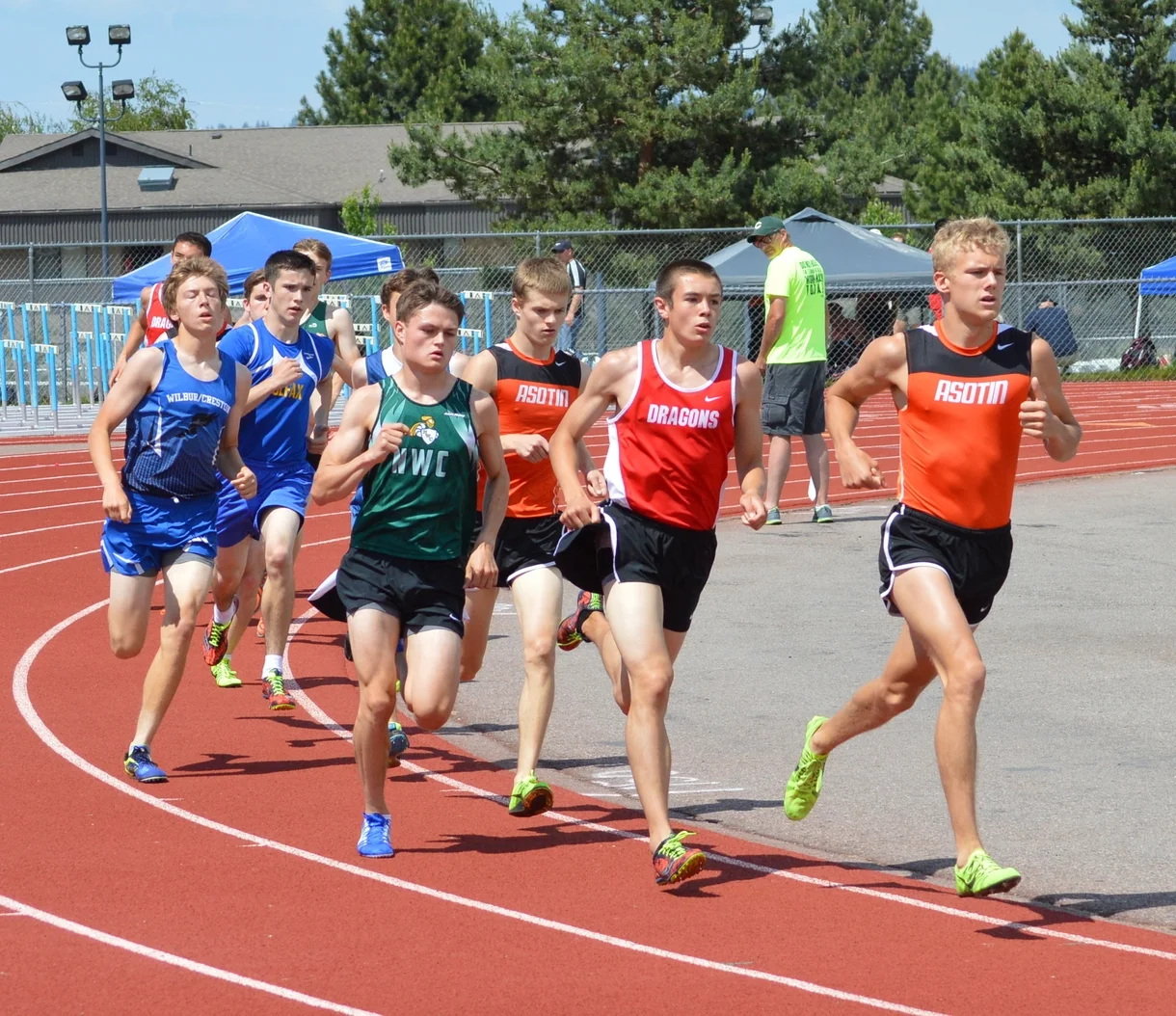
Chandler Teigen (Asotin), leading, with Nathan Vanos (St. George)  running a strong race behind him. Jack Ammon of NW Christian Colbert and Thomas Weakland round out the top four.

Chandler Teigen (Asotin), leading, with Nathan Vanos (St. George)  running a strong race behind him. Jack Ammon of NW Christian Colbert and Thomas Weakland round out the top four.

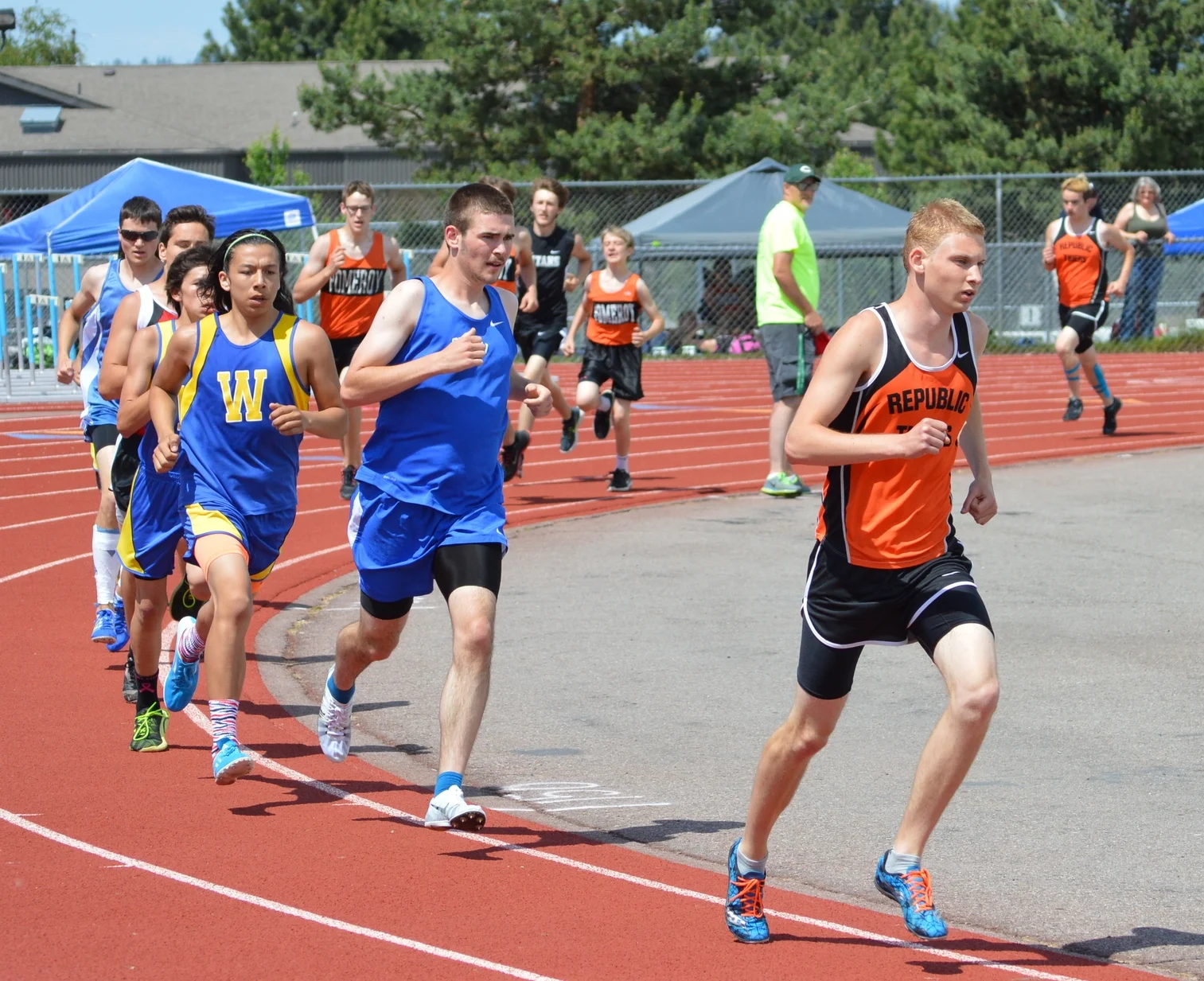
Duncan Forsman leading in the 1B race with Spencer Reiss of Curlew chasing.

Duncan Forsman leading in the 1B race with Spencer Reiss of Curlew chasing.

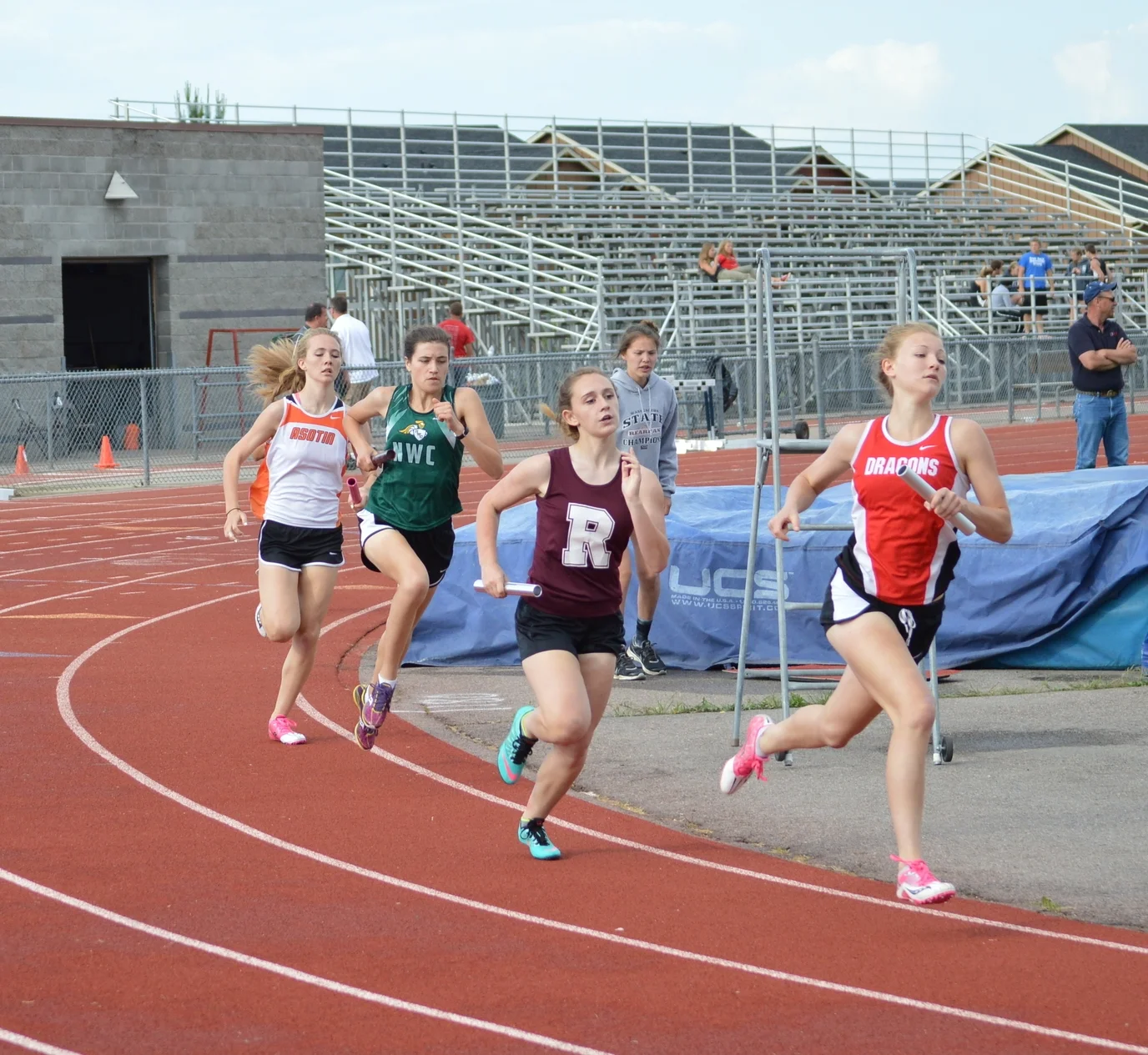
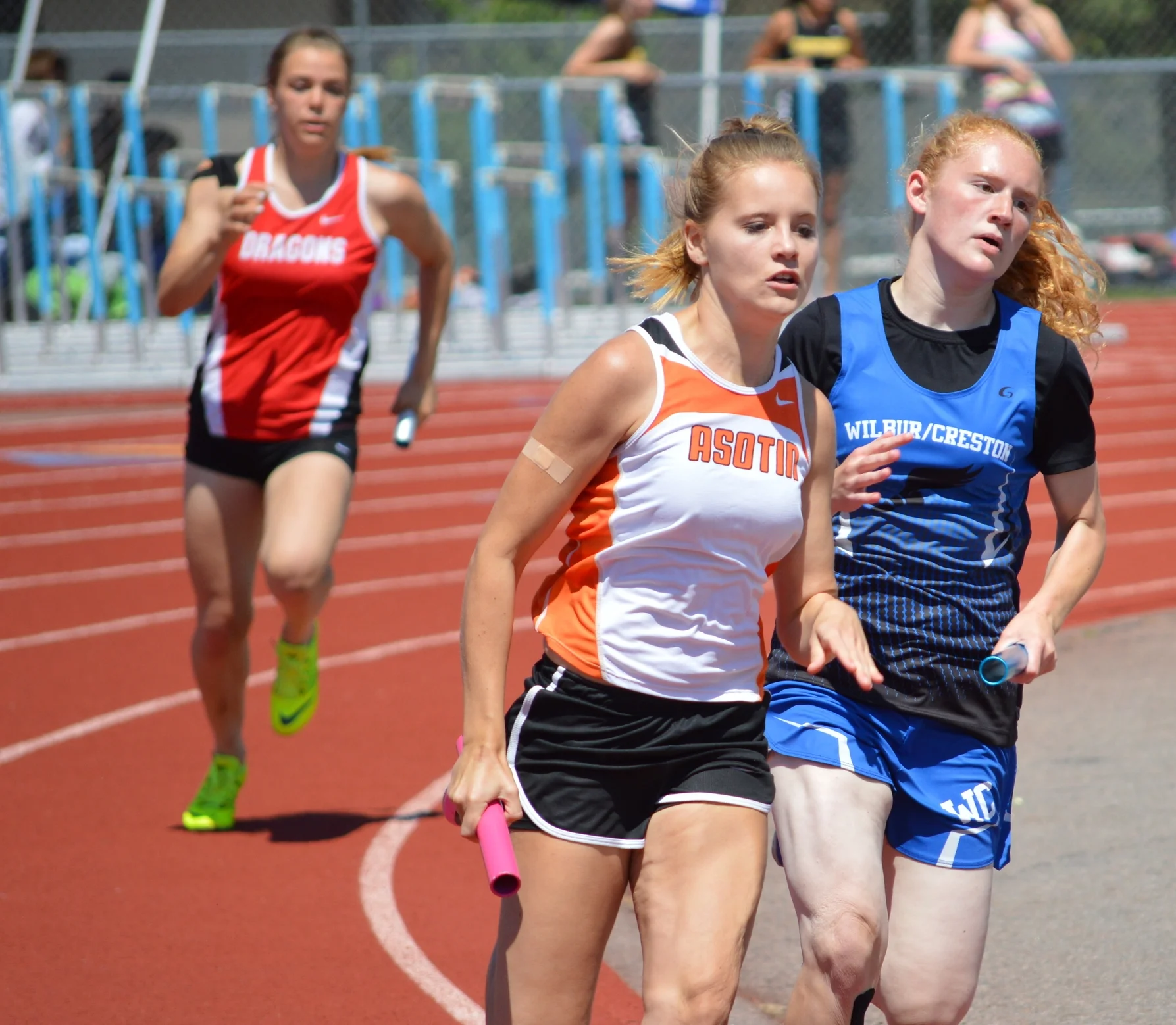
How tough is the race? Less than a quarter second of a split between the two teams.

How tough is the race? Less than a quarter second of a split between the two teams.

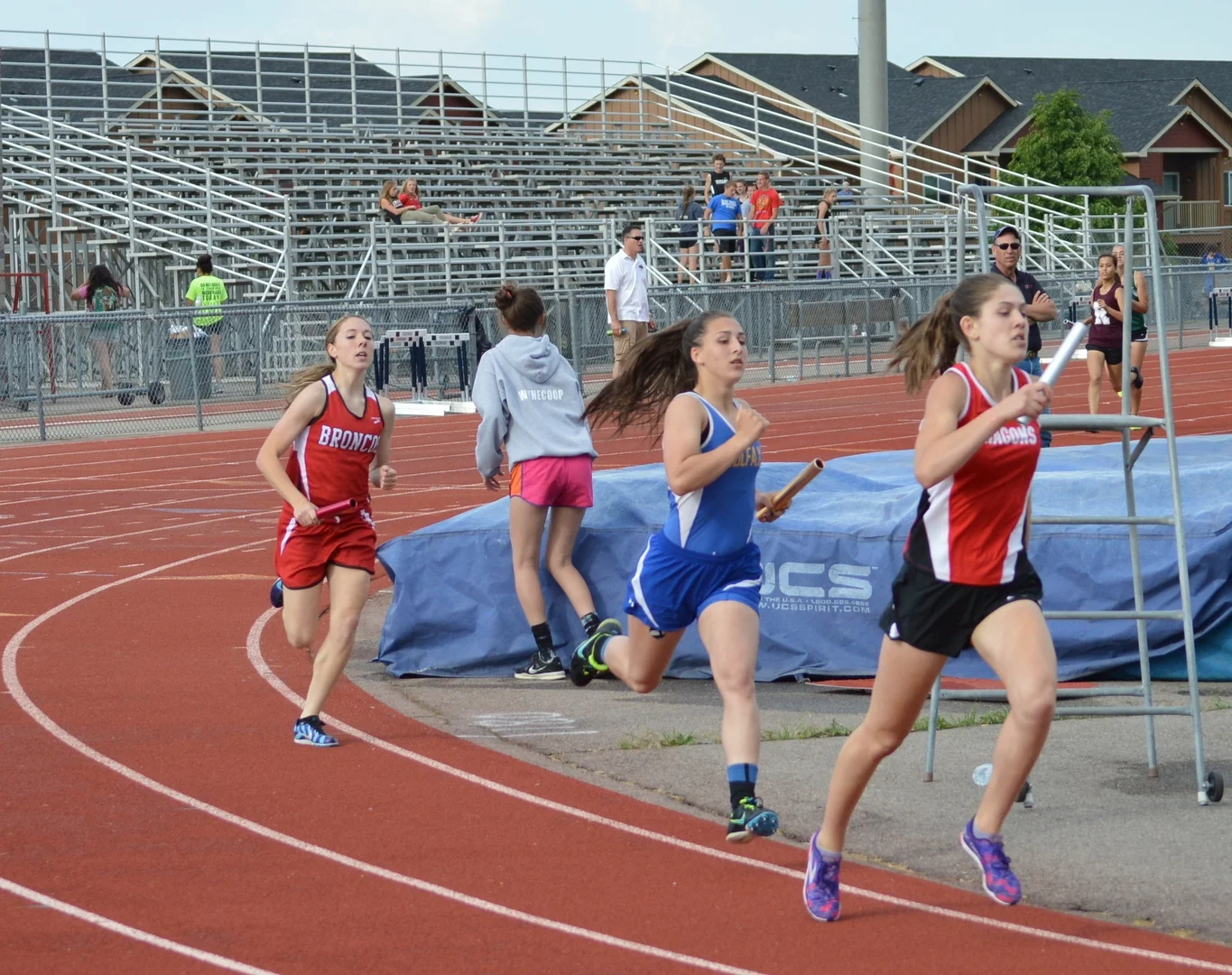
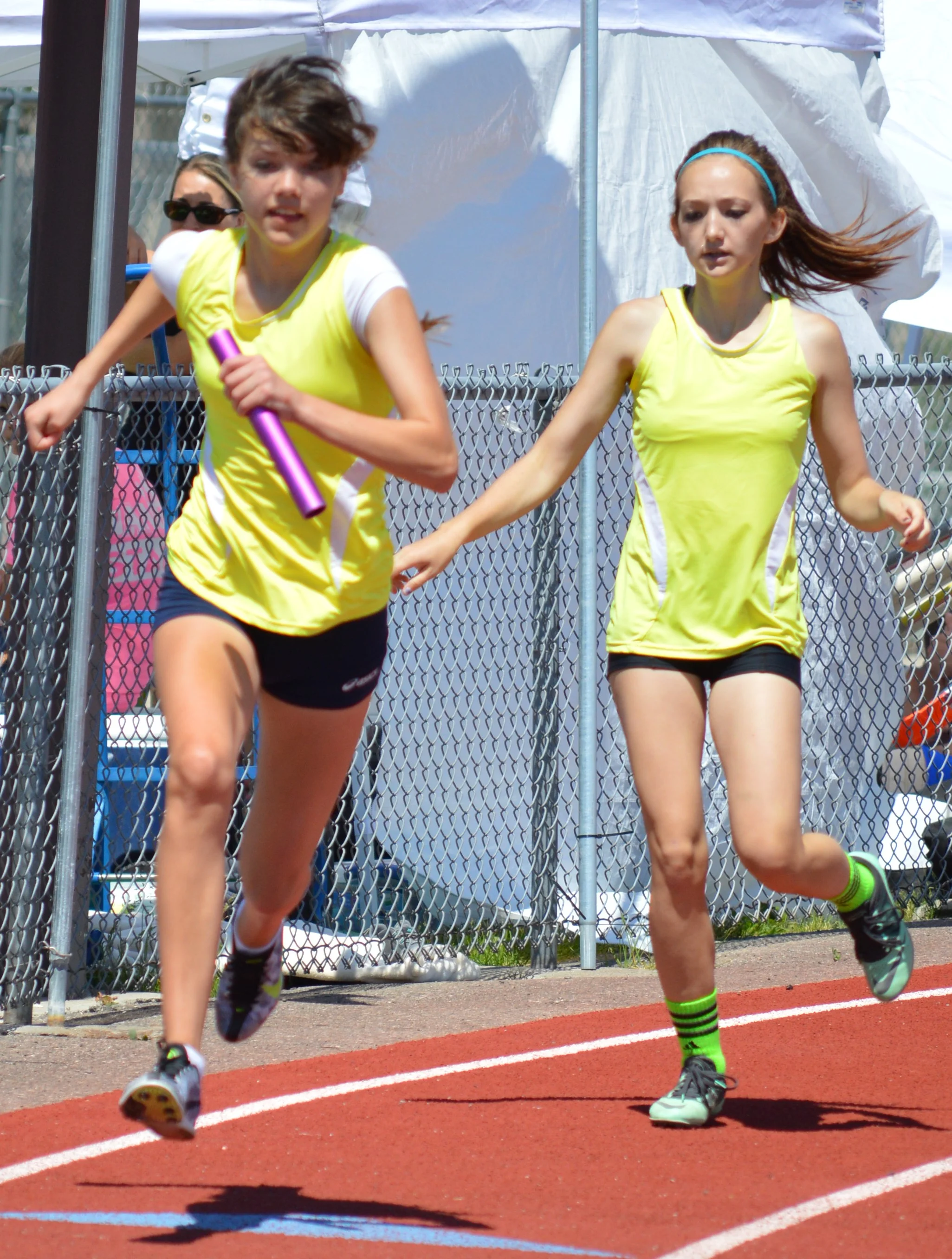
Zoe Robertson launches after getting the baton from Emma Perry

Zoe Robertson launches after getting the baton from Emma Perry

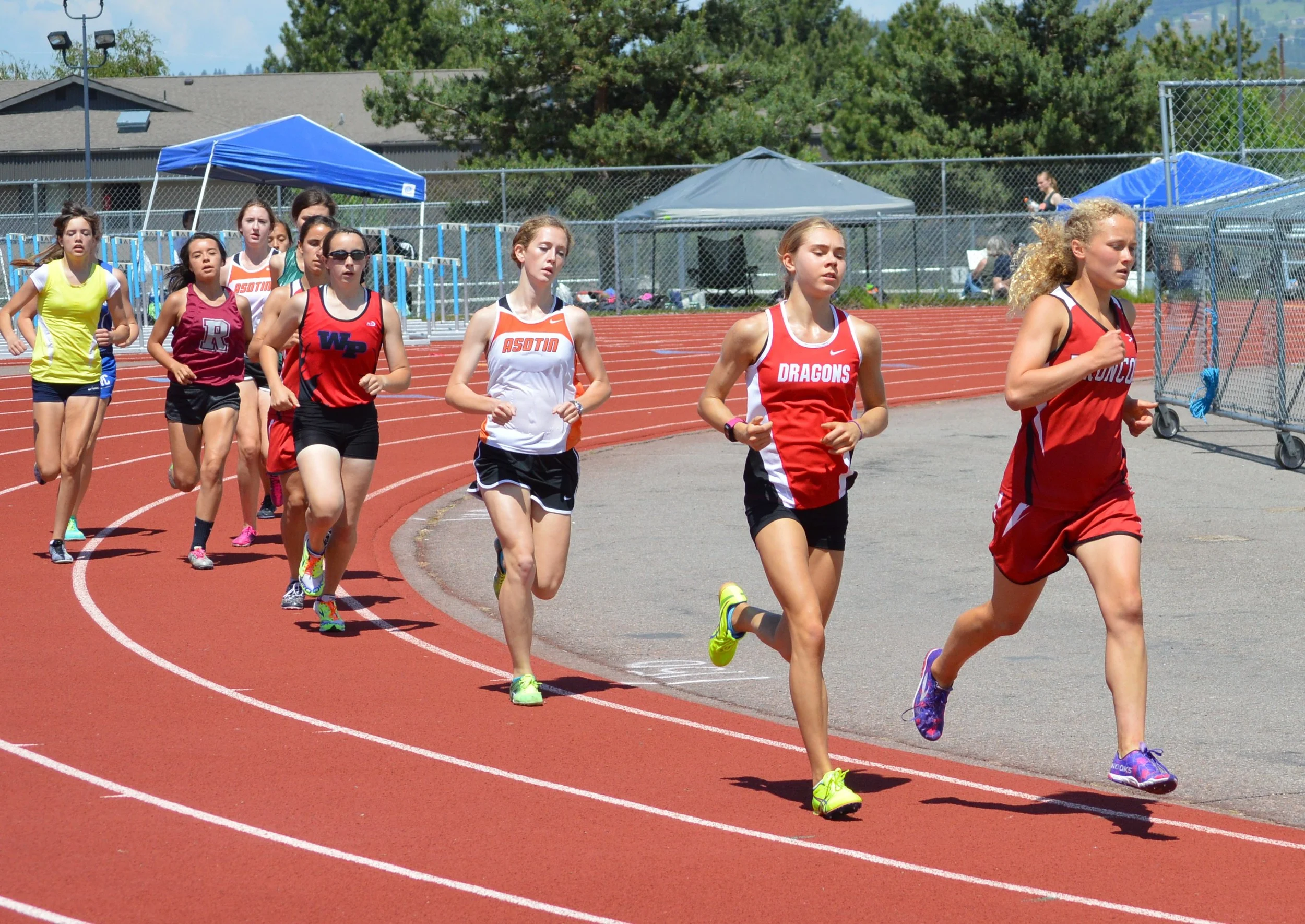
Tracy Melville of Lind-Ritzville leads the 3200M with Marika Morelan (St. George) challenging her. Lucy Eggleston holds a steady third with Waitsbury-Prescott's Emily Adams grabbing fourth.

Tracy Melville of Lind-Ritzville leads the 3200M with Marika Morelan (St. George) challenging her. Lucy Eggleston holds a steady third with Waitsbury-Prescott's Emily Adams grabbing fourth.

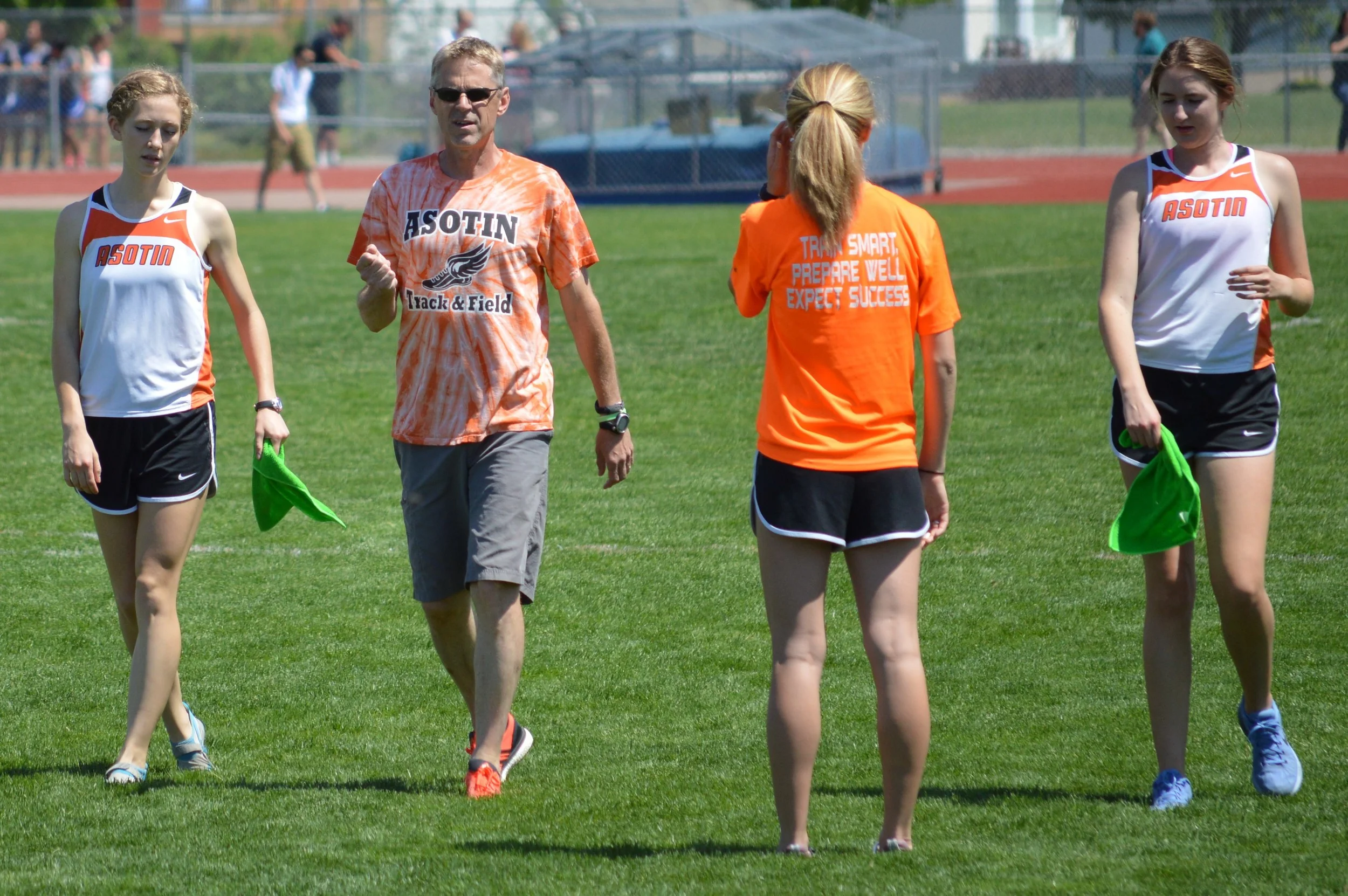
Coach Tim Gundy of Asotin with Lucy Eggleston (left), Maria Eggleston (with back turned), and Kat Stephenson.

Coach Tim Gundy of Asotin with Lucy Eggleston (left), Maria Eggleston (with back turned), and Kat Stephenson.

Sunday Morning, Moving Slow

Not so much an full post as random thoughts as I start a desperately needed vacation.

Went to see the Asotin kids run, jump, and throw at the Regionals in Spokane on Friday. Took pictures that I haven't had time to post - maybe tomorrow. As always, there was drama from the kids, and sadness for some of the seniors. I got a burst of joy watching Lucy Eggleston battle Harley Strope to the finish in the 1600m with a spot to State on the line. The top four had run away from Lucy but she hung tough. With 150 meters left, I could Lucy measure the distance and make her decision to try to out-kick the best kicker in the region. The gamble paid off as Harley took a second to long to match the move.

Maddie Ward of St. George's won in dominating fashion and is looking incredibly strong. Her running mate, Marika Morelan ran well, but was fighting a bit of a bug, according to Josh Hayes, her coach. Tracy Melville broke up the pair with a great run of her own.

Lucy's sister Maria wins my courage award. She came into the meet with a pulled muscle in her back, so she was parked for her 4x400 relay with one of the alternates in her place. Then both alternates got injured. Unwilling to see her season end (and with coaches and parents permission) she dressed out and ran a very credible quarter.

As I said, I'll put up pictures, maybe tomorrow and give more commentary.

I also had a chance to chat with Rick Riley and made a date to visit his running camp. Which reminds me that I should contact Mike Collins at LC about coming out to the Clearwater Running Camp. If you have young'uns that want great camps, these are two of the best, with terrific coaches.

I got word that a magazine is going to review Finishing Kick. Very exciting - unless they hate it. Yes, writers are neurotic. Yes, I'm a writer. No, I'm fine, really. They'll love it. I hope.

Wednesday I head to Portland to pick up Jack Welch. Thursday, we head for Eugene for the Pre Classic. Should be a hoot. Not sure how much writing I'll get done. I expect we'll get some runs in, though I'm the slowest of the bunch.

Now, to play with grandkids. Sometime today I'll get a short run in, probably in the heat. Good for sweating and character building. Now that it's getting hot, mind the temps and stay hydrated.

Run gently, friends. 

Can Writing be Taught?

I probably spend more time on writing blogs than running blogs which is just as well since I'm a better writer than runner. Over at the Killzone Blog yesterday, James Scott Bell posted a partial response to Porter Anderson,  who had a thought-provoking article over at Writers Unboxed.

The question posed was "can writing be taught" and examples offered yea and nay. Much like the argument that only a certain amount of running can be taught, and so many other disagreements over talent and hard work, this one brought out some interesting perspectives.

One of mine, directed at Porter, is below. Both Jim Bell and Porter Anderson are the sorts of fellows you'd enjoy a beer with, and who'd have your back if necessary. Very classy. 


Porter,

Thanks for swinging in and stating your case. I appreciate folks that hold up mirrors. We are in a transitory period and all the rules – and assumptions – for both sides are open to debate. If it’s not the best time to be a writer, it certainly might be the most interesting.

You raised a point about calling out a charlatan. In my comment above, I offered an example of an instructor, who despite publishing success, was a poor fit for me. It was would be easy to state that he or she was a fake, a fraud, but that would be unfair. It also would needlessly stir animosity when none is warranted.

I’m new to writing, probably newer that most of the writers here. One lesson that I learned running my other businesses is that I can’t please everyone – and not everyone will meet my needs or expectations. When that happens, I lose money and learn. The lesson seems to stick better with a skinned knee or a pocket lightened.

Your concern, of the minor frauds (which exist) of the various training programs, pales in next to the behaviors seen at the more rarified reaches. Where major fraud does exist – at Author Solutions, for example, which is warming the bed for the several large publishers – it seems to get swept under the coverlet. Author Solutions operates the same way a con man does, by finding a mark that wants to believe and will do anything to prove that belief.

You offered a bit of your wisdom in the form of a creed. Let me do the same.

I believe . . . that the digital dynamic has unleashed a stunning diversity of ability, of all levels, for all tastes.

I believe you’re right – Jim is not a charlatan, but I’m open to the premeditated coffee thunking, if only for dramatic effect.

I believe that humans share the same weaknesses the world over. . .

I believe that marks look for their con men, wanting to believe . . .

I believe that the publishing industry has, for decades, acted on the this very nature of men and women.

I believe that I have the right to go to hell my own way. I may have an audience cheering me along, or the lonely silence that writers fear the most, the quiet that comes when people just don’t care, but it is the path that I forge, as an aspirational adult. I don’t need looking after, as though I were a child too simple to comprehend the gap between myself and a dream, that my tender feelings should be assuaged. Bah! If writing can’t be taught, I will learn that, but I won’t be told it. I’ll need proof and years of my labor to convince me. Along the way, I’ll kiss a frog or two and find a toad. I’ll expect I’ll survive.

Because I also believe that you can’t grasp what you don’t try first to reach.

And . . .

I believe that the ultimate failure would be not to try.

That is at the heart of the digital dynamic. Most of us will lose, but so many at least will get a shot.

Now, it being evening, I’ll lift a glass in your direction and toast your health and fortune. I ask you not to worry for us.

Racing the Rain: A Review of John L. Parker’s newest novel

Racing the Rain delivers the goods on young Quenton Cassidy with Parker’s flair for inspirational running scenes, an intriguing cast of characters, and a verdant setting above and below the surface of the Florida Gold Coast.

John L. Parker returns in Racing the Rain to flesh out the character of Cassidy, beginning with the young boy that would toe the line barefoot to run his first race, not against people, or even himself, but just to feel the wind and the joy of the act of running. Quenton Cassidy, the famed hero of Once a Runner, received the gifts of speed and the courage of a miler from the gods, but until those talents were nurtured by coaches and mentors, they lay quiescent.

Parker opens the novel with scenes from an American childhood that will seem alien to most of his young readers, but that resonates with authenticity for the age; and, of course, there’s a race.

The boys in the story—Cassidy, his friends Stiggs and Randleman—roamed freely as the story unfolds, the early years touched on at the highlights, until Racing the Rain settles into the early teenage years when Cassidy turns serious about sports even as he searches for his identity.

For Cassidy, identity gets bound by the character of the Florida Gold Coast and by Trapper Nelson. Trapper, who as Cassidy thought of it, “. . . was supposedly bigger and stronger than Paul Bunyan, had more powers than Superman, knew more about animals than Tarzan . . .”  is the first to suggest that Cassidy pursue running, and was wise enough to wait for the seed to germinate. Trapper lives alone in the Everglades and the two form a relationship built on a mutual appreciation of each other and the Glades.

Parker’s ability to write a race scene that leaves your pulse pounding was the backbone of Once a Runner. In Racing the Rain, he adds a graceful skill in describing the natural world of Cassidy, whether describing a foray to capture bait fish amongst the cattails in the tide pools, scuba-diving in coral “so exotic they seemed not the product of the natural world, but of some schizophrenic jeweler,” or the feel of the oppressive summer heat as he works for Trapper maintaining an exotic menagerie. Parker’s affinity for Florida helps him paint the scenes with details that allow the richness of the place and time shine through.

As an author, Parker also added some misdirection to his repertoire as he gently builds a training program for young runners under the guise of telling the story. Gone are the sixty quarter miles, replaced by the guiding wisdom of Archie San Romani through Trapper, and later, from his coaches, especially Mr. Kamrad. The running is interspersed with basketball. It’s on the court that Cassidy first stars, learning the lessons of diligent practice and focus to reach beyond the barriers that had been applied to him.

Parker does a smooth job of bringing the previous book’s characters back to round out the scenes. Readers of Once a Runner will recognize many of the characters, not the least Mizner and a young Jack Nubbins and the race finale takes place at Southeastern University, the setting for Once a Runner.

Parker continues to blend in the science of training with his racing, but does so subtly. He sets basketball as the prestige sport, with cross country and track distant also-rans in the school hierarchy of popularity, not so different from the reality for most runners. As the plot develops, so does Cassidy’s character. The reader watches the writer deftly molding young Cassidy into the man that he will be in Once a Runner, the athlete with an almost visceral rejection of stupidity masquerading as authority. The tension builds through the second third of the novel as Cassidy is forced, by a combination of his own talents and decisions as well as the internal pressures of the sports programs with the prestige to decide on his future.

The result is less a one dimensional running book like Once a Runner and more a coming of age story for Quenton Cassidy, teenager. As such, it should have wider appeal to more readers. And yet, there’s that Parker touch, and the runners will recognize the magic that Parker brings to running fiction, that makes it special to all of us that once dreamed of being that runner.

_______________

Paul Duffau writes novels about running and works with junior high cross country runners part-time. His first novel, Finishing Kick, was recognized by Running Times in their Summer Reading list July, 2014. His newest novel, a high-octane adventure set in the mountains of Montana, is Trail of Second Chances. He blogs on the running life, running book, and interviews people that he finds interesting at www.paulduffau.com .

Runners can be . . . Touchy

Fair warning, you need to bring a sense of humor today. For our jumping off point, let's start with an article from Philadelphia, titled A message to runners: shutttttt uppppppp! The article itself is pretty funny, but it probably should have come with a trigger warning for the sensitive types. Based on the comments at the article, The Evster entertained some of us and managed to offend a few runners. A lot of them took it very, very personally.

Too bad.

HIs basic premise, that runners incessantly talk about running, how many miles they completed, their pace, the food they ate to PR in the local 5K, and how virtuous it makes them, is spot on. We also talk, though more discreetly, about bowel movements, snot rockets, and how to spit, with the usual warnings not to expectorate on thy fellow runner's shoe.

He's got a point. Runners love to talk about their sport, with the zeal of the newly converted seeking to proselytize. Old runners tend just to go out the door and run but start following runners on twitter and you'll get a daily deluge of mileages, and heartrates, and #runderfulrunners hashtags. Read the magazines, and it's a unending pitch for more running gear interposed with articles to run faster. (I'm excepting Like the Wind from that, though.)

From the magazines and blogs, I don't know how I ever managed to run a step without my FitBit GPS-enable wrist appliance that doubled as a music player/cell phone/text-messenger/selfie-taker while it measured steps taken, pace, altitude adjustments, relative and personal humidity levels, and the current state of my sleep patterns. I've been assured that all this is necessary to run. Gone are the days where a pair of shoes, a pair of shorts, and a tee shirt (optional - and yes, it's sexist) got you out the door.

Interestingly, it's not the elite runners who talked gear and miles and OMG GREAT RUN!. The elites mostly post of the people they're running with, and the joy, though you'll catch some of the marketing from their sponsors. The point is, the elites talk about a bunch of stuff that inspires them, not themselves. They tend to celebrate the successes of others.

The article even managed to trigger a debate on Letsrun.com, too. Several of the Letsrunners pinned the blame squarely on the hobby-joggers, with a couple saying they just don't talk about running with non-runners. Skipping for a moment the irony of the semi-pros at Letsrun thinking the hobby-joggers take it too seriously (first reaction), the fact that the second reaction is to simply protest that the sad little non-runners just don't understand how hard running is, is rich.

Non-runners know how hard running is - that's why they don't do it. Almost everyone has run at some point in their life, either through the threat of failing PE or because someone in a hockey mask was right behind them with a chef's knife. Some time in life, even non-runners ran. They just don't like it. That's okay.

Now if a non-runner wanted to buried me under a hundred tweets about the greatness of French films, I'd find that a touch boring. As in, I would nod off and likely start snoring. People talking about fishing have the same effect. To each, their own, I guess.

Maybe - and this is just a wild thought - maybe if we didn't inundate people with running, and actually laughed at ourselves a little bit, we wouldn't see articles like this. Or at least, not get offended by some poking some fun in our direction.

Run gently friends and find something to laugh about today.

Paul

Meeting Heroes and Friends

John L. Parker introduced me to Quentin Cassidy and, along the way, set the standard for running fiction. For two generations, Once a Runner has inspired runners seeking the answer to breaking through to the next level and Parker delivered it in Cassidy's story of commitment, sacrifice, and work, and then he delivered the dream in a racing scene that hasn't been equaled since. Now, in Racing the Rain, Parker is back to tell the story of the childhood Cassidy, before the track, when he flew barefoot ahead of the thunderclouds

Jack Welch sits down across from the great runners in history, and with a hint of the beatnik, teases out the real-life tales and puts them into a book so the rest of us can look them in the eyes and get their measure. Not just the immortals like Rodgers and Decker, but the rest of the greats like Patti Catalano and the elusive Gerry Lindgren. He put them all in When Running Was Young and So Were We and won the Track and Field Writers Association honors for best track book in 2014.

The Diamond League meet happens in less than a month at storied Hayward Field at what’s now known as Track Town, USA. The best in the world will step into the arena to measure themselves against each other and their most relentless opponents, the clock and tape.

A group of us will be there to watch, John and Jack among them.  Few other visiting writers, some of whom will be working to build an ambitious new history of Eugene. Hopefully, one will be Kenny Moore. Kenny Moore, author of Bowerman and the Men of Oregon, writes in a beguilingly smooth style that sits you down next to Bill and entertains you as he leads the exploration into America’s most famous track coach.

Don Kardong may make the trip, if organizing another successful Bloomsday didn't wear him out.

And me. I'll be there. Some of these folks are heroes. I can ask almost anyone for anything, but I couldn't bring myself to ask John Parker to read Finishing Kick. When I wrote the novel, I set it deliberately as the women's answer to Once a Runner and tried to make the racing as inspiring, the lessons hidden within story, and the joy of running flow off the page. I finally sent him a copy last month, after I read a review copy of Racing the Rain.

Some of them, like Jack, are becoming friends.

The Pre Classic won't be the only meet that I'll be attending this month that has heroes and friends, though. Tuesday I headed out to watch a junior high meet. I coached some of these kids in cross country and think the world of them. A couple of them came by to say "hi" before their race, and then stood around wondering what else to say. Me, too. It gets easier, I've discovered, as they get older and graduate. In the meantime, I get to be their biggest fan and cheer them on while I add to my happy memories.

The coach of the middle school team is a running buddy. He manages all the kids with a humor that more of us should emulate when life gets screwy. The coach of the high school, Tim Gundy, is also a friend, and a heck of a runner. I haven't seen him all season, but I'll catch up with him and the distance kids at the district meet.

Tim won't have time to chat - that will have to wait until the summer. For now, he's focused on his kids. It says something that the kids universally love him. Tim is much more than a track or cross country coach. I talked to Pat Tyson, the coach at Gonzaga University. The two of them share a lot of character traits, humility and compassion high on that list.

The high school coaching gig doesn't have the cache of coaching the Buffaloes and, with rare exceptions, most of the athletes won't see their names emblazoned on Running Times. It's here that the youngsters learn to dream and begin to believe. Some, a very few, will achieve great heights. All will care, and never more than during these years.

In the glitz of the Prefontaine Classic, it becomes easy to forget that all these athletes started someplace away from the glitz and media attention. It began with a passion, and probably a good coach, and a little luck. Most will have picked out a hero or two to inspire them and dream of reaching the Olympic oval or famous tracks of Europe, the Armory, or Eugene. For those that make it, stories will be told of their exploits, the daring tactics, or the incredible level of commitment. Writers will flock to them. Fans will cheer.

One or two of the high schoolers may make it to Eugene to race someday. Most won't even if they have the burning passion, the work ethic, the guts. Not all of my heroes sit in rarified heights - I'll be cheering for those kids and their coaches, and telling some of their stories, too.


Give that kid a prize!

Today I'm taking a detour on running stuff to talk about high school. We'll get back to running over the weekend as I put together an article on how my experience with a coach has progressed.

Tuesday, I cleared my schedule and headed up to Spokane. I had two missions and a quest. The first mission was an interview with Pat Tyson, the head XC coach at Gonzaga University. Pat is every bit a gentleman and it's easy to see why he has enjoyed so much success coaching. He's incredibly positive, calling out by name students, athletes, and friends as they past us on the way to classes. More on that visit on another day.

The second mission was to visit a creative writing class at Mead High School. Dori Whitford is the teacher, the track coach, and one of my biggest fans. I offered last year to visit, meet her class and her xc team, and had a blast, so I offered to do it again during the spring semester.

What a joy! The group is eclectic in personality. I sat in with a group while they did a reading of their work in progress. I didn't have the entire backstory to work with, but the young man put together an engaging piece of writing that was imaginative and held together nciely.

Dori shared a paper from another young lady, a future writer. She's sixteen or seventeen but she has the eye of an author and a voice of her own that was apparent from the first page.

I also had a chance to meet a young lady who has been getting updates (too infrequently!) on my current book and has been hugely supportive. She had to ask special permission to visit the creative writing class instead of going to math. That's a high compliment that she offered me - I'm not sure she realizes that, but when I'm writing, she's one of the ideal readers that I hold in my head.

When I say the eye of an author, by the way, I'm talking about something quite specific and I'm not sure it can be taught. It the ability to see that one thing that defines a person or a thing or a behavior and be able to express it. It goes beyond simply seeing what is present. Like the chain of a knotted necklace folded into itself, there is one link, when you pull it, begins to unravel the whole length until the charm at the end shows through.

There's always that one person who seems to know which link to pull. When she does, the rest of us stand around and think, "How did she do that?"

In writing, we think, "I wish I could do that." You'll hear the same thing in writing with dialogue. Some writers have a knack for capturing the voice of their characters without resorting to the clumsy use of patois to get the point across. The word choices are subtle, the pacing and the rhythm shift, and the voice becomes unique to the character. The writers that pull that off have great ears. They listen and distill, and then know the words to pour on the page to bring it to life for the rest of us.

This girl has those kind of eyes. Dori called her over before the class got start. I could see repressed excitement, and a little fear, when Dori  told her that I had read part of her work. I made the comment about her eye for the telling detail. I'm not sure she realized she lifted almost onto tippy-toes while we talked and she needs to focus on breathing, but I really hope she keeps writing and working at learning the craft of writing.

The prize, though, goes to a young man in the back of the class.

I brought in copies of my books, including the new home inspection book. We were about halfway through the class when he raised his hand and asked a simple question.

"Did you know you have a grammatical error on the cover?"

The oxygen level in the room went to zero as all the kids sucked in air and I'm pretty sure my eyebrows were trying to climb over my forehead.

"I do?" (I'm great with witty repartee - always after the fact.)

He read it to me. I did. And twenty pairs of eyeballs waited to see what the Author in front was going to do.

I exploded with, "Thank you!"

Which might have been the most shocking thing I could have said to him, and in front of all of them. I reinforced the thank you with a  quick lecture on always thanking people that have helped you in your writing. This young man had done me a very large favor in pointing out something that literally hundreds of people had missed, including some professionals.

It impressed me that he had the gumption to speak up, both in front of the class and in front of me, and ask an honest question that would be sure to elicit  response. There was no way for him to know how I would react.

Neat, neat kids, all the way around. I enjoyed all the questions about writing and self-publishing, and even the discussion on story-telling after the class was over.

The quest was to find a particular wine shop. I found it - and it was closed. Sadness.

"The Dude buys a stopwatch."

The title comes from Bill Bowerman's book called "Jogging" in the section on how to jog. The idea of jogging isn't the first to immediately come to mind when you bring William J. Bowerman, co-founder of Nike, coach of Pre, into mind. Usually, it's the magnificent runners charging across the Eugene landscape, or powering through the final lap at Hayward that catch our imagination, not a very pedestrian jogger out on the road.

Yet, more than any one individual, except perhaps Dr. Kenneth Cooper, did more to set the spark to the original running boom in the United States. He did so after his well-publicized visit to New Zealand and meeting with Arthur Lydiard. Embarrassed by his own lack of fitness, he returned to the States an acolyte for running for everyone instead just the elite masses.

In Jogging, Bowerman lays out a simple-to-follow program of exercise in 127 pages. Most of those pages are devoted to one of the three training programs but the first forty pages or so is devoted to everything you need to start a jogging habit now. Those introductory pages include the reasoning behind the program, namely we're an unfit nation - in 1967, mind you! That assessment certainly will not have changed. He also gives the new jogger all the tools needed to run. For clothing, anything loose and comfortable from your drawer, a pair of shoes, though not necessarily running shoes ("You may purchase a pair [of running shoes] or get by nicely with what you have at home.")

That's it. For timing, he suggested a wristwatch or pocket watch. Nothing was so exact with a jogging program that a few seconds of sloppiness in the timing department would ruin things. You can almost hear the derision in Bowerman's voice when he writes, "The dude buys a stop watch." For those of you under, well my age, dude hasn't always been a greeting you toss at your friends. It used to be a term more synonymous with a dandy or a pretender.

Bowerman also reserved some pointed remarks for the sports culture in the country. Again, remember that it was 1967. Things have not improved. He makes the interesting point that most ordinary people have been discriminated against in the field of sports. The best coaching, equipment, and venues are reserved for two groups: professional athletes, and youngsters. Before you scoff, go to a big city and try to access the school track outside of school hours. There's an excellent chance that the gates are locked and, if you're caught on 'their' track, you'll be warned against trespassing. Grossmont Community College in San Diego comes immediately to mind.

Bowerman favored the creation of running clubs but I'm not sure what he would have thought of our current crop. I suspect he'd be a bit dismayed. One of the admonitions in the back of the book as he talks of forming clubs, both formal and informal, was this: "Watch out for the "professional," who urges you "ever upward." This type of instructor regards you as something akin to un-American if you don't strive all the time. That's not what jogging is about."

Something to think about the next time you head for the track and I'll throw in another question as a bonus.

Are you having fun?

Time to Catch My Breath

Over at letsrun.com, they're having a fun little thread about middle school coaching and proper breathing techniques. Since I help coach the same age range, I put my two cents in. I spend a bit of time working with them on abdominal or belly breathing, but it really isn't a major focus given the really short season we have to work with.

The other thing I teach them is sequencing. In. Out. In. Out. And at every race I remind them of that little factoid. Some of the parents will laugh but it helps a lot of them. Not that they literally forget to breathe, but it gives them something to focus on other than their nerves.

In my case, I breathe about as well as a corked bottle of wine. I compensate by being very mechanically efficient and do the best that I can to improve oxygen uptake. There are a ton of books that will proclaim to teach a runner how to get more air in, and there's plenty of workouts, too.

I find that long intervals do the best job of driving improvement on lung power as well as long steep hills. Unfortunately, I haven't been doing either lately, so while my legs have gotten a lot stronger, I haven't picked up any noticeable top end speed.

That will probably be the case for the next couple of months while I build up my base to handle the mileage around the Seven Devils. Once the base is built, I'll do some sharpening to bring the lung power online for the trip.

And, just in that little description, you get an idea on why teaching breathing techniques to the kids isn't a good time investment. We only have eight weeks total. So, yes, we give them some exposure to the ideas behind breathing and running, but much more of our time is spent getting the kids fit enough to run the entire race and stay healthy at the same time.

Plus have fun.

If you click on the letsrun link, check out the name of the guy posing the question. Middle school Drama. Funny, because every year Steve and I promise "No drama." Every year, we're wrong - though last year set a new speed record.

Run gently folks. Don't forget to breathe. In. Out.

Finally! Got to watch a JR HS meet yesterday.

I've been working six and seven days a week but finally managed to carve out time to go watch some of the junior high kids competing out in Lapwai. When you don't have any kids running, watching is much more enjoyable.

I also had a chance to visit with a former Asotin runner, back to cheer on her sister, and several of the families who's children were just behind mine at the school.

The first one to spot me was Sam Dickerson as he sidled up next to me with a "What's up, coach." I missed his 1600m race but it was good to see him. He said the heat got to him a little bit (it was our first day pushing 80 degrees) but seemed pleased with his effort.

Didn't take many pictures, too busy cheering instead.

2015-04-20 16.26.52.jpg