First Day - Iten

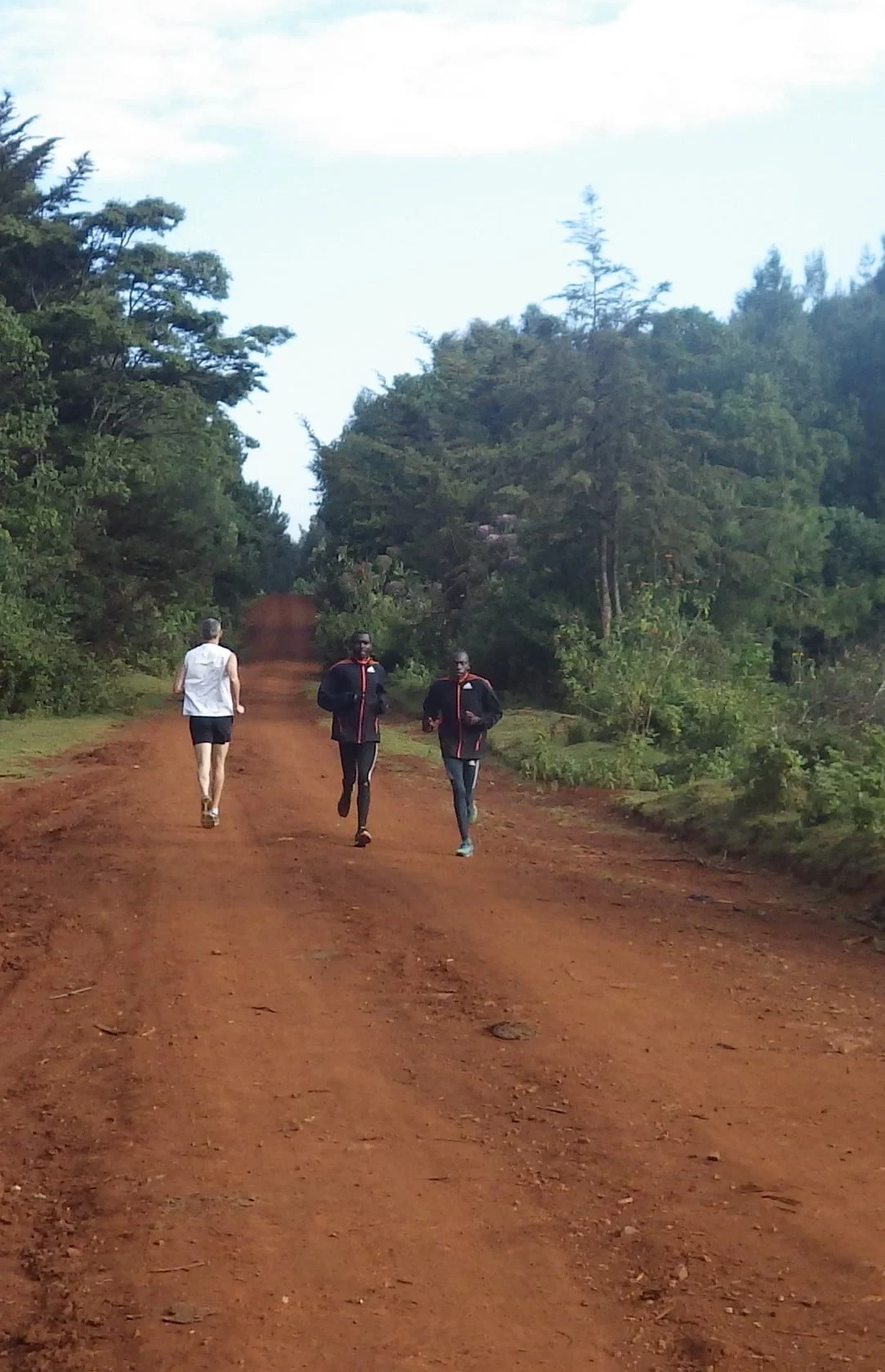
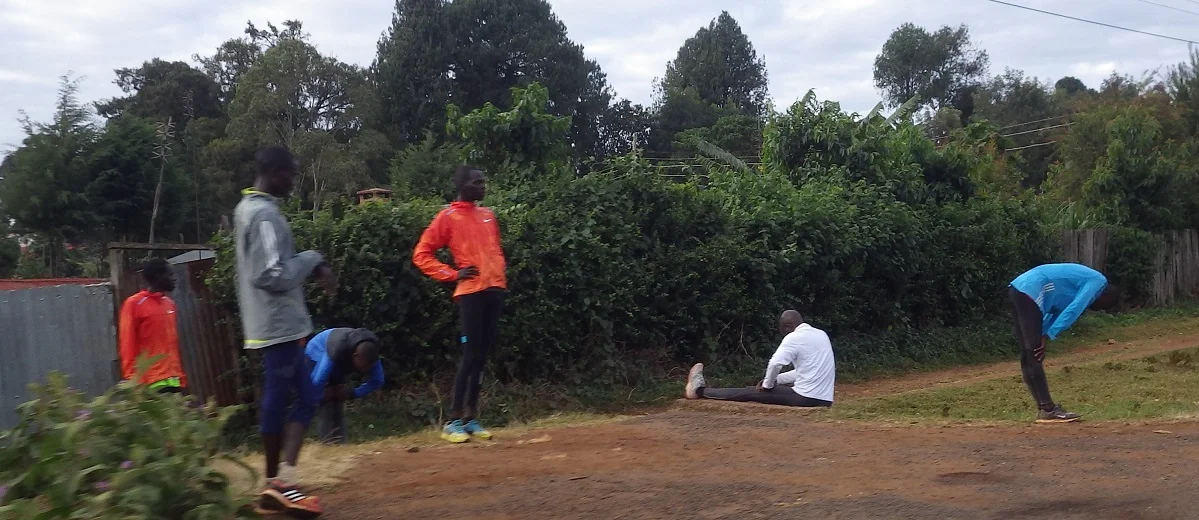
Okay, if I walk into town, I can get internet service again. Cool. So, first morning run in Iten, and more high quality runners than you would see at a major t&f meet, Kenyan, American, European. Really friendly to the tragically slow runner in their midst, though. I'll get articles up on the blog, but I'm going to have to write them separately and upload once a day. Not sure how pictures are going to work.

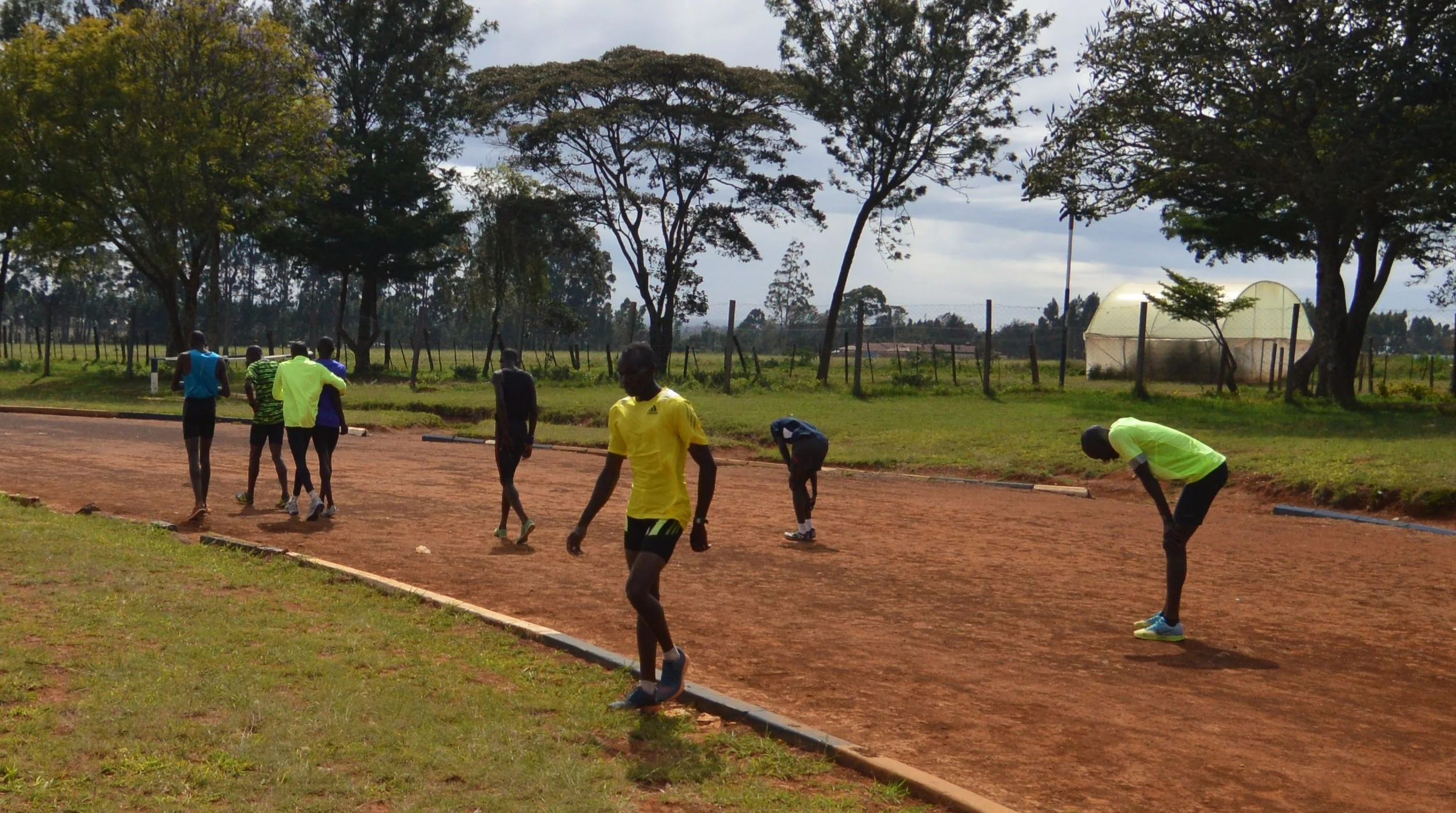
The place that I rented, the cottage at Simbolei Academy is very well located for runners. Within a mile, you have the High Altitude Training Camp. the track, Wilson Kipsang's Keellu Resort Centre, and the Kiero View Restaurant (they have cottages and paragliding, too). Stepping our the main gate puts you on the same road that the professionals are using. I was out by 6:30 - a fair number were already winding down their morning run. Others will wait for later in the day, especially the Europeans/Americans.

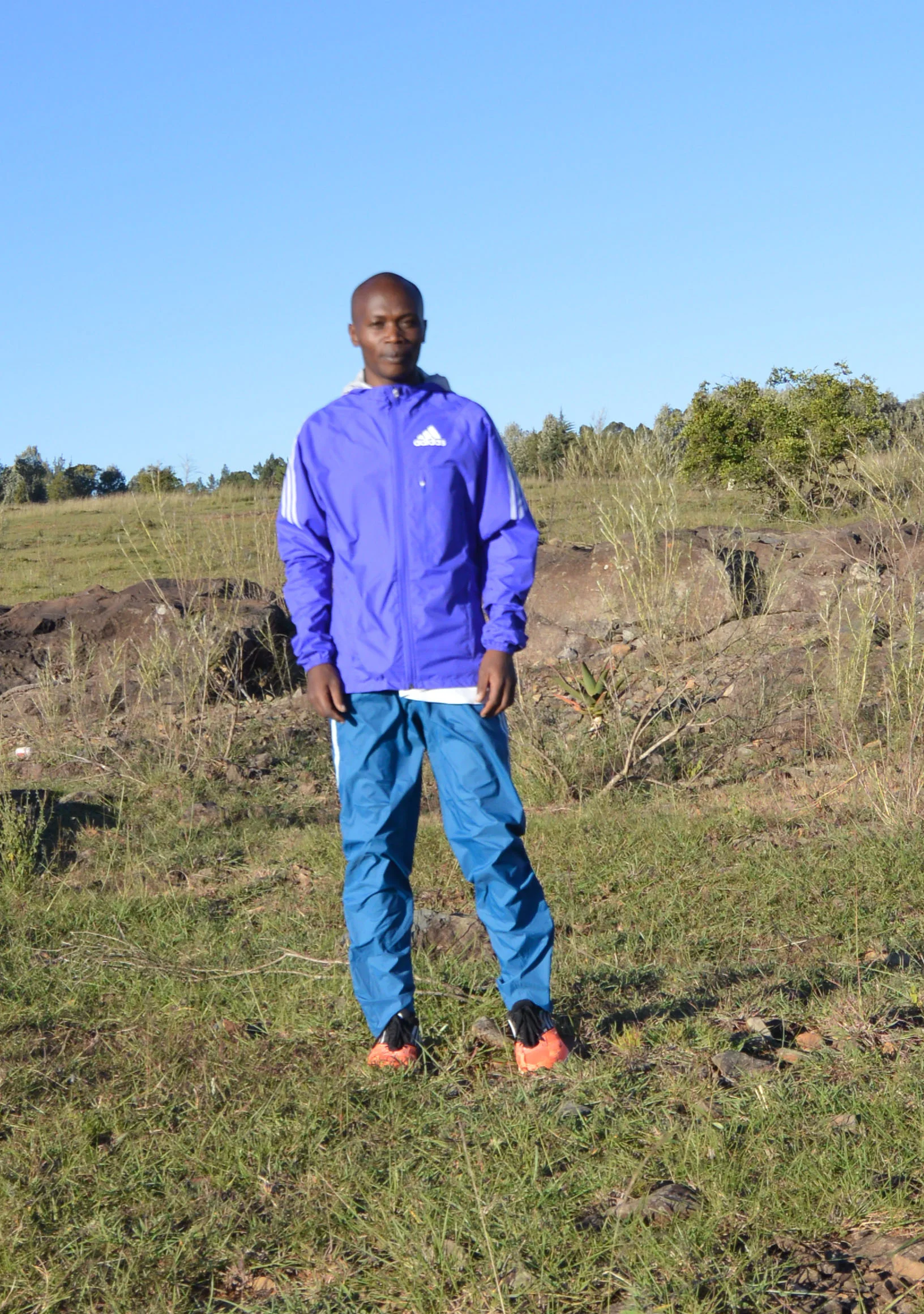
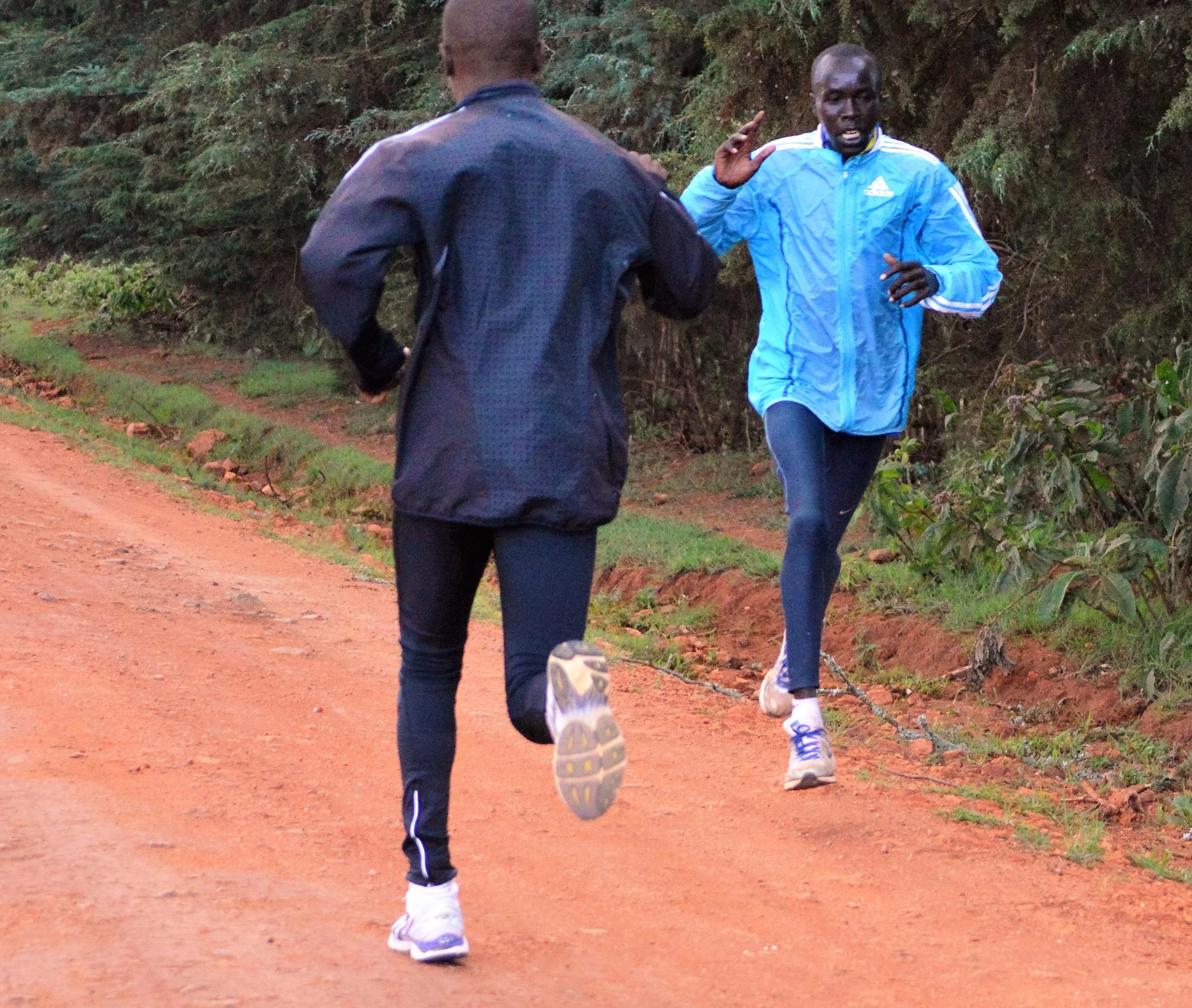
Interestingly, all the Kenyans train in full jackets and pants, despite temperatures in the high fifties, low sixties. My guess is that they regulate heat better than most groups which is a decided advantage for racing long distances.  Zero body fat plays a role as well, something that I don't need to concern myself with.

Run gently, everyone.


People you meet in Eldoret

I figured out why I haven't seen any runners lately. The County Cross Country races are this weekend. All the distance runners, which is to say most of the runners here, are prepping and tapering for the big race.

So I went for a walk and took pictures of Kenyans in Eldoret (and two from another trip) instead.

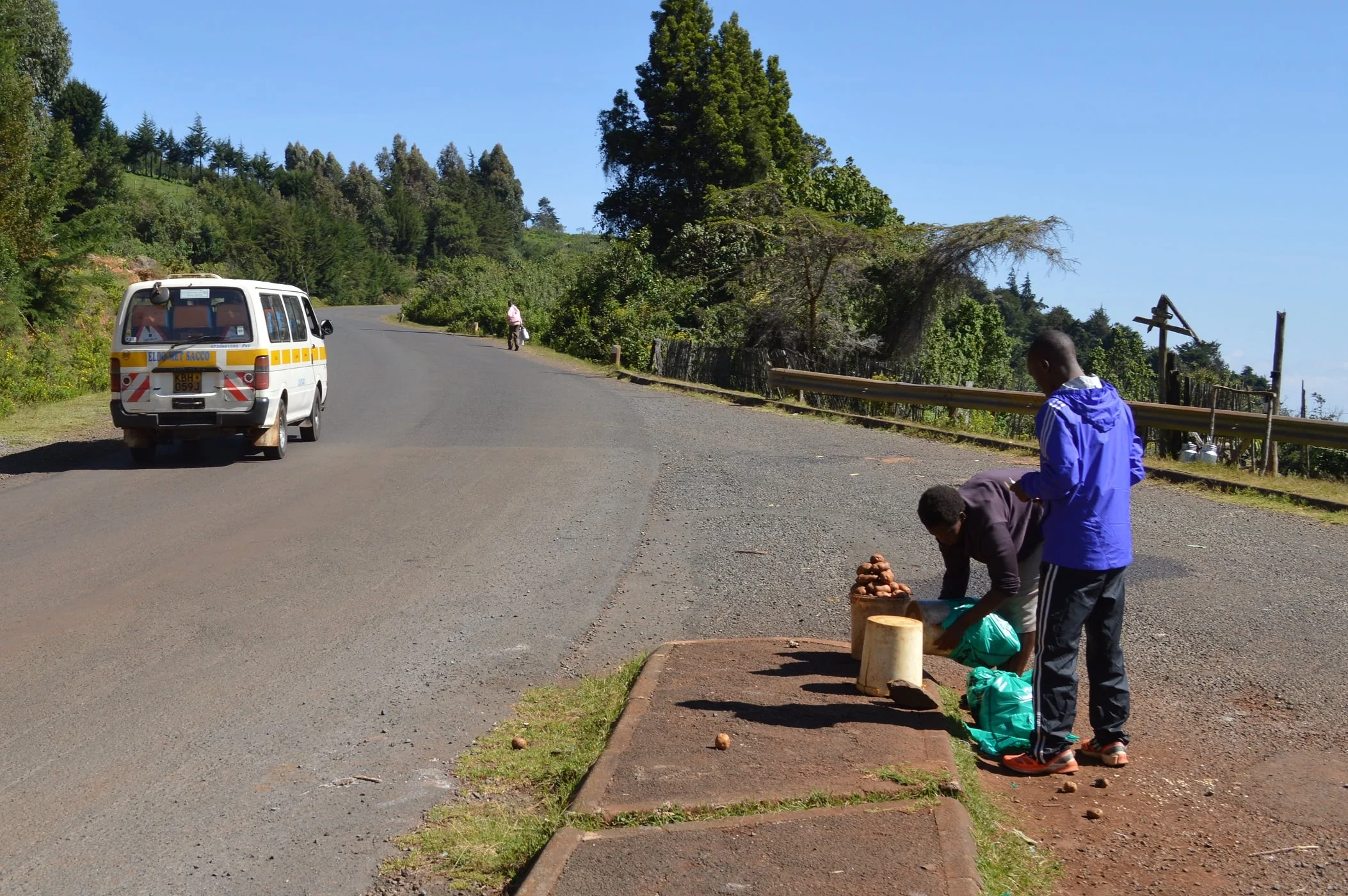
We bought potatoes from this roadside set-up - 10 kilos or more for 200 KSH

We bought potatoes from this roadside set-up - 10 kilos or more for 200 KSH

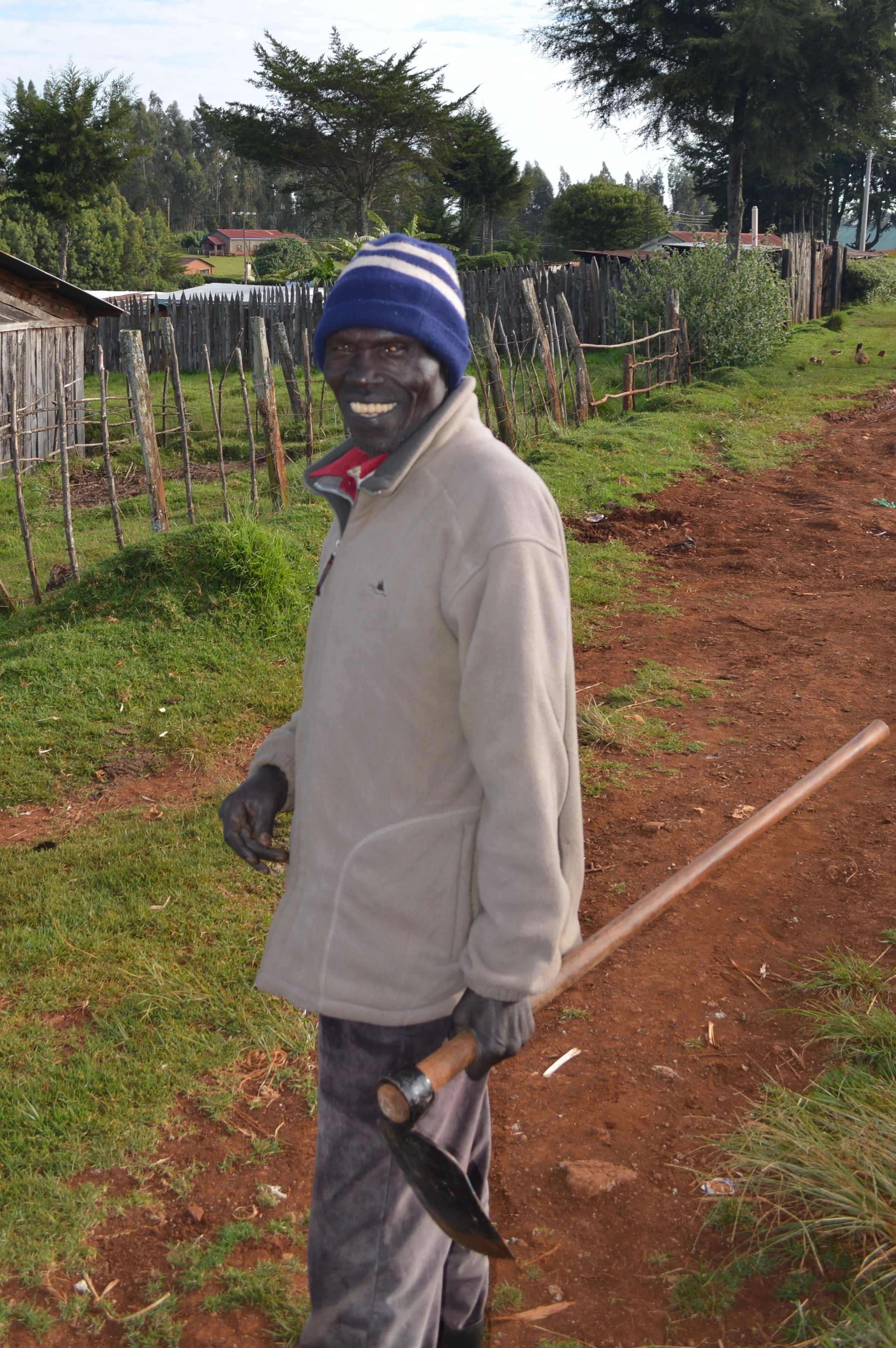
Joseph. A kind man.

Joseph. A kind man.

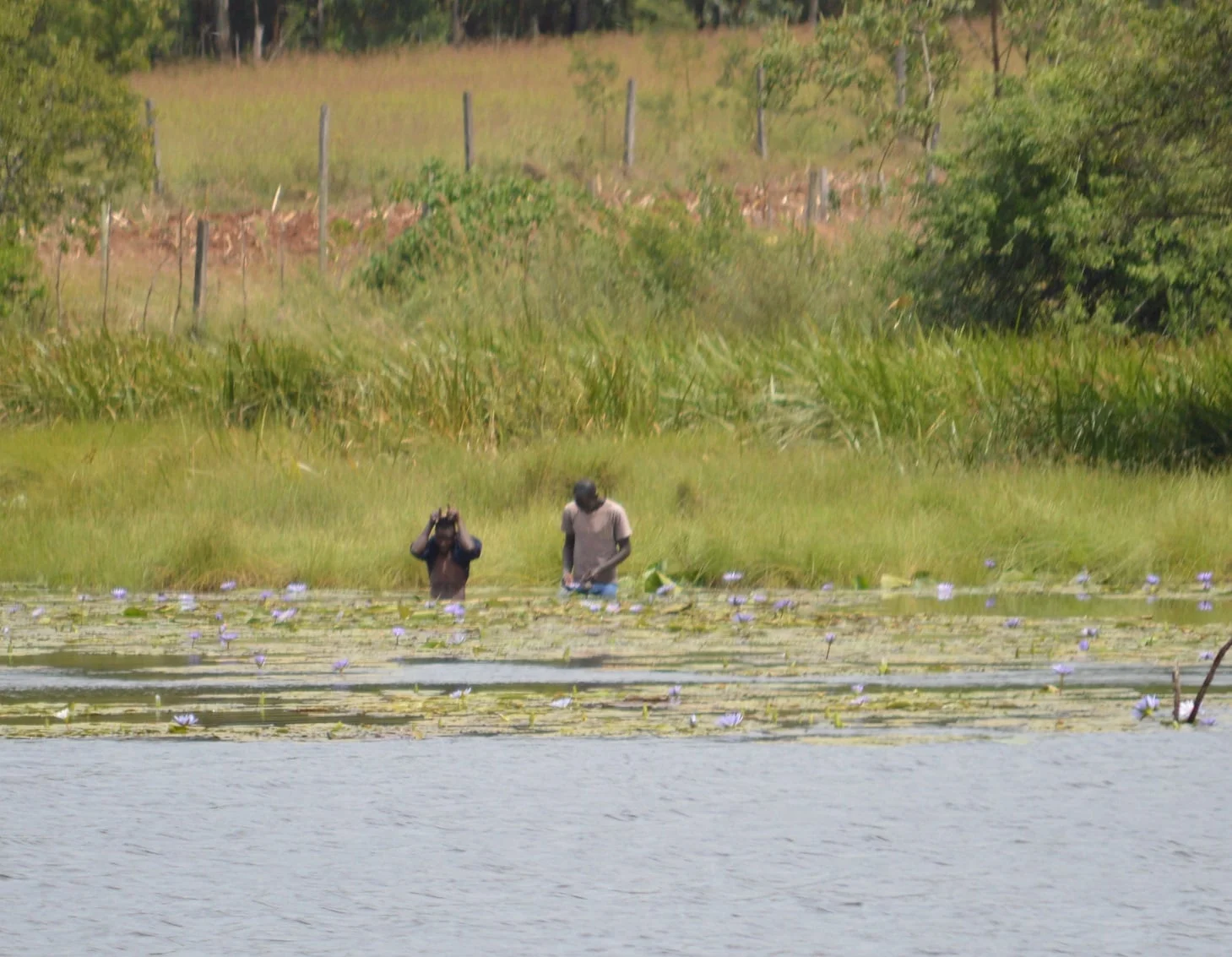
Fisherman in the lake. Soy, Uasin Gishu County.

Fisherman in the lake. Soy, Uasin Gishu County.

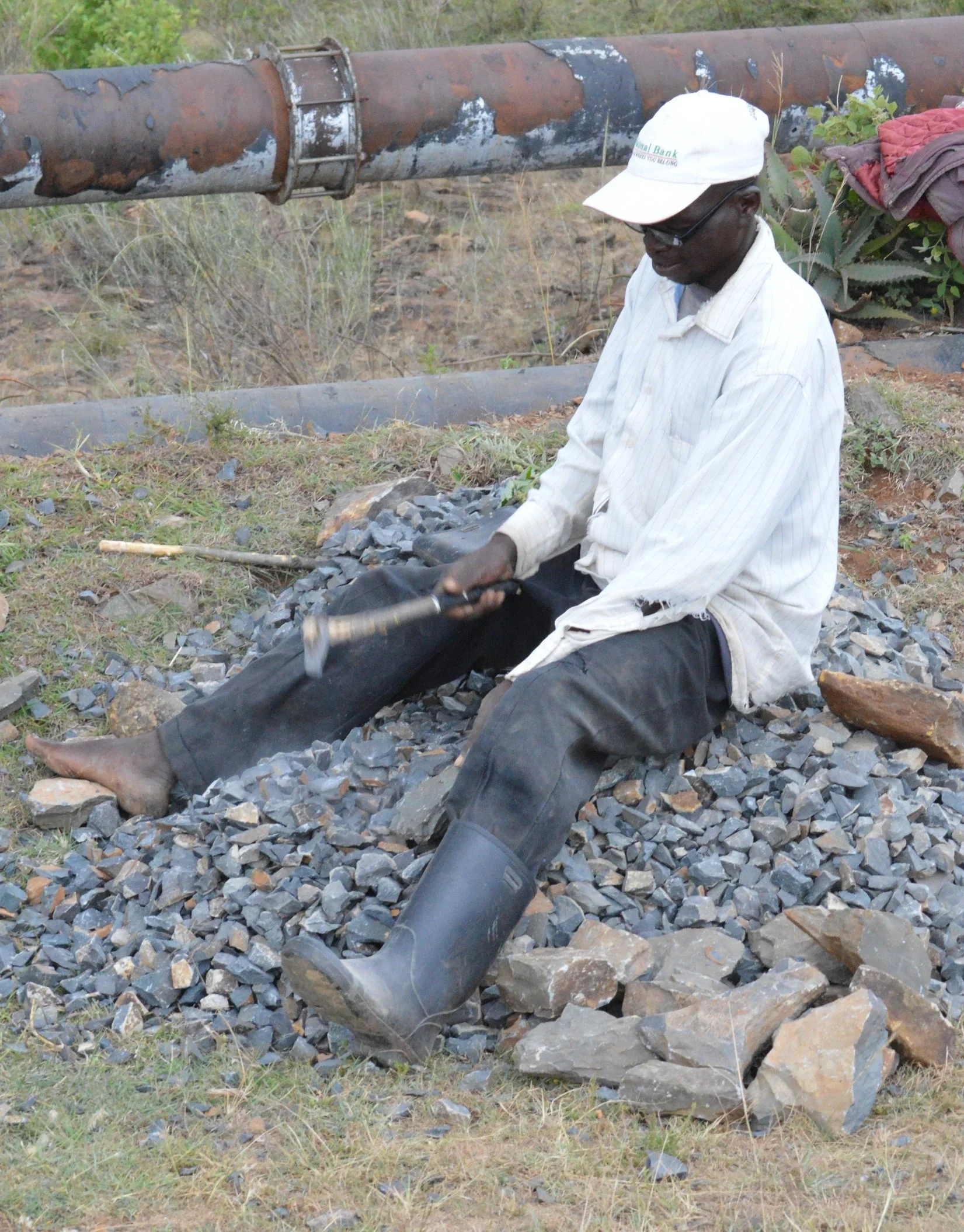
Running is easier. Without a university degree, options are very limited.

Running is easier. Without a university degree, options are very limited.

Running late. In work clothes, this man is still faster than me.

Running late. In work clothes, this man is still faster than me.

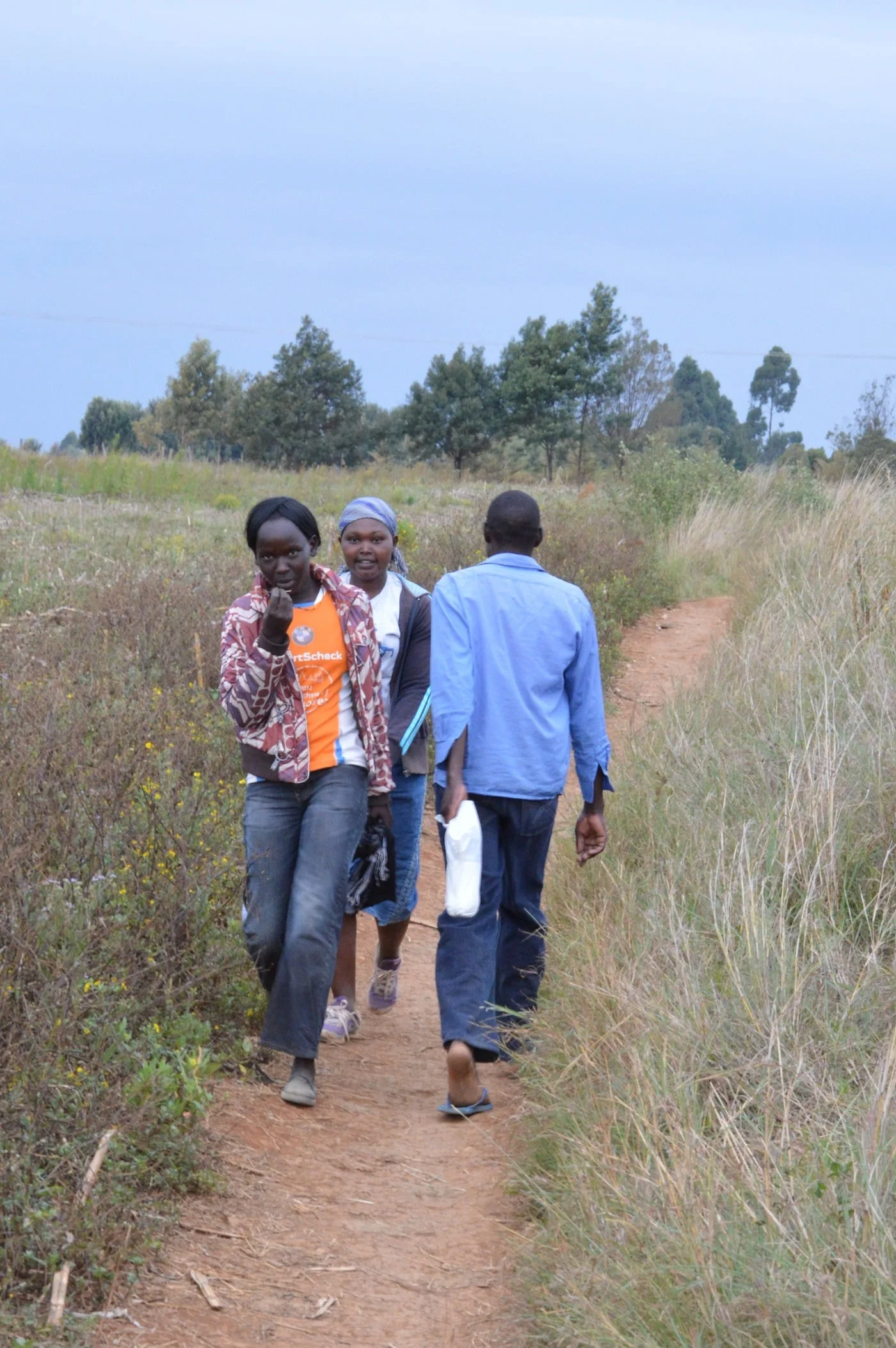
On the way home from work.

On the way home from work.

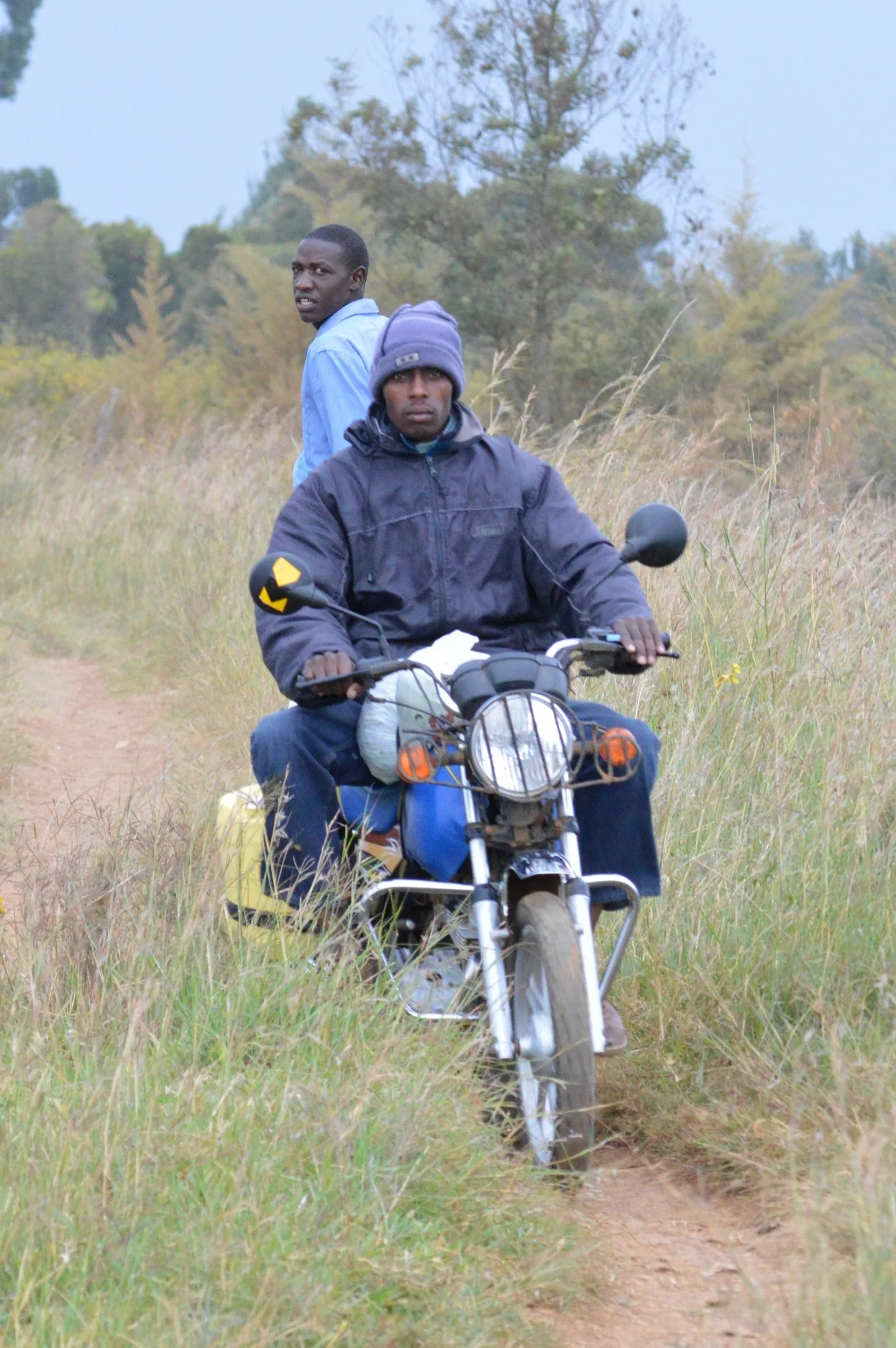
Motorcycles take the right-of-way, usually by bullying.

Motorcycles take the right-of-way, usually by bullying.

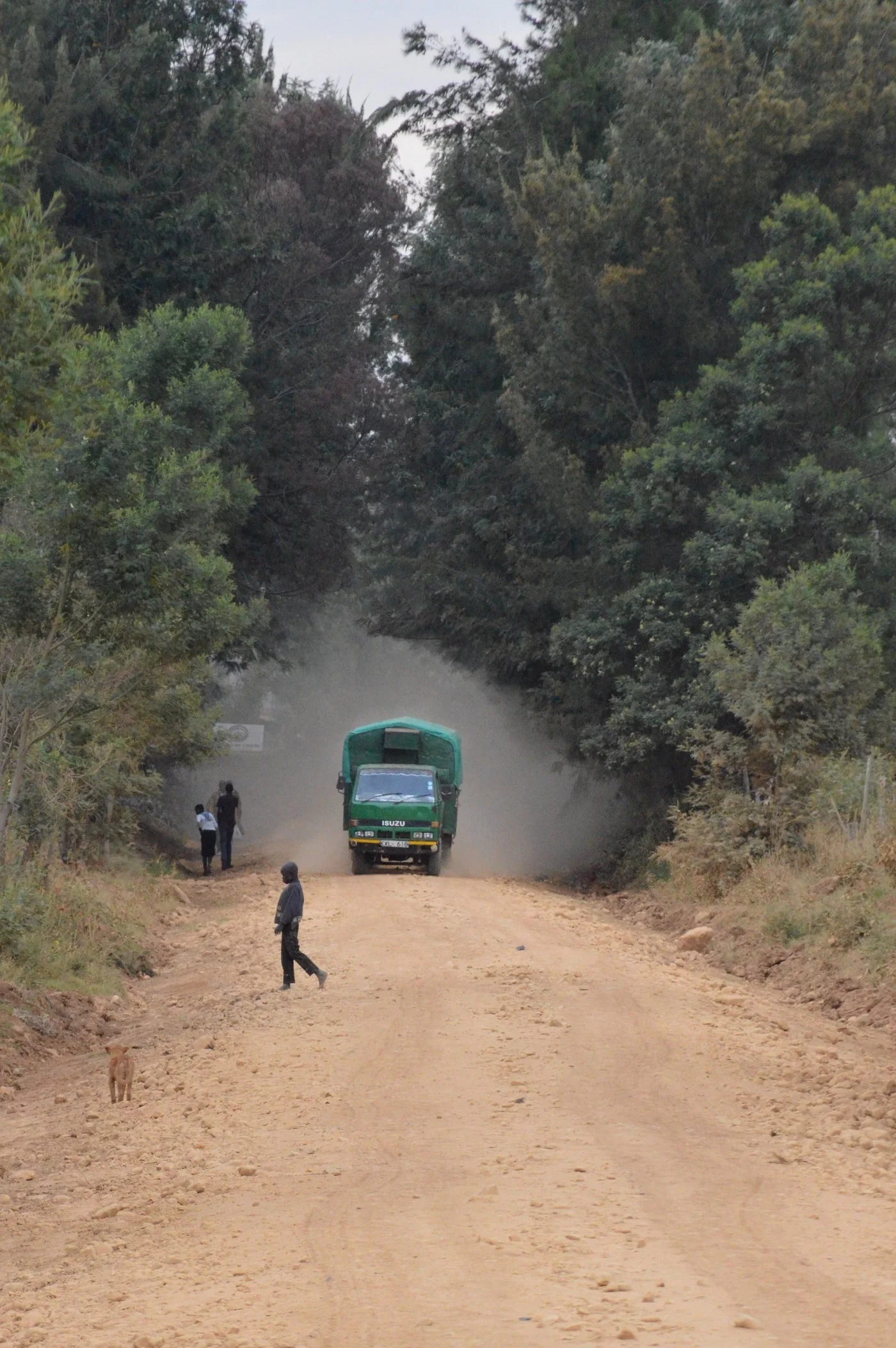
Vehicles don't slow for much of anything. The kids know to get out of the way.

Vehicles don't slow for much of anything. The kids know to get out of the way.

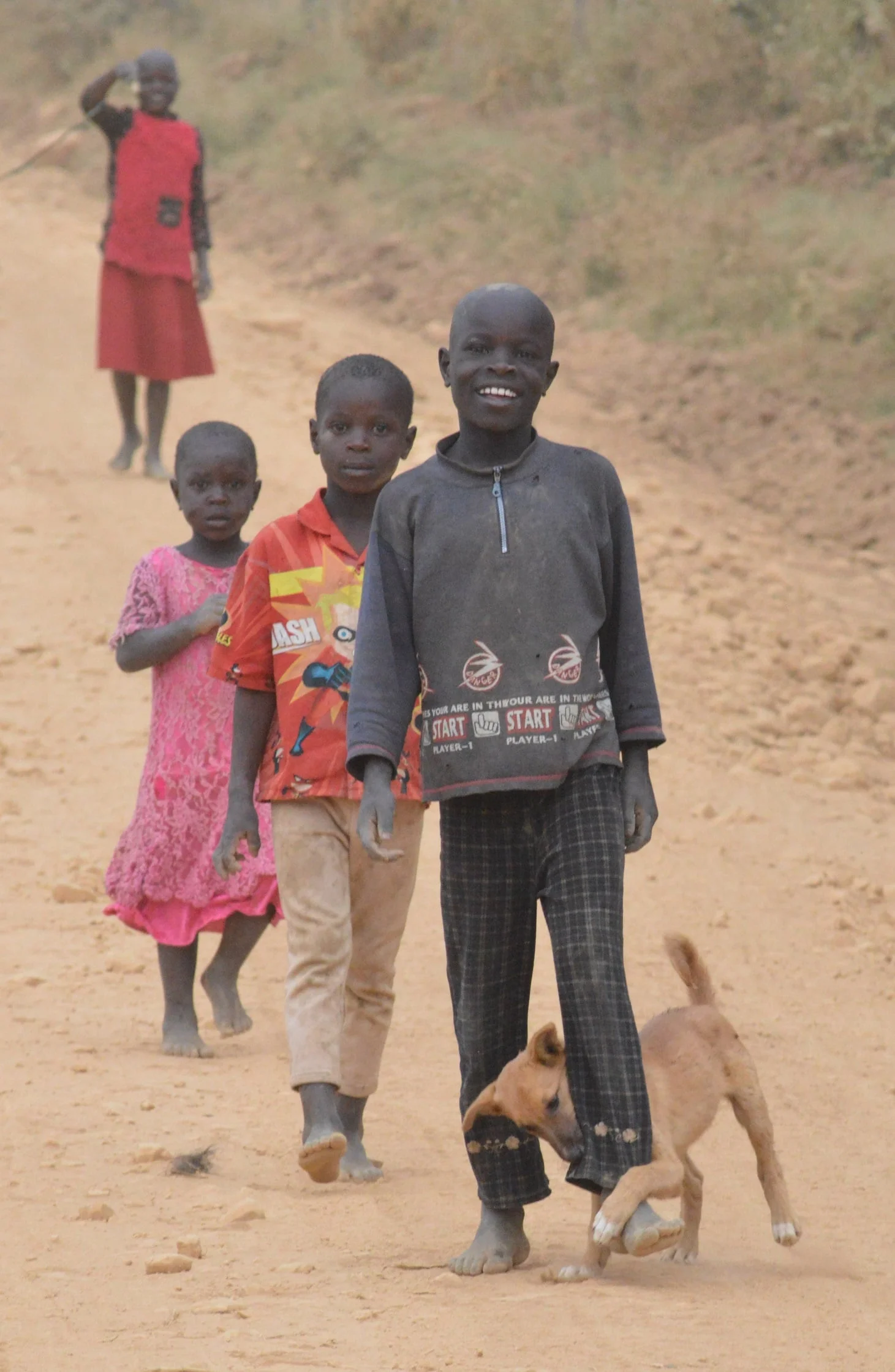
Little kids and a pup.

Little kids and a pup.

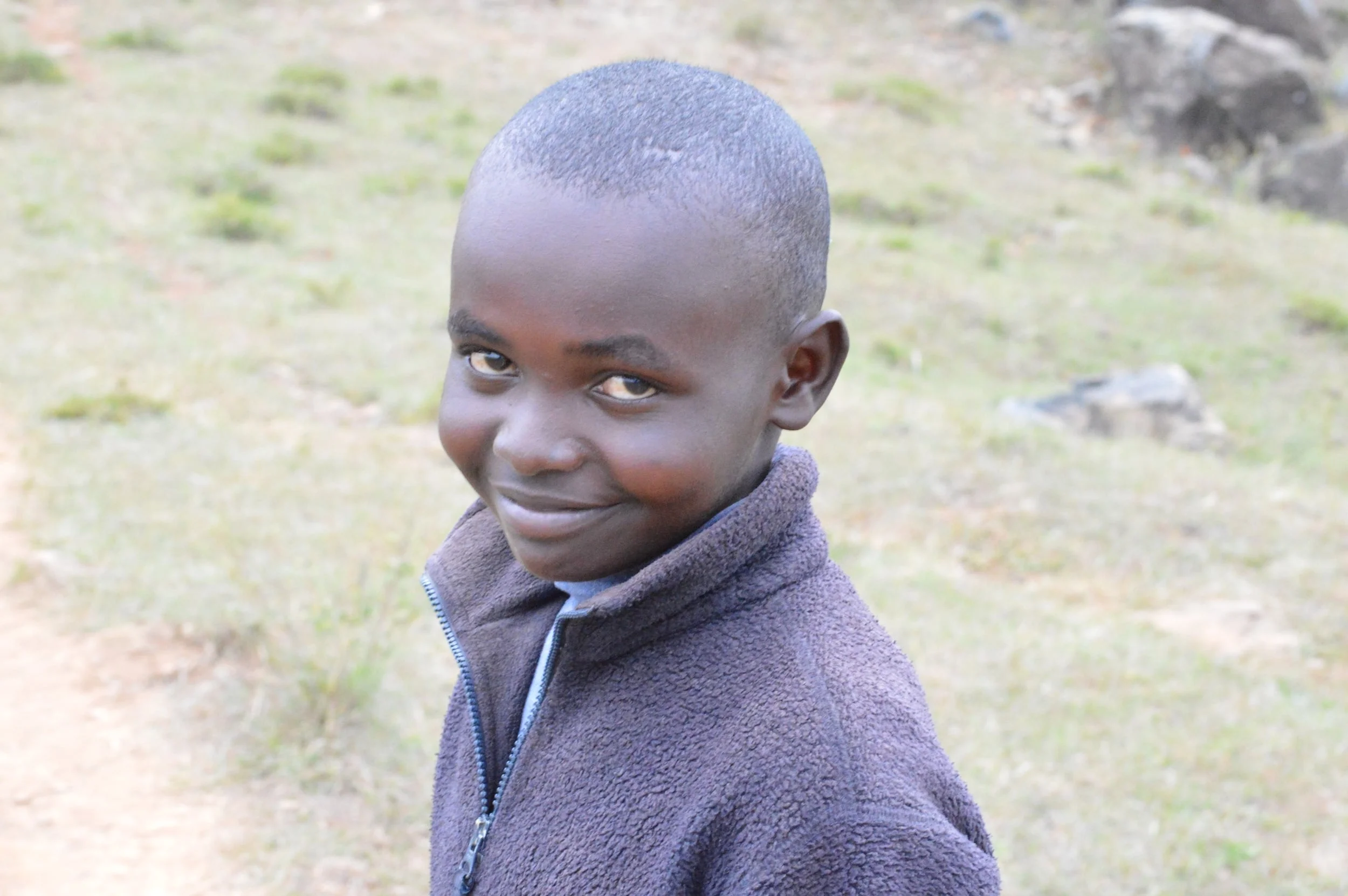
This is Collins. First, he asked me to take his picture. Then he asked me to take him to America. The picture I could do.

This is Collins. First, he asked me to take his picture. Then he asked me to take him to America. The picture I could do.

Goof off day in Eldoret

This is a post made in pieces . . .

Came back from a slow morning run and sat on the concrete wall digging the clay out my shoes with a stick. This, apparently, is the height of entertainment as two little children went and got chairs to watch me. Like all small children, they have the attention span of a gnat, so they lost interest in that and started to poke and prod the pale skin on the dude's thigh. I drew the line at pulling the little hairs on my leg. Vey curious children, and very open. Cute as heck.


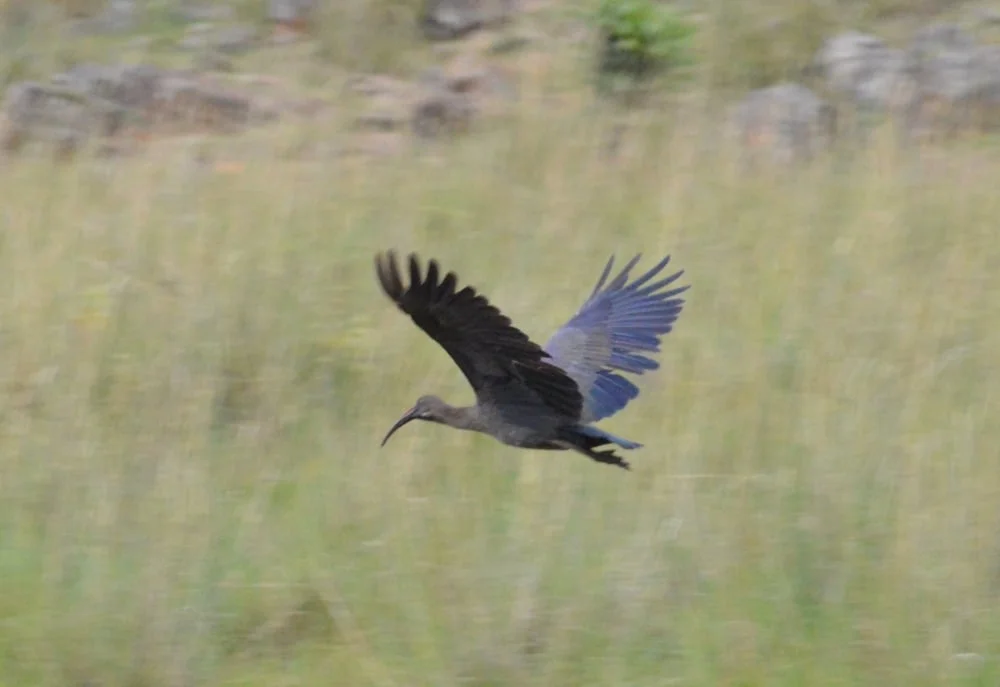
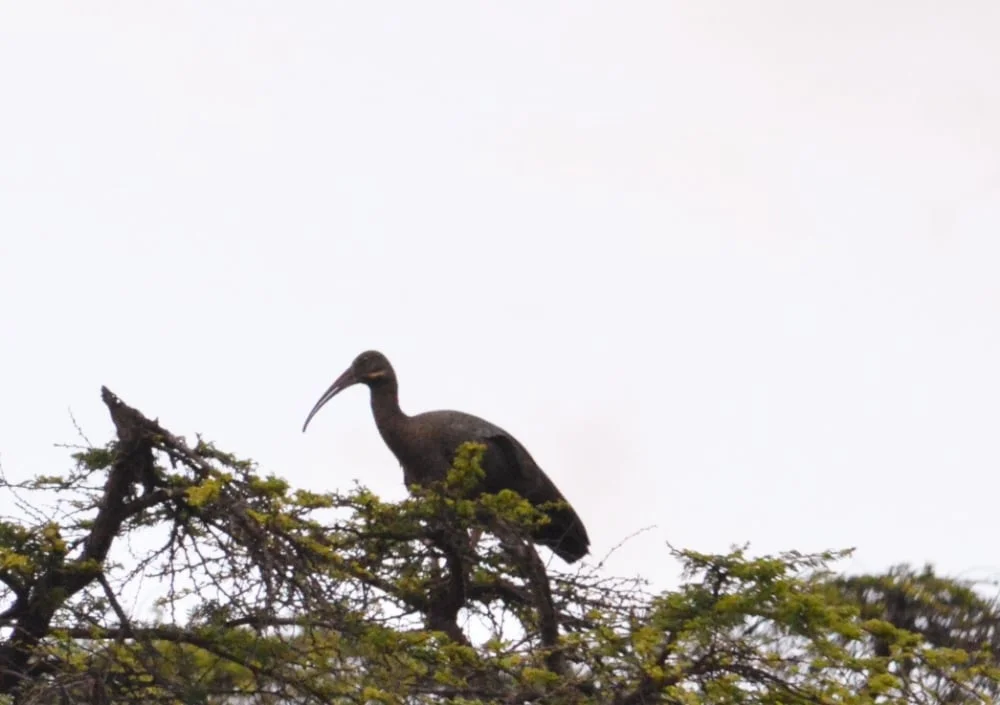
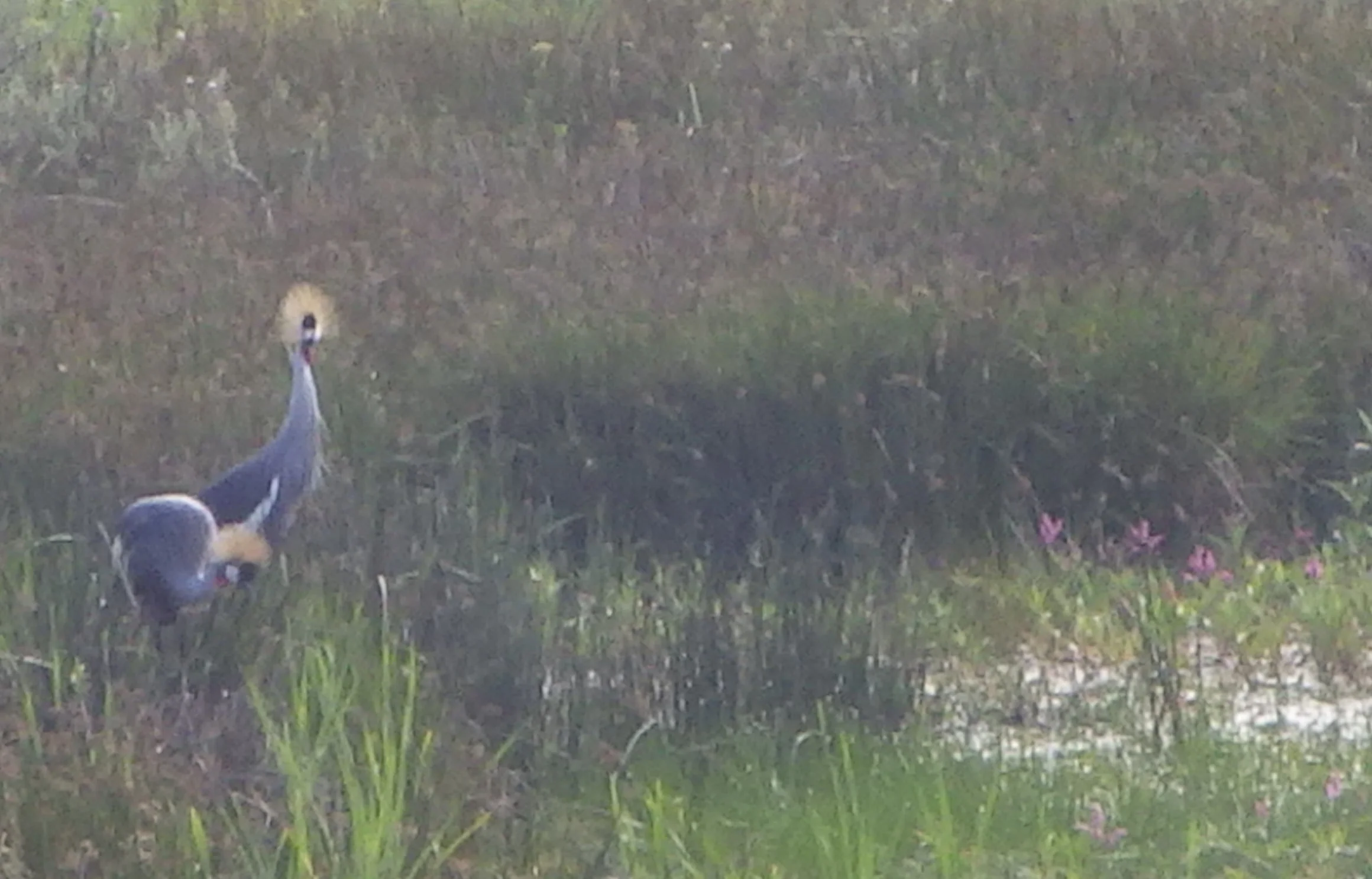
Went for a little bird watching the other evening - which is a new experience for me. The large ibis(?) I captured with my telephoto at full extension. Centering on a moving target like that is tough. Easier when it's sitting in a tree.

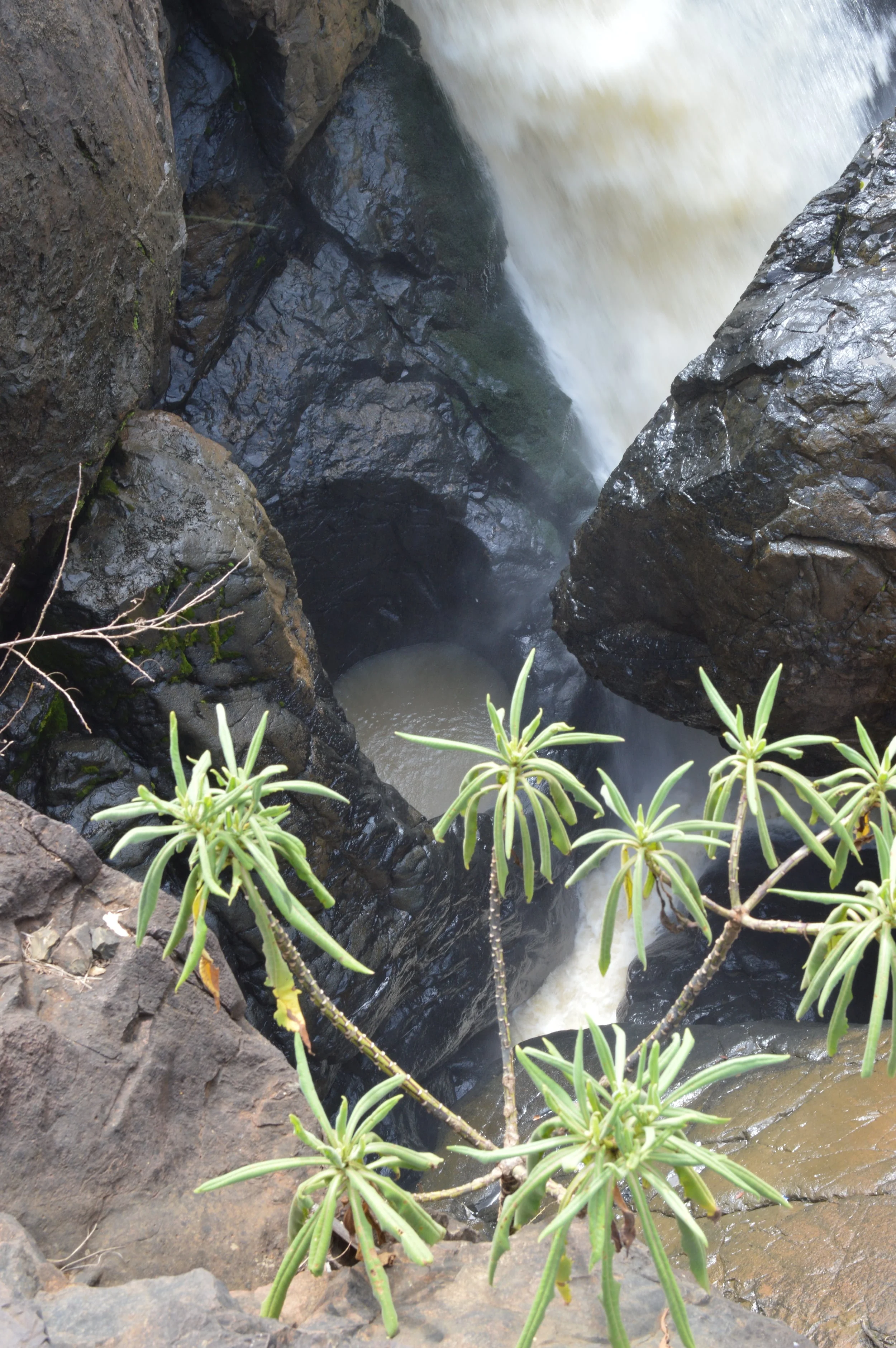
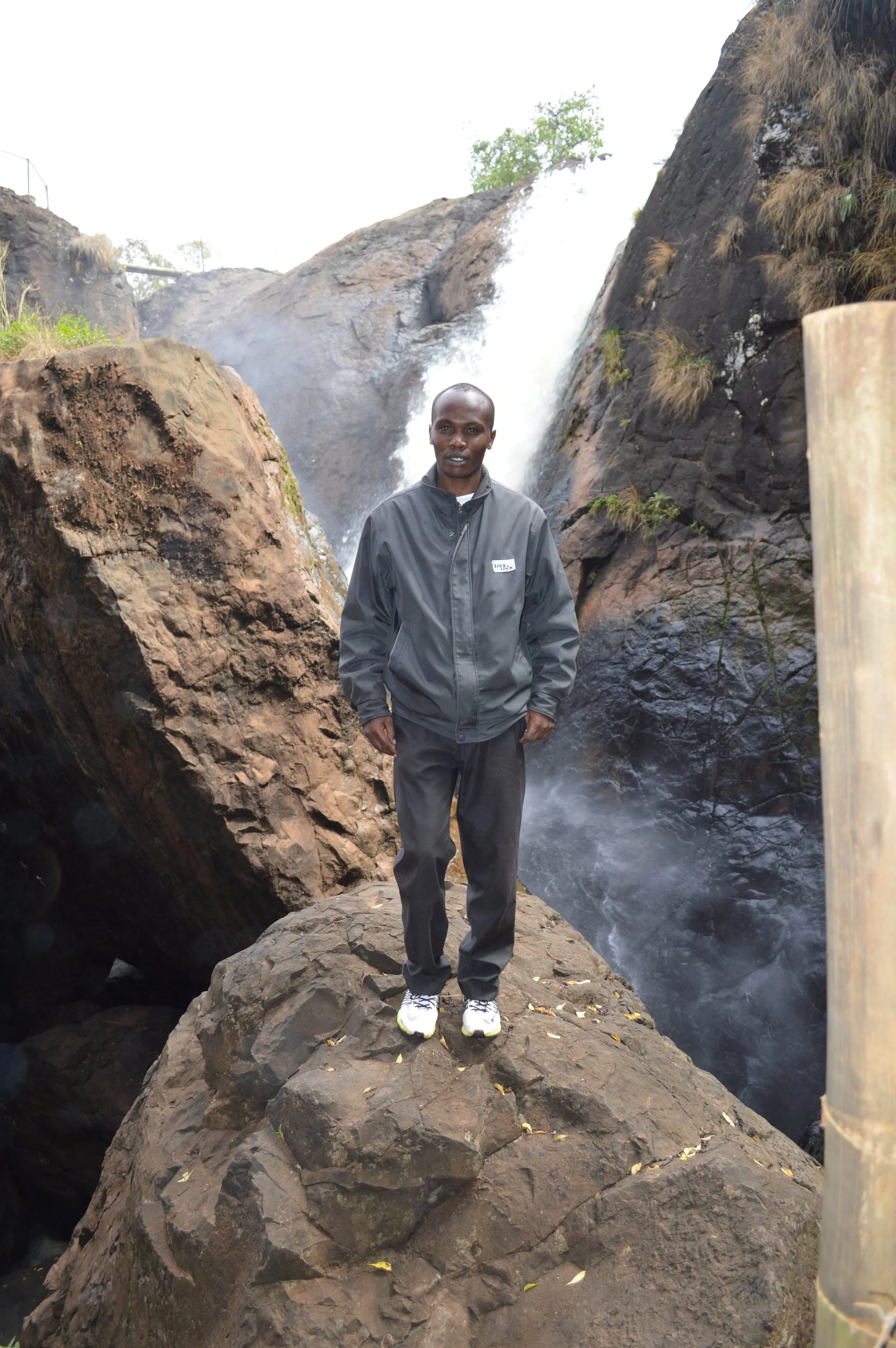
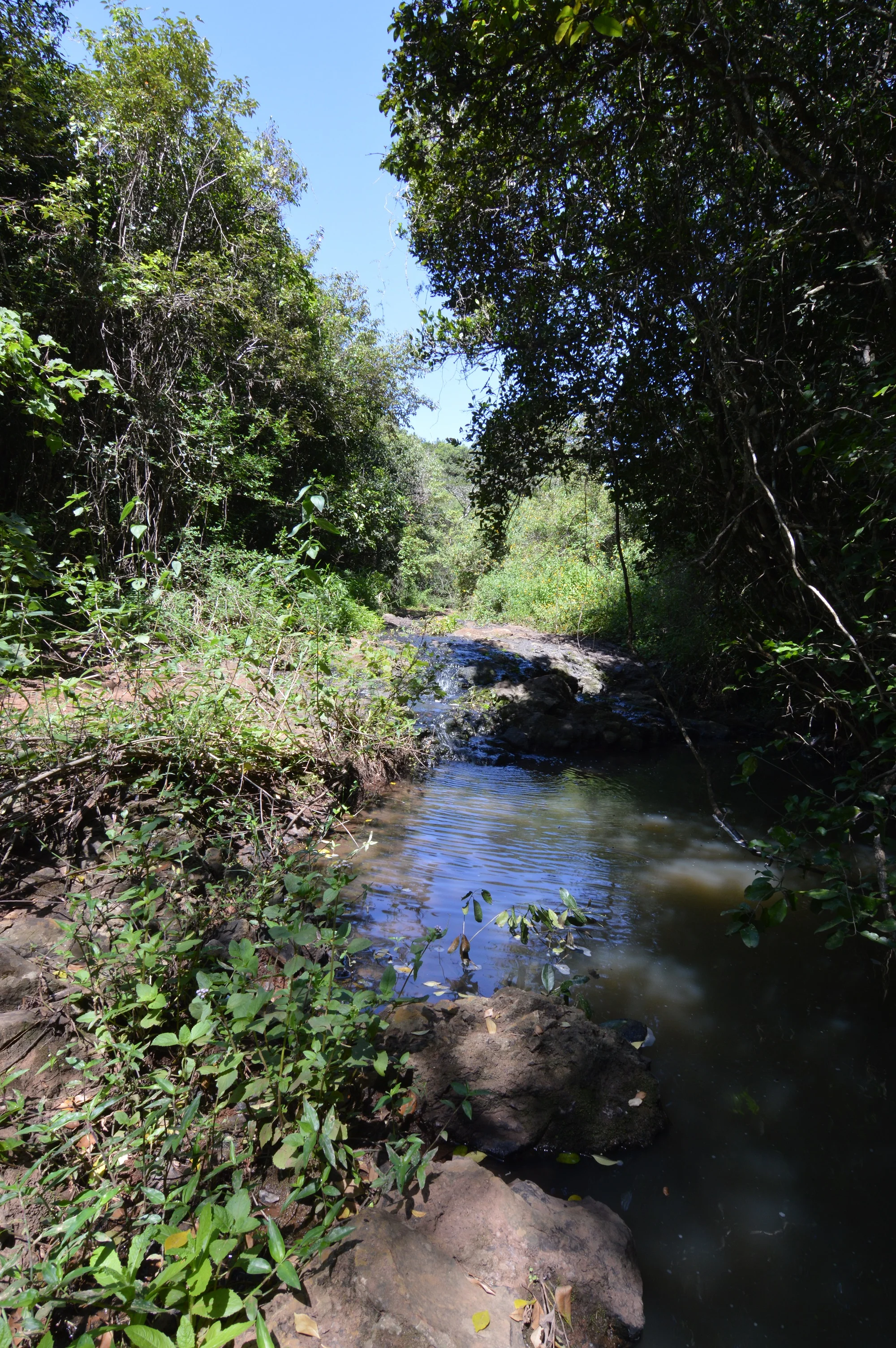
This morning, after a run, we headed to a pretty little waterfall. Justin was a little more adventurous than I was. What I can't figure out is the round cut at the base of the waterfall. A well?  A baptismal? A health spa? Aliens?


Starting to pick up on things that I'm not seeing.

Frogs. Why no frogs in all the little ponds and creeks I've been around. It's not that they lack for food - there's plenty of mosquitos to support a zillion frogs.

I've yet to see a Kenyan smoking. Makes sense for the runners. Most Kenyans are not runners (it just seems that way when you check out the top finishers in races 800m-marathon.) Pleased to note it, surprised it took almost two weeks.


Tried to take a picture of Kenyan traffic when Justin and I drove home. The Red Sea of sedans, trucks, bicycles, motorcycles, saccos, and pedestrians parted. No picture but we got home in record time.


Had lunch at the Rosewood Restaurant while the car got washed. I had fish and chips, the first really western food I've had in several weeks, and a Tusker beer. Wonderful food and the tartar sauce was very tasty with cucumber and sweet red onion. Stealing that for home.


Tomorrow's plan is a rest day for me running since I've run 9 of the last 10 days, then some housekeeping stuff downtown, followed by an evening photo session out in Kaptagat. Hoping for the brilliantly clear blue skies from my arrival to make the pictures pop.

Thursday, it's back to the track at the University of Eldoret.

Lots of pictures on the way.

Telling Details

Despite all the running-related stuff I’ve been posting, the purpose of my trip to Kenya was to get the kind of details that would make telling the story of Grace (introduced at the very end of Trail of Second Chances) realistic and relatable.

Justin and his wife, Winnie, have been absolutely wonderful in helping me with this. On Saturday, we went to Winnie’s parent’s home in Soy (So-yay.) Soy sits on the border of Uasin Gishu (WA-sin Gi-shu) County and Western County, out toward the Ugandan border.

The land here is flatter than the rest of the county or of Nandi County, and drier despite several decent sized lakes. The dirt roads are in better shape, due to less erosion during the winter seasons. The tarmac roads are pretty bad everywhere except Nandi Hills, a response to the tea industry and their need to get product to market.

Winnie’s parents were welcoming – it’s a word that is very apt for the whole country so far, with one exception – but I ran into a language barrier for the first time.

Kenya has two official languages, English and Swahili. English is used in all the schools, according to Justin. However, that is something that pertains more to the younger generations. Winnie started to apologize for her parents, and I laughed, telling her that they speak more English than I do Swahili, which is limited to about four words, Please, Thank you, Sorry, and Uh-oh.

One thing I don’t know is how Kenyans stay slender. Each journey to family homesteads takes on the elements of a progressive dinner. The trip to Soy was no different. Two stops, two full meals. The first also included two cups of mursik. I pretty much skipped dinner when we got home.

Winnie’s dad, with Justin playing the role of interpreter, told me that the area used to be covered in wattle trees, used locally to produce ink (from the tannins in the bark) and charcoal from the pulp. That changed in the late 1990s when the East African Tanning Extract Company Ltd divested, finding that the sector was not profitable enough for the stockholders tastes. Since then, homes have sprung up, including a new home under construction for Kenyan soccer star, McDonald Mariga. He is one of two international stars from Kenya.

A special treat for me was an invitation to see the kitchen at Winnie’s parent’s house. The kitchen is purely the woman’s domain and men are expected to stay out. Because Winnie understands the kind of book I’m hoping to write (and because I had volunteered to do a little cooking one night), she asked if I would like to see a traditional kitchen. Absolutely, I said and meant it.

This marked me as very different from most Kenyan men. They have no desire to visit the kitchen, preferring to savor the foods that come out of it.

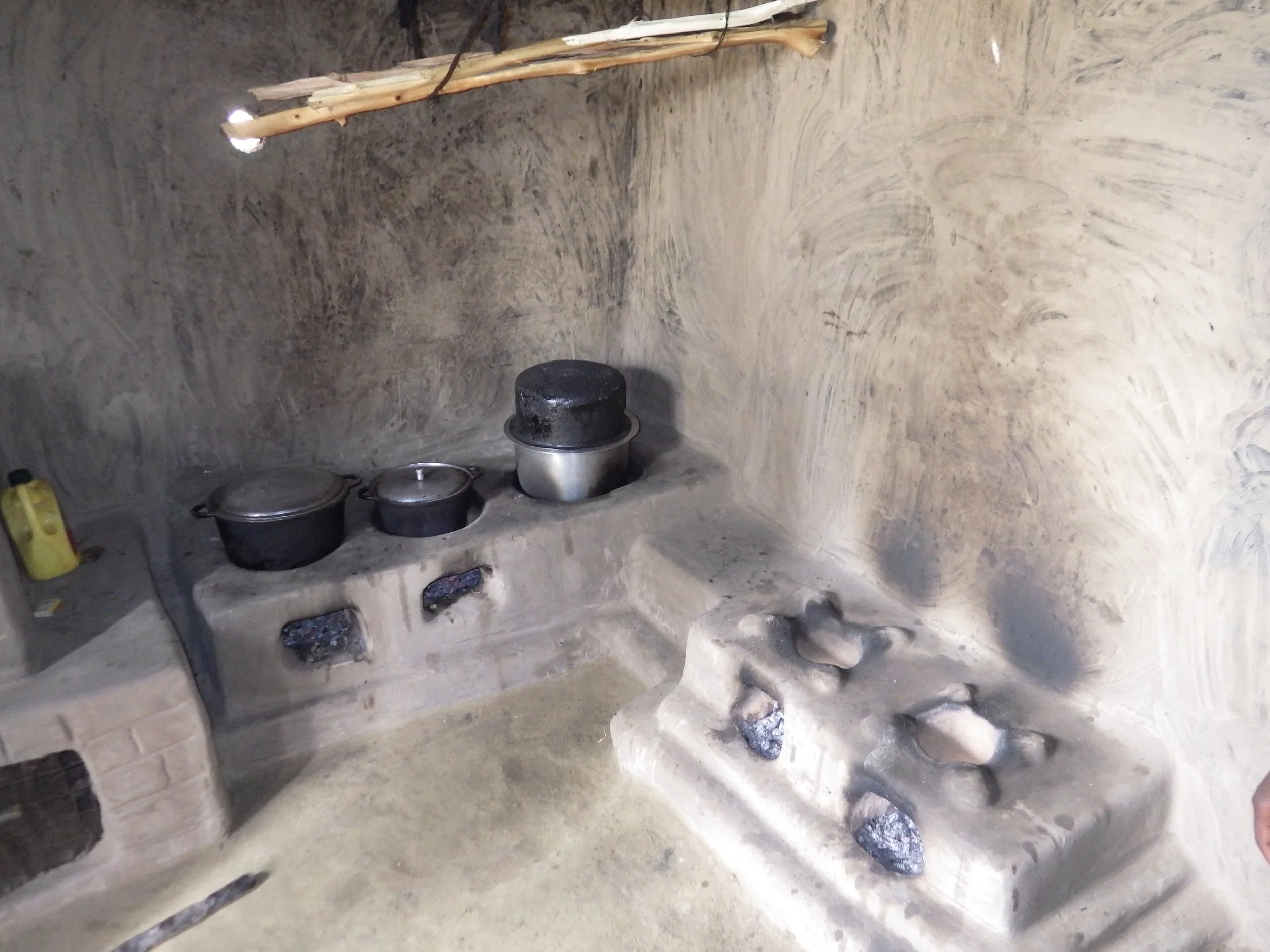
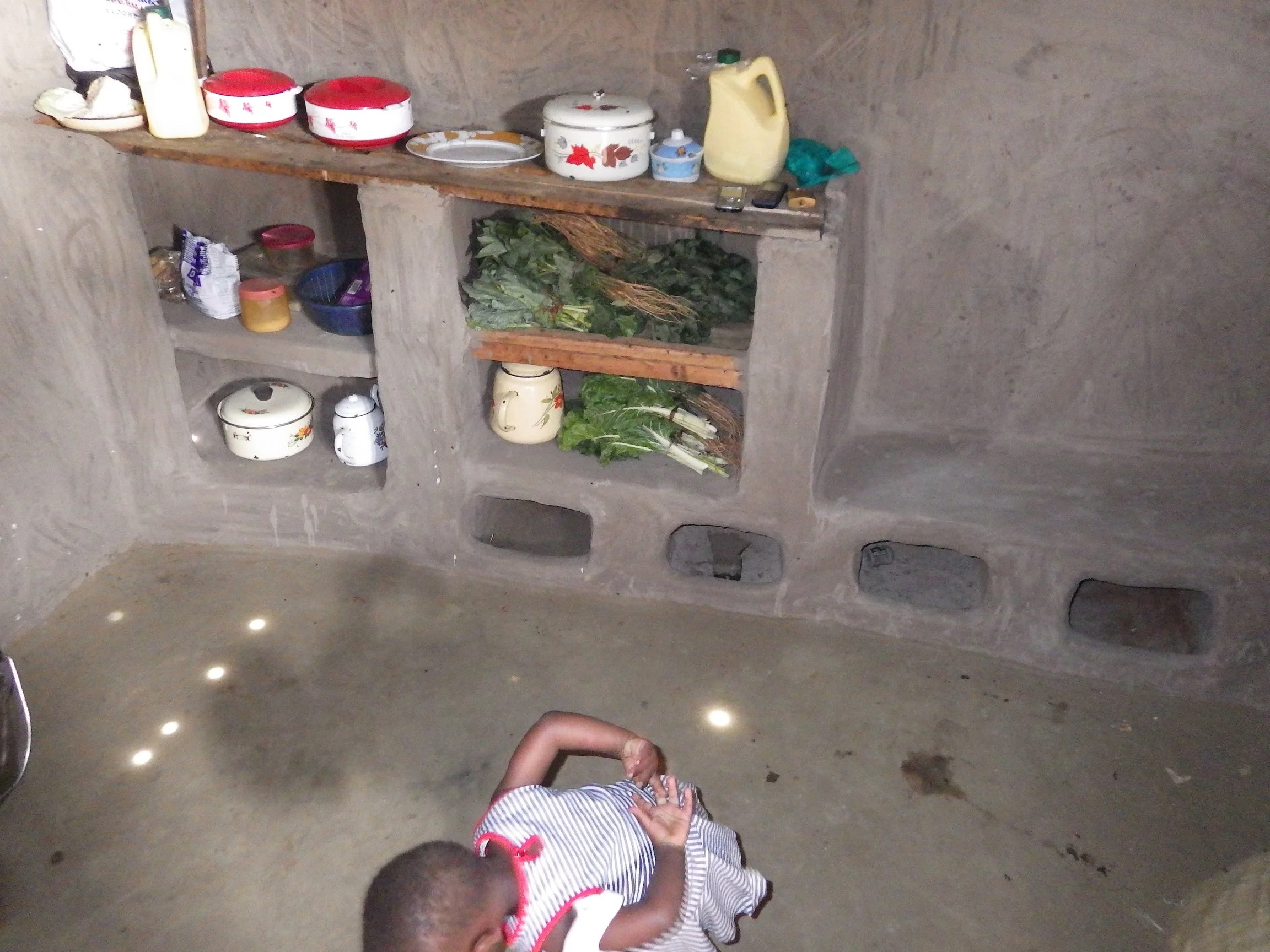
The kitchen is set up in a separate building and the cooking areas are literally built into the walls of the structure. Not something that I would have imagined. Likewise, the lack of a chimney. Kenyan kitchens use cross-ventilation from windows and the small gaps at the top of the walls to handle smoke. These are the kind of telling details that, when I write the book, will make the story honest

The fires burn corn cobs, a plentiful material here while other places use charcoal. The flames are set below and pots set into the cavities molded to hold them. Storage is done at the other end of the room. All the ingredients are fresh since there is no refrigerator, and the water is drawn from wells and boiled before use.

Each of the women, including many of the younger girls, will play a role in the preparation and serving of the food. Preparation is by hand, with everything cut into bite-sized pieces except meats attached to bone. Boiled rice, potatoes, millet, and chapati (a fried flour dish somewhere between a pancake and a crepe, but without the sugar) are all very common, as are cooked vegetables. At most of the meals I’ve been present for, meat was served, but I suspected that’s in honor of me, not a part of normal Kenyan diets.

After we ate, the family gathered in chairs outside, enjoying the cooling breezes from under a few remaining wattle trees. Listening to the family speak, sometimes emphatically using hand gestures—Kenyans talk a lot with their hands— and sometimes jokingly, scenes for the book finally started to drop in. I’m not ready to write it yet, but I am getting close.

I came here in search of the story, worried I might not find it, but it is here, right in plain sight, as though it has been waiting for me. 

Sunday Long Run in Eldoret

First Long Run

Sunday marked my first long run since I got to Kenya. I typically like long runs that meander rather than the measured and business-like runs recommended in most training plans, i.e., 16 miles @ xx:xx pace.

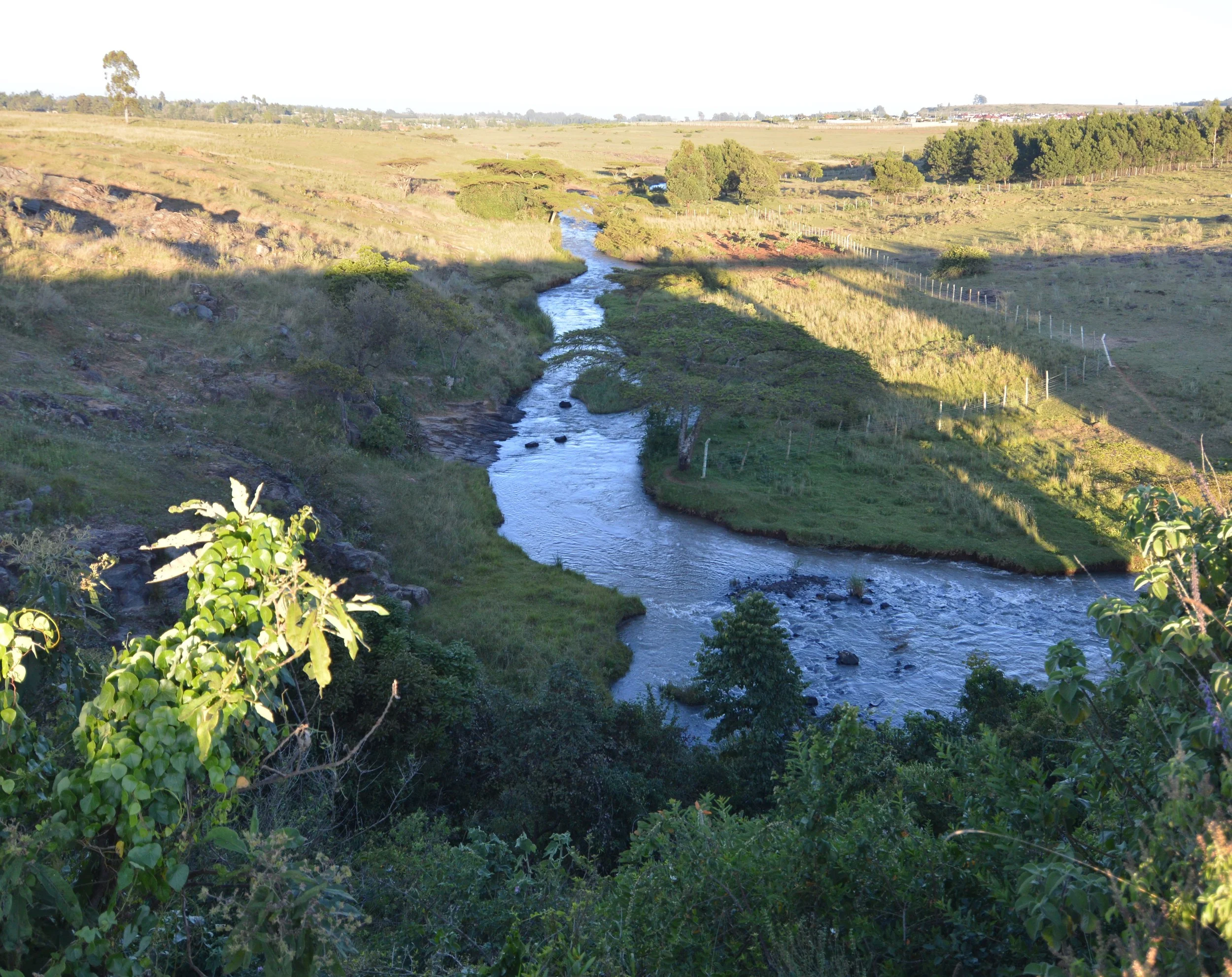
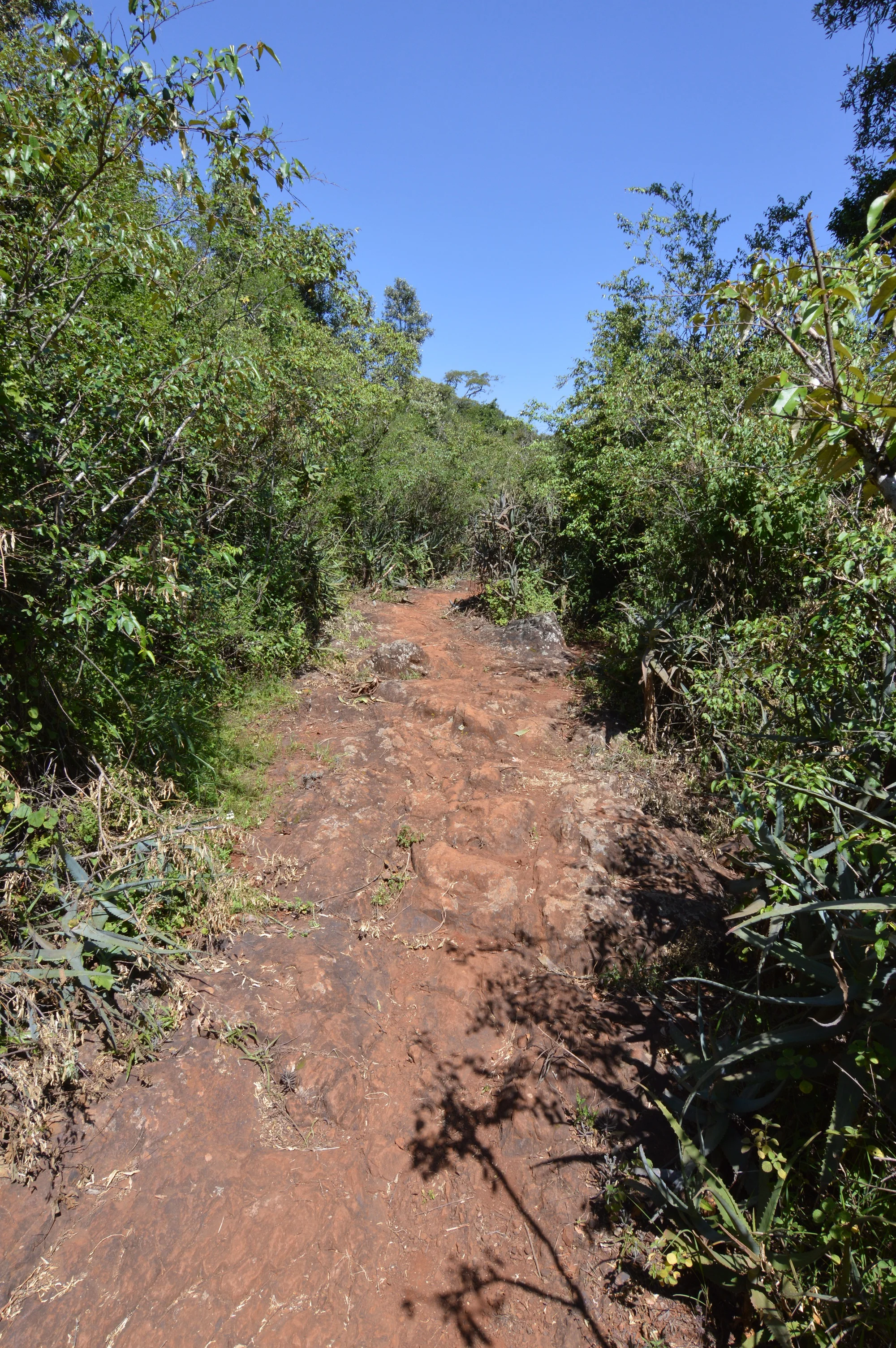
I did that this morning, sliding out to run west along the river. It’s semi-familiar, with the low grasses and the basalt rock. The little things remind me that I’m not anywhere near to home. Pretty flowers that I’ve not seen before, or the call of a bird with a ‘whep, whep, whep’ sound or another that sounded like a gate squeaking back and forth. I saw a pair of Hadada Ibis who, from the way they complained, didn’t like strangers. Little things, as I said, except for the Ibis – they were way cool.

The run started with cloudy skies, something that Justin said is a bit unusual. I think I brought them with me. It cleared later though, with the characteristic blue of the African skies.

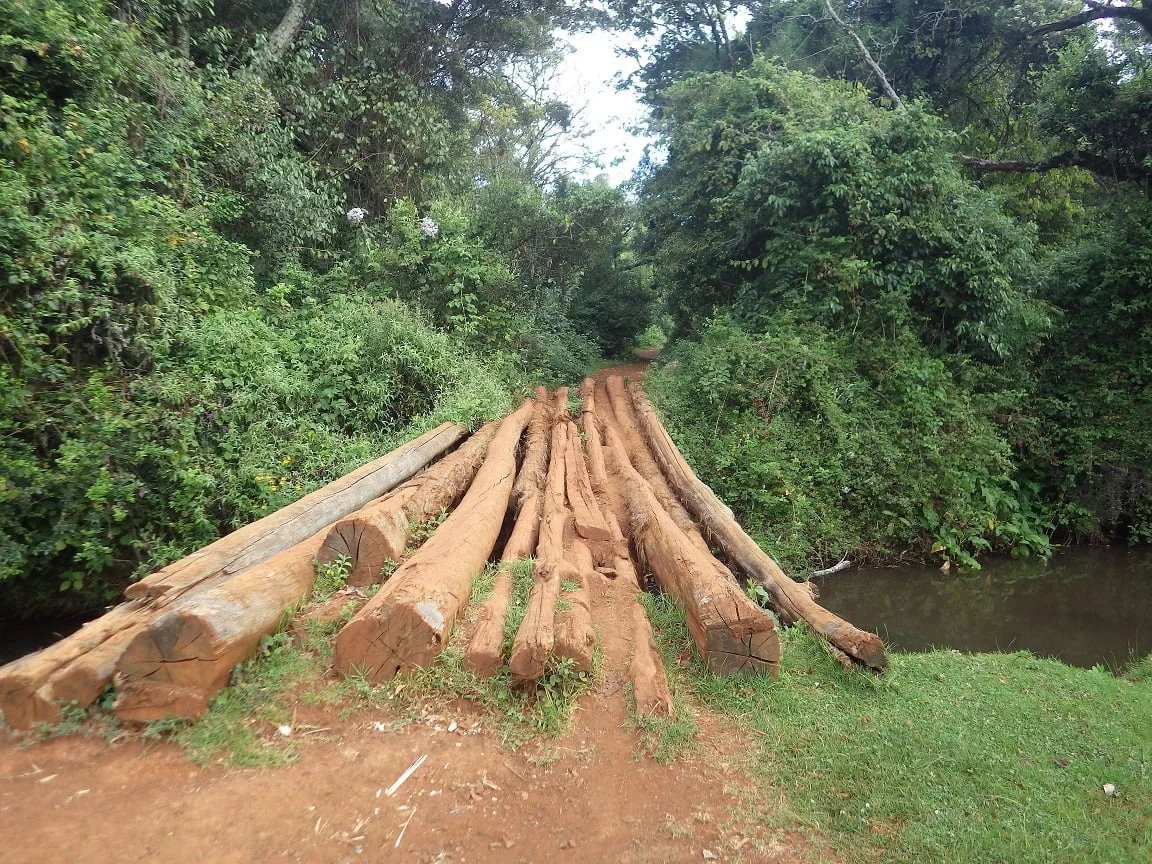
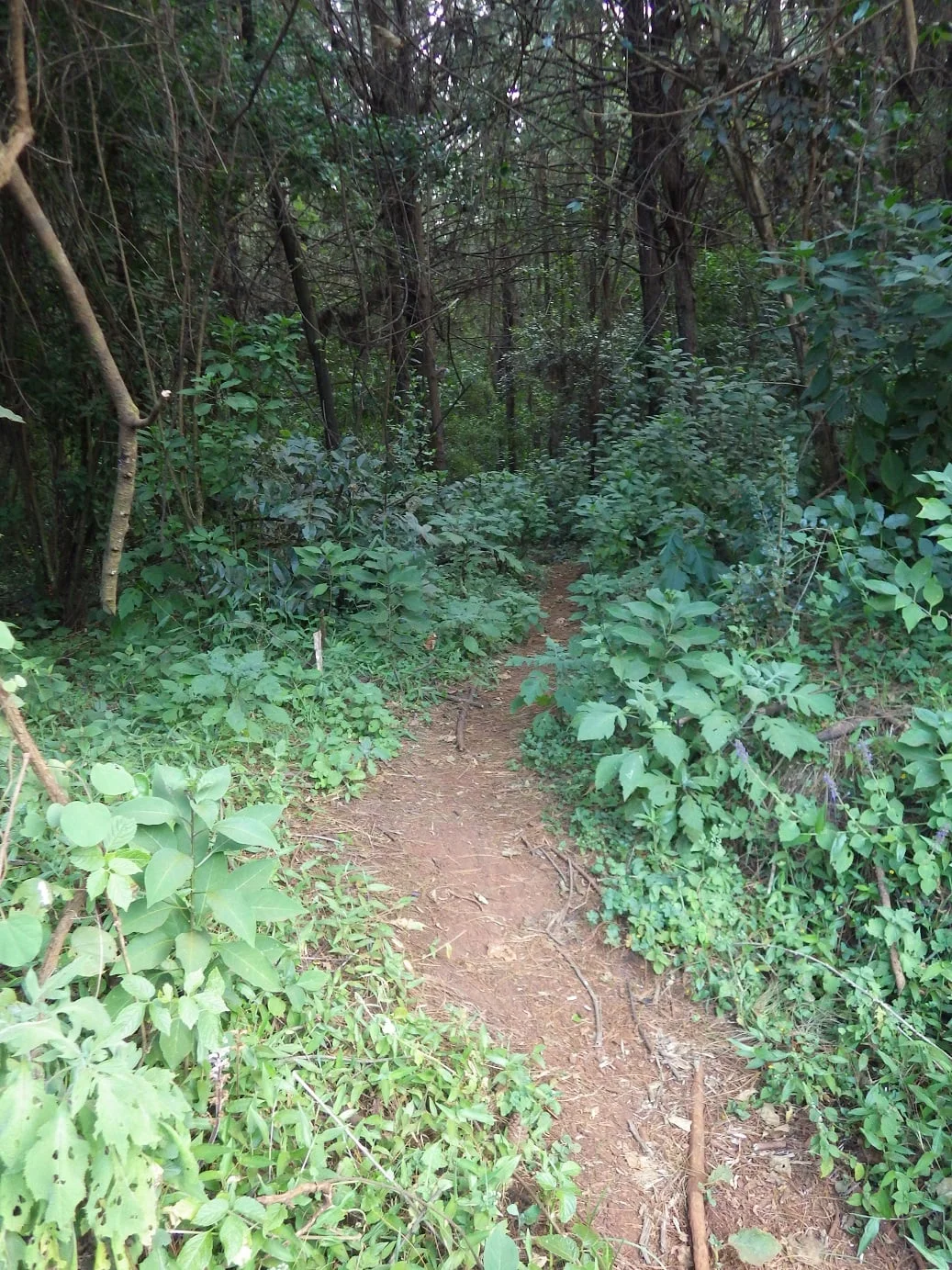
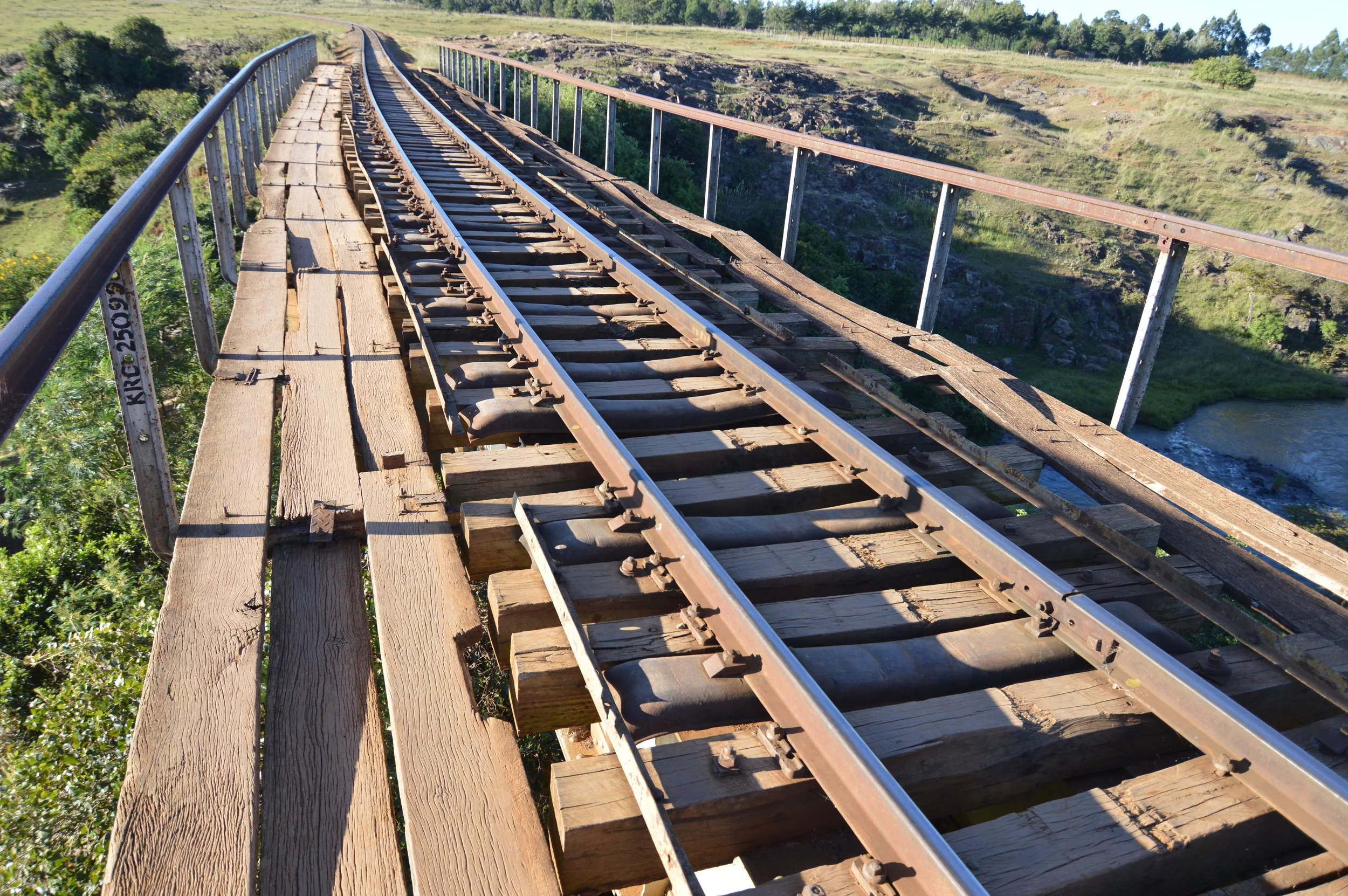
In addition to the railroad trestle bridge, which is a bit on the sketchy side, there’s a wooden bridge across the river to the east, and a downed eucalyptus tree to the west. I didn’t use any of them, content to stay on my side of the river. At points I was on cattle paths, dirt road, single track, railroad track, and bushwhacking. My kind of run, in other words, where the play factor is high.

An observation that I made to Justin when I got back – he did his own long run, headed in a different direction – was that Americans are obsessed with their watches at the expense of learning to listen to their bodies. Looking at a watch today would have depressed me. Since I left it at home (deliberately,) that wasn’t an option. For the trip, I’ve been using a Fitbit to keep track of exercise time and heartrate.

As expected, my heartrate spiked when I landed at Nairobi, bumping up about twelve beats per minute. (I don’t trust the Fitbit resting heartrate calculation, by the way – it usually higher than what the device actually shows first thing in the morning.) About a week ago, the rate stabilized and began to drop, the earliest indication that the adaptive response to altitude is kicking in.

For running, I’ve pretty much ignored mileage in favor of time. Kenya, as you might imagine, is somewhat deficient in mile markers. Or kilometer markers. Or markers in general. Today’s run was set for an hour and ten minutes. It’s shorter than it would be at home for a very good reason—as soon as I start to exercise, the heartrate climbs like a rocket. My average on today’s run was about 143, or about 87 percent of max heart rate, depending on what formula is used. For a long run, that’s pretty high. Runner’s World recommend 65-75 percent of max, for example. I can get to that just walking if some hills are involved.

So, the obvious-to-me way to handle this situation is to run by ‘feel’, varying speeds with terrain and my perceived effort. As the chart shows, I managed to do this really well for the first forty-five minutes. Things got a little irregular after that (though one of the gullies is the result of a pit stop – the Kenyan countryside does not have porta-potties.) The last third of the run still showed good consistency when the hills are accounted for.

I didn’t bother to check the Fitbit to see what the rates actually were, but just ran at a pace that seemed pretty comfortable. As long as I’m at altitude, I can expect elevated numbers. Obsessing would drive me nuts, the opposite of the goal here, so I run, enjoy it, and check on my progress afterwards.

Hope your long run this week goes as well – run gently, friends!

The Tea Estates in Nandi Hills

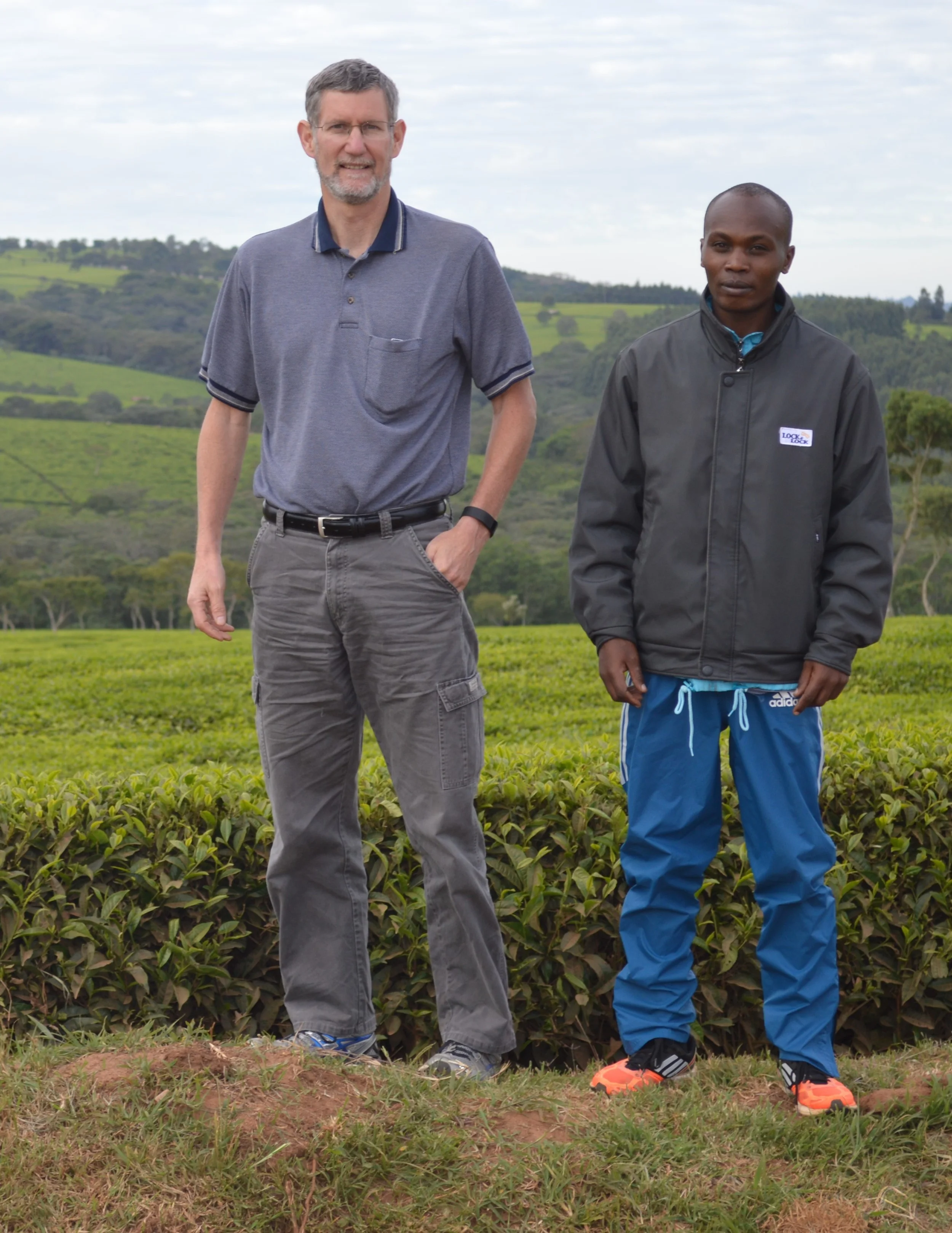
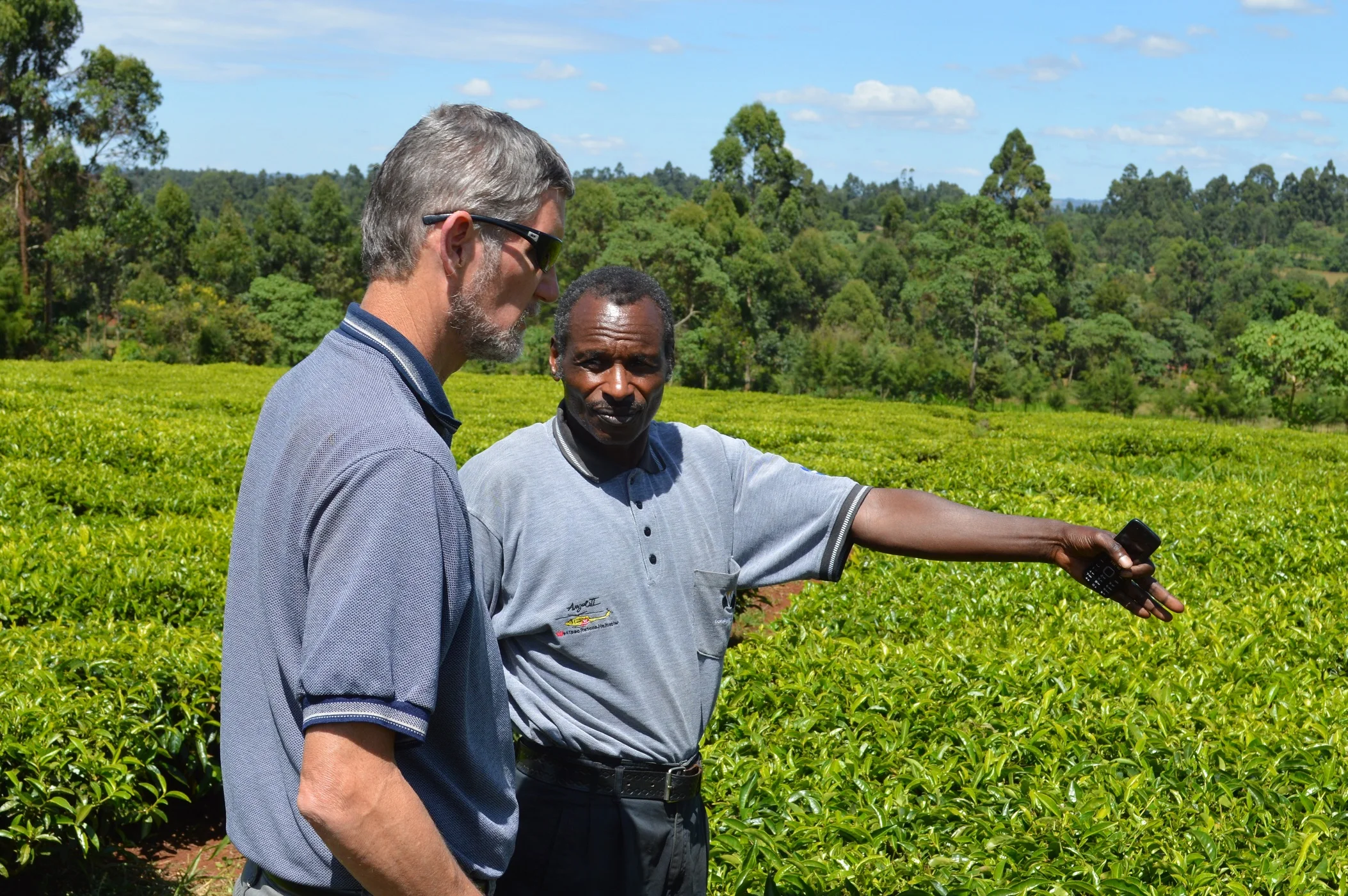
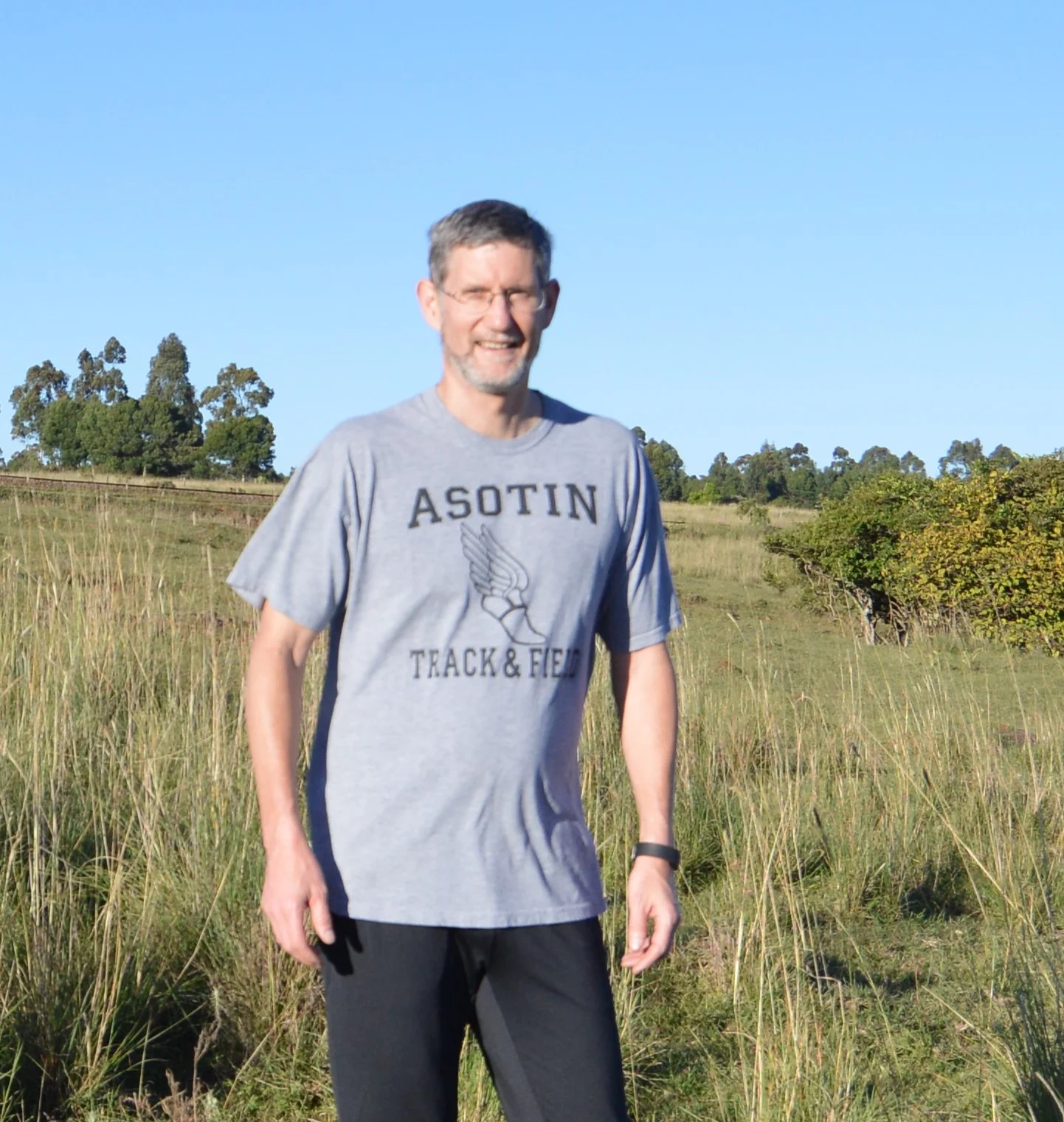
Paul Duffau and Justin Lagat in Nandi Hills

Paul Duffau and Justin Lagat in Nandi Hills

Yesterday, Justin and I headed to Nandi Hills to tour the tea estates there. We also took a side trip to a historical museum for one of Kenya’s heroes from the colonial period, and visited an almost-uncle of Justin’s.

Since the drive was more lengthy than the others we’ve tackled so far, we bombed out before dawn. This proved to be interesting—Kenyans are not much for getting up that early, I supposed as a function of the tremendous consistency of the sun-up and sun-down this close to the equator. Runners, bundled in warm-ups and hats, out-numbered the rest of the pedestrians, and traffic was thankfully light.

Kenyan traffic is hard to imagine for a westerner. Start with the lack of lane markings, add in a high degree of competitive fire since most of the drivers are young men, and then picture intersections without a hint of traffic control signage—no stoplight, no stop signs, nada. The traffic jams are impressive. Still, they make it work, but I’m glad Justin is driving.

A brief look at Kaspabet

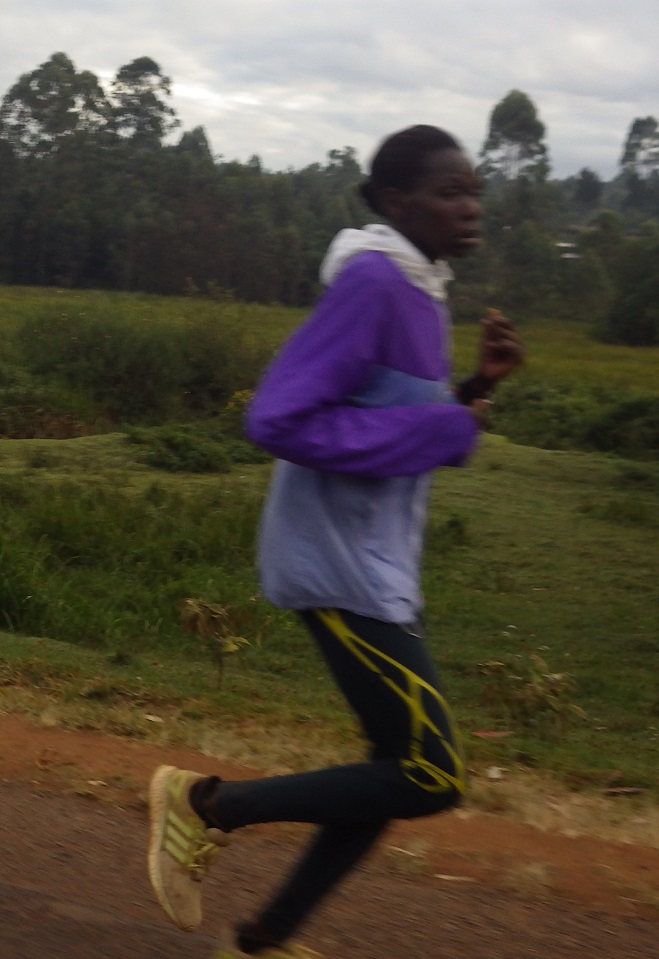
Sorry for the blur - picture was taken from a moving vehicle.

Sorry for the blur - picture was taken from a moving vehicle.

The drive out took us past Kaspabet, one of the three main training centers in the region, joining Eldoret and Iten. The quality of runner here is high, based on what I observed from the road going by. Also, for the first time, I saw women training. Unlike the men who will pack a small bag and leave home for a training camp, the options for the women are more limited. This is partially due to cultural influences and a desire to protect their daughters, a task easier done from close to home than many kilometers away. I’d guess the ratio of male to female runners to about four to one. For contrast, in the US, there are more women runners than men, though the ratios approach one-to-one at the highest levels.

Kaspabet is undergoing a major resurgence with building construction proceeding at breakneck pace. For what I could see, most of the construction is related to new residential buildings. If you’re thinking of coming to Kaspabet for training, give it a year. There should be plenty of new housing. (Be aware that Kenyan standards for room size and rest rooms may not meet a picky westerners expectations.)

The Tea Estates

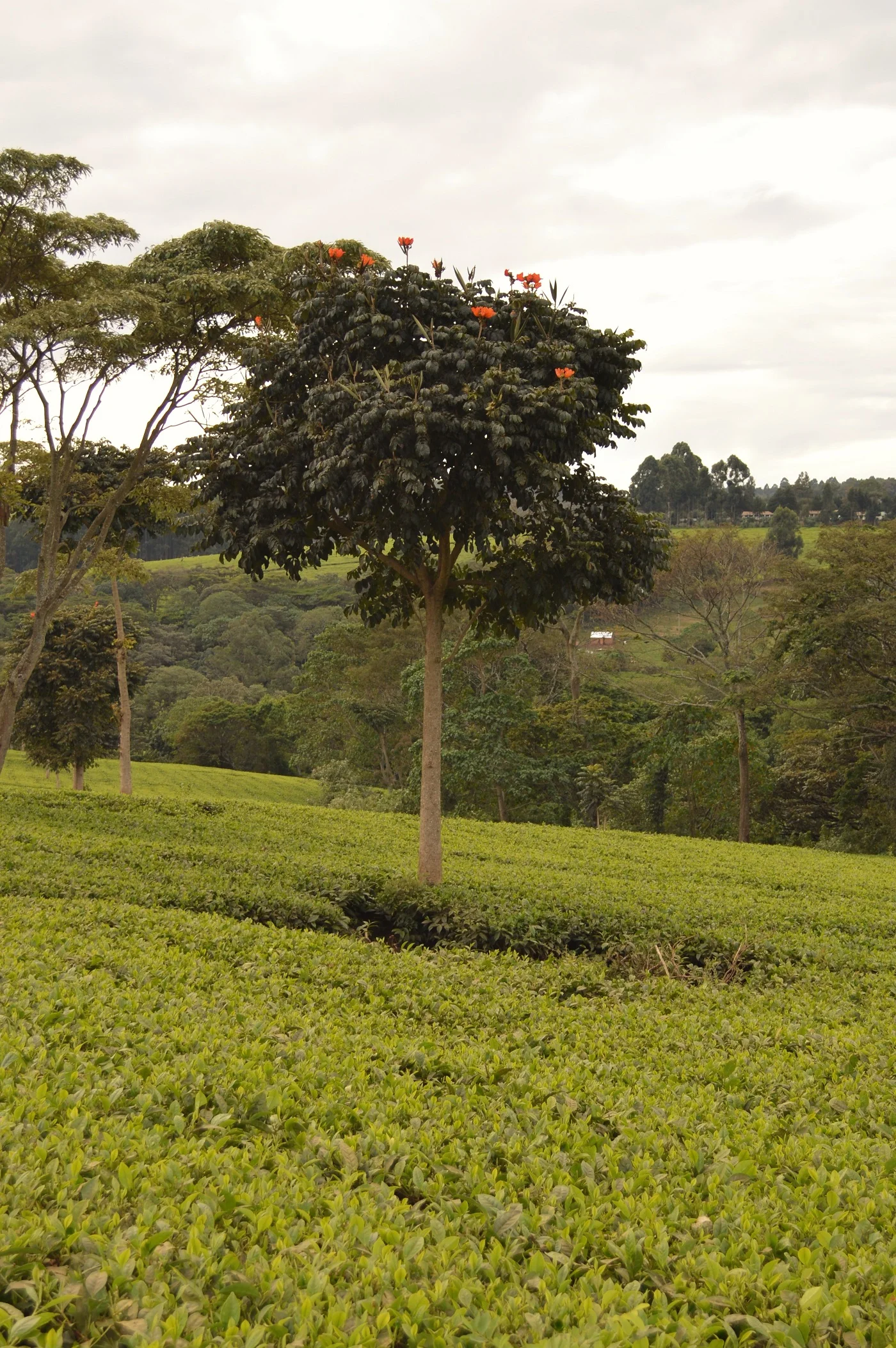
First, the tea estates, rolling up and down Nandi Hills, may be one of the prettiest sights I’ve enjoyed in a while. The vividness of the colors, from the green of the plants, to the oranges atop the Nandi Flame trees, to the brick red of the roads, was stunning.

Nandi Flame Tree

Nandi Flame Tree

Tea is a relatively new agricultural product in Kenya, introduced in 1903. Since then, it’s grown to be the fourth largest producer of tea in the world. Nandi Hills, where we were, is one of the smaller regions.

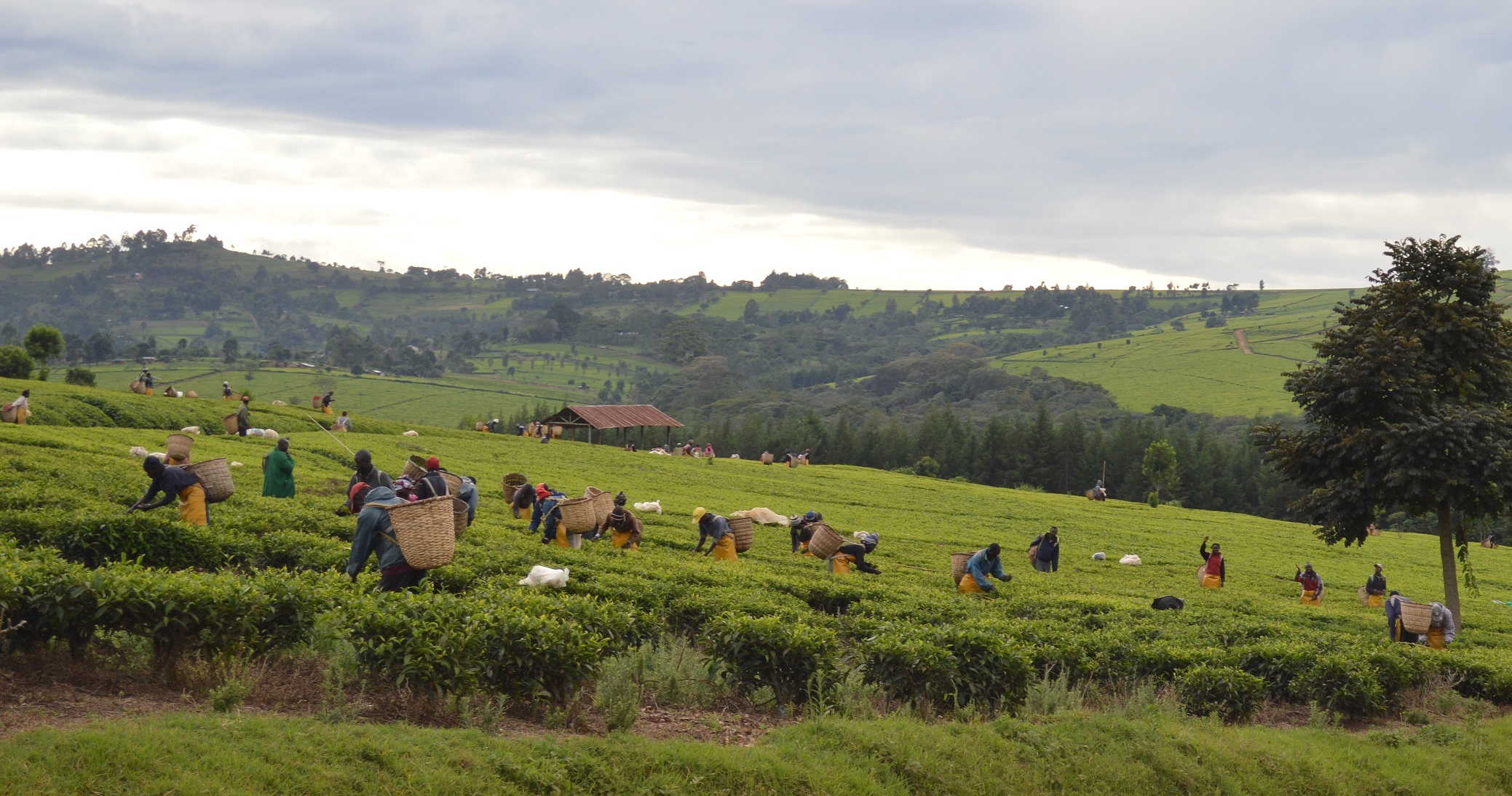
Workers picking tea.

Workers picking tea.

While efforts have been made to mechanize the picking of tea, this remains a back-breaking manual labor position. It is, however, a step up from the starting job, which entrails trimming the plants with a machete and weeding. The workers are paid by the kilo, so the more good quality tea they pick, the more money they make.

Most of the estates have living quarters for their workers. The type and sufficiency vary depending on the individual company. Usually, there is a small store of everyday items in the worker village to reduce the necessary travel of the workers to the nearby villages. In all, it harkens back to the days of the old company towns run by mines and mills. I don’t know the situation well enough to know if the same problems that beset the company towns apply here.

The fields are picked on a rotational basis, a fact I learned at Justin’s almost uncle’s house. Josaphat Tuwei retired from police work to run a small private tea estate. Kenya, unlike India and Sri Lanka, encourages small tea producers to plant and harvest. Approximately 60 percent of the tea grown in the country comes from these private estates.

Since the weather in the higher elevations is suitable year-round for tea production, the plants are under constant attention, picking when ready, fertilizing and weeding when not, and trimming back every couple of year to remove the old think leaves that make for poor quality tea.

Time out for a late breakfast and the Barsirian Arap Manyei Museum

Breakfast was at the Tea Planters Inn, in Nandi Hills. Two Spanish omelets, coffee for me and tea for Justin. Like most of the Kenyan restaurant I’ve been in (so far), the have large areas set aside for groups with smaller tables scattered in. My take is that eating is very much a social activity of sharing for the Kenyans. The idea of a small private and intimate table probably runs counter to the culture except in the westernized urban areas.

The Spanish omelets come with a peppery zing and the coffee everywhere is Nescafe in little packets. As good as they are with tea, the Kenyans need a lesson or two on coffee drinking.

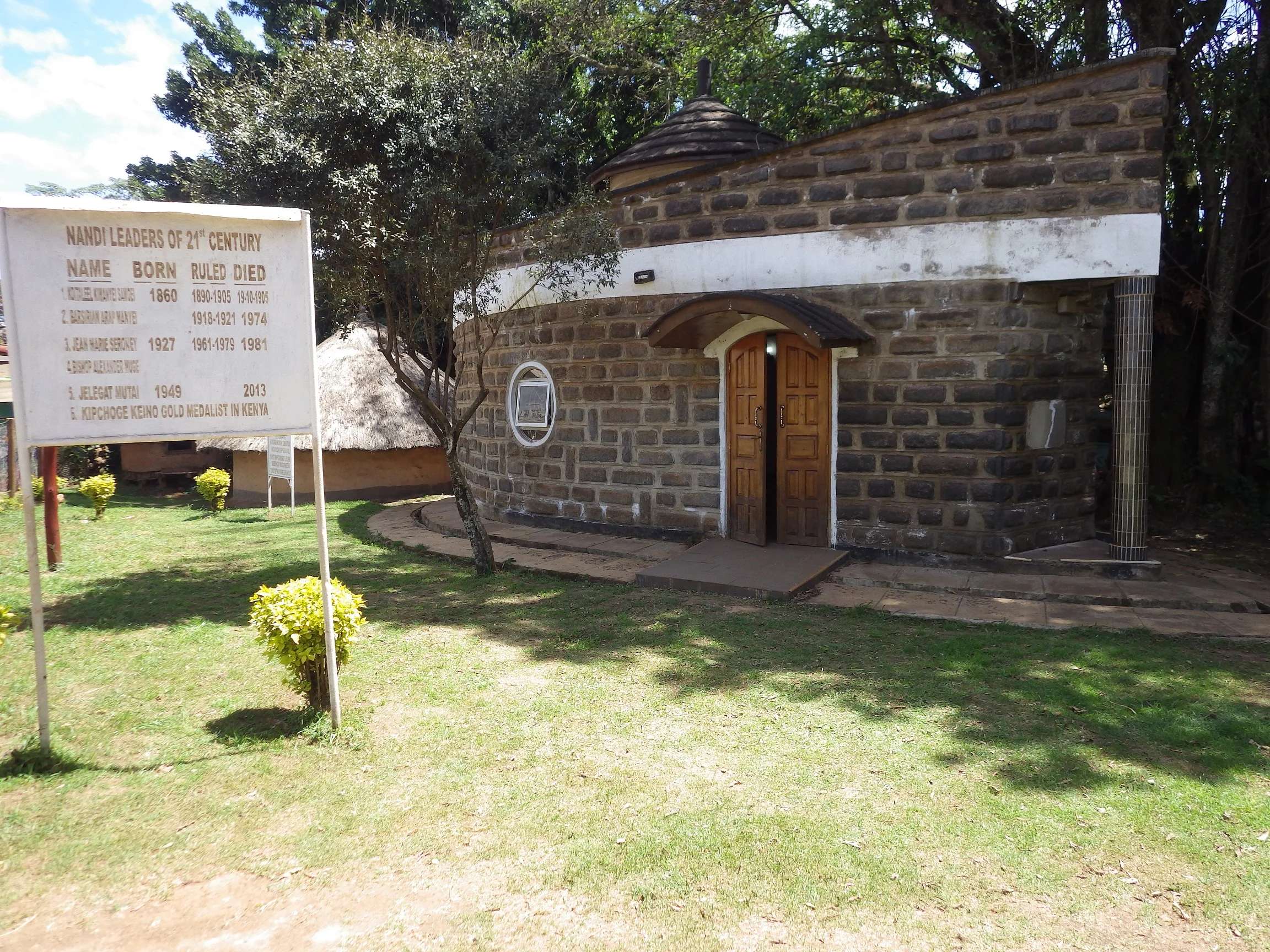
We went to the museum next. For those not aware, the British in the 1950’s were disinclined to give up any of their territories. This did not represent a recent change of heart but a continuation of long-standing policy. They would never have relinquished their hold on the US if the independence driven thirty percent of colonists had been such a terrible pain – and an expensive one when Britain could not afford either.

The mausoleum with a symbolic olive tree in front.

The mausoleum with a symbolic olive tree in front.

Koitalel Arap Samoei was a Nandi Orkoiyot who fought the British over the Uganda Railway. For eleven years, he and the Nandis were a major thorn in the side of the British. They responded by inviting him to a peace conference and then, in the spirit of fair play, British-style, murdering him and his entire party in cold blood. That was in 1905.

In 1922, his son Barsirian Arap Manyei was imprisoned in a home in 1922. He was not released until 1962, making him the longest serving political prisoner of the age. That house has since been converted to a museum, filled with artifacts from Nandi tribal days. Justin and I were guided through the building by a museum representative.

Next door is a mausoleum, honoring Koitalel Samoei. There is tremendous symbology built into the mausoleum, from the direction of the sarcophagus to the four pillars representing manhood. They are not done yet, planning installing a lion, the tribal animal for that family of Nandis.

Learning to pick tea with Josephat Tuwei

Our final stop was in Kipraragon Villege to visit Josephat Tuwei. He has a small private estate that covers several acres of hillside and he was kind enough to educate me on tea. The tea, once planted, takes three years to reach a maturity suitable for picking. Once they are ready, though, the work becomes non-stop as each section of the estate needs to be harvested every 10 to 14 days.

Josaphat Tuwei teaching me about tea growing.

Josaphat Tuwei teaching me about tea growing.

Harvesting is not just a matter of picking whichever leaves come closest to hand. For Grade 1 tea, you need to select new shoots with two full leaves and the start of the third. Grade 2 tea has a third full leaf.

The pickers pick by hand, using a pinching motion between the fingernail of the thumb and hard calluses that get built up on the sides of the fingers to snip the stems. Good pickers use both hands, seemingly without even having to look at the leaves.  

Mr. Tuwei, an energetic man who does not look near his sixty years, had me try my hand at it. Interesting work for the five minutes that I picked but not a job I want for life. He was very encouraging as I figured it out. Together, we enjoyed more than a few laughs, including when Justin, who was acting as the photographer, suggested I smile while picking. “I can’t,” I told him, to laughs from everyone, “I’m picking and working.”

After walking through his sections, we retired to lunch. As I said, the Kenyans treat meals as social occasions, so we spent a considerable amount of time chatting, mostly about America. What was different? Could they visit?  

The subject of Henry Rono came up, from me, since we were this close to Nandi Hills. Indeed, we were in his home village and Mr. Tuwei knew where Henry’s old home was. The younger people looked a little perplexed, so the two of us shared a bit of history, of four World Records in 81 days, of the greatness of Rono. It’s good to see the memories still there, but sad to see them fading. In thirty years, Rono will join Zatopek in running lore, a legend that fades a bit over time.

When it was time to leave, we thought of seeing Rono’s home – but I like my heroes bigger than life and my imagination is better sometimes than reality, so I declined Mr. Tuwei’s offer to guide us and we got into the car.

Mr. Tuwei asked me, as we were getting ready to leave, to tell you one thing, though.

“Drink more Kenyan Tea!”

Interval Training at Eldoret

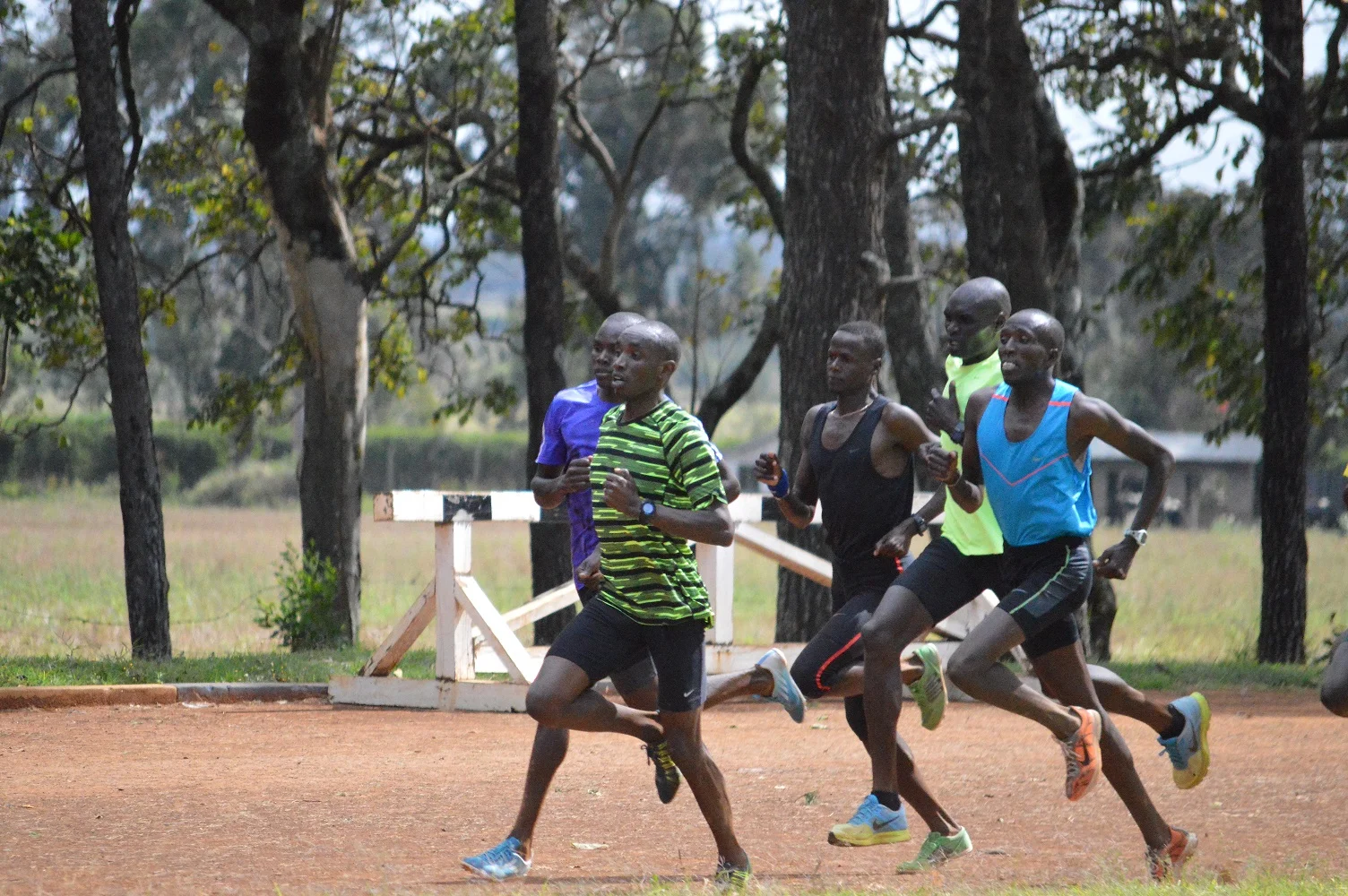
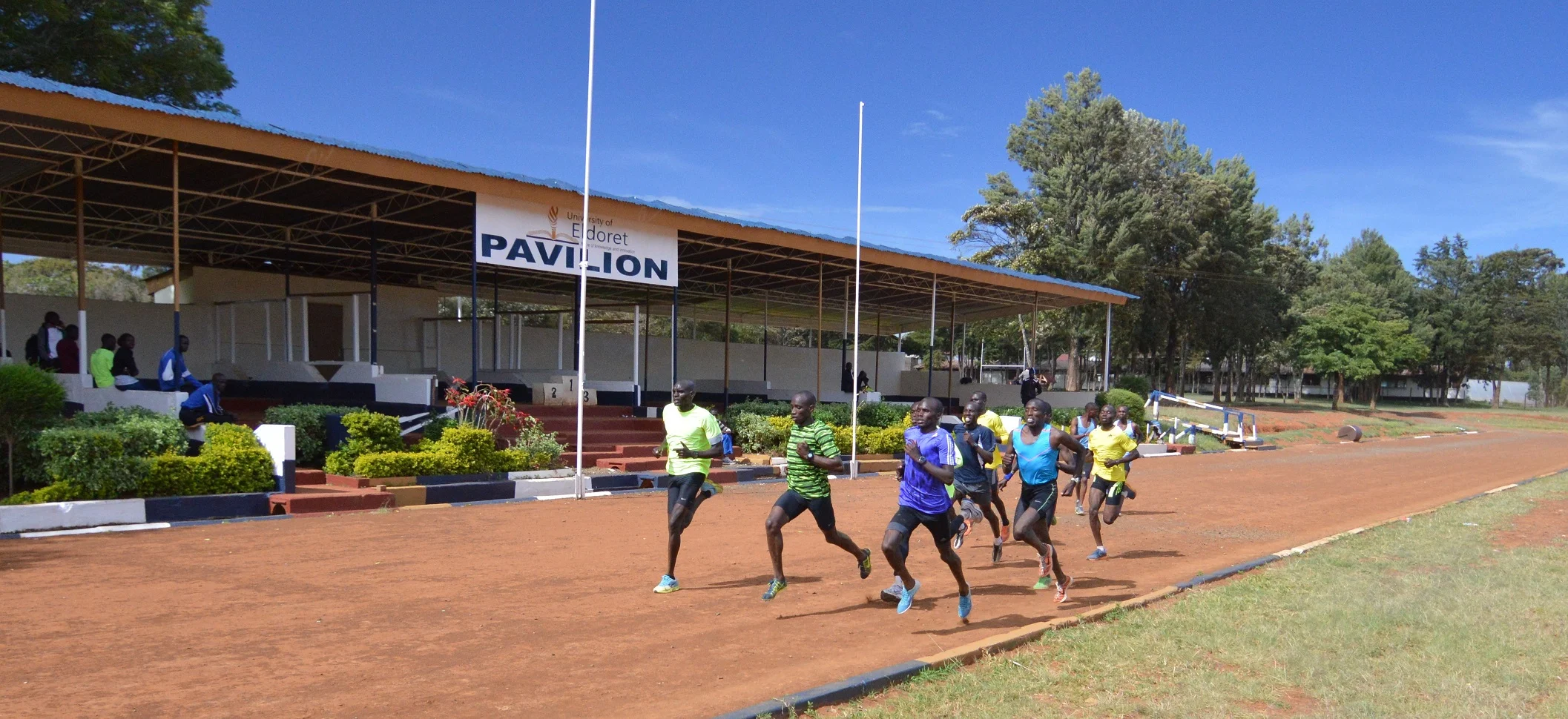
Justin took me down to the track at the University of Eldoret to watch some of the runners training. Sammy Matei of Pace Sports Management was there coaching his athletes. So was World Champion Nicholas Bett, the 400m Hurdler. I didn't get many names, so I likely missed some luminaries. Incredibly to watch these men training.

Second Lap of an 800m interval.

Second Lap of an 800m interval.

The home stretch of a fast 200m

The home stretch of a fast 200m

Nicholas Bett, World Champion

Nicholas Bett, World Champion


If you like the articles I'm writing, thank you very much! If you would like to read some of my fiction, you can find both books online - just hit the links in the covers in the sidebar. For those of you enrolled in Kindle Unlimited, you can read them for free! Finishing Kick is also available in audio, narrated by the wonderful Annette Romano, for those of you looking for a great listen on your next run.

Feel free to email me or to leave a comment - I'll get back to you as quick as I can.

Thanks for reading!

The Source of Champions

Nandi County, the Source of Champions is written large on the sign that marks the division from Uasin Gishu County. Justin is taking me, along with his wife and daughter, to meet his family at Kapkeringon Village.

The sign also marks the last time the vehicle touches asphalt as we take a fast right on to a rough dirt road. The red clay and the embedded rock remind me of the drive that we used to do to my wife’s parents house in Dulzura, CA. She hated that road. She wouldn’t have like this one any better as it was nearly twenty miles of rough travel, often dodging motorcycles and pedestrians. I was fortunate to only bounce off the ceiling once – the trials of the over-tall.

Kapkeringon Village sits a bit higher than Eldoret. Justin pointed out to the distance to show me when I asked. As with my current neck of the woods, the air is clear enough that trees are clearly visible from miles away. More on the trees later, by the way.

The home where Justin’s mother lives, his father just very recently having passed away, sits atop a hill with view of the surrounding countryside. The wattle and daub home itself is traditional, which in this part of Kenya means that there is no electricity or running water. The roof is corrugated tin. The floor was dirt but looked as though it were a chocolaty brush velvet.

Justin’s family joined in for the visit. One somewhat discomfiting problem is that I seem to be the only white guy that has visited some of these areas, so I’ve been attracting attention just for that, with children literally running next to the car to see the mzungu. The family, though, could not have been more welcoming.

Thanks to Celia, I ask Justin if we could bring a gift for his mother. We stopped at a market on the way and picked up sugar and flour, appropriate gifts for the visit. I didn’t know that later we would visit a second home and didn’t have a gift then. Hopefully, I will be able to rectify my lack of manners soon.

Unlike the other visits that I have made so far to homes, tea was not served. Instead, fresh milk, made in the Nandi way, was. Absolutely delicious, rich with the creams that we normally see separated out in our milk. There was also a black residue that comes from lining the interior of the gourd with ash which apparently helps seal the gourd and to preserve the milk.

Also served was mursik, a fermented milk. This had a tarter taste and a thicker composition. Justin’s mom put me on the spot and asked which I preferred. I said the fresh milk. That might have been a bit of a faux pas. Oops.

While we waited for the meal, several of the men of the family – the women were cooking and watching the young ones – proceed to grill me on all things American, supposing that I had all the answers. I was impressed by the depth of the questions they asked and on the wide range of things that captured their curiosity.

That we had free public schooling through the twelfth grade (once we got around the differences in the English system of forms versus grades) was revolutionary. The idea that students would drop out rather than complete their schooling seemed scandalous. Home schooling as an option seemed equally inconceivable to them.

We spent quite a bit of time on agriculture, not surprising given they, as a family, run a farm. The Nandi (and the Massai, too) treated their cattle as part of the family, to the extent of naming them so that they will come when called. I gave them our version of factory produced beef. The men were less than impressed. I understood.

They laughed at my joke that the American food industry was trying to kill me. They nodded in affirmation when I told them that I grew my own vegetables when I could. I neglected to mention that I ‘let’ the deer eat it this year.

Vehicles, roads, driving in snow, exactly which Washington I was from, book pricing, university education, and a host of other topics were touched on. It was a most pleasant, if exhausting, conversation.

Food was served, chapata, meat (chicken), potatoes, stewed leafy greens that had a bit of bite to them, and tea. Millet came later, along with more mursik.

The Kenyans have a really nice custom of bringing warm water in a jug with a pan to the people eating. The water is poured over the hands so that you can wash the dust of the fields or your travels from your hands before eating. The whole ceremony of the washing is very comforting at a visceral level.

After eating, we walked out to the yard. I meandered, taking pictures of the hillsides, much more green than I expected and looking at their expansive and well-tended garden. Justin pulled me aside to point out where his school lay.

We couldn’t see it. The trees were in the way. Three or four times during the course of the day, some would point and mention a place across a valley or up a hill, and finished by saying, “Just behind the trees.”

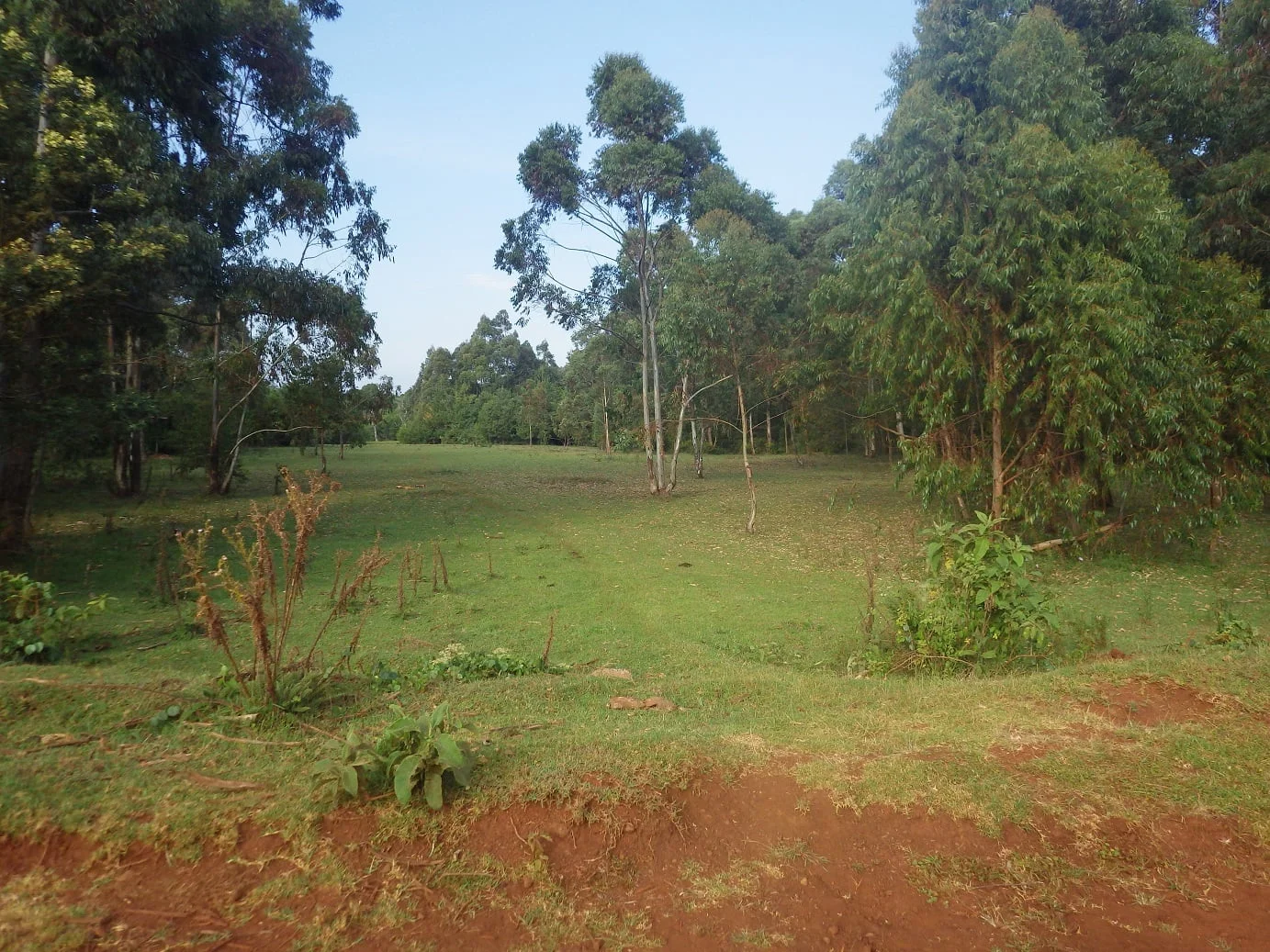
The trees in question are eucalyptus trees. In the last two decades, they’ve begun to completely reform the landscape. They are also not so slowly squeezing out the native trees. They grew very well in the high altitude environment and spread quickly. It will be interesting to see the changes that the increased vegetation brings to the county.

The crops here changed as well. Formerly a major coffee producing region, the main cash crop now is maize. That’s starting to change but getting the new coffee plants requires capital. The changeover will take years.

 When Justin and I returned to the group, I discovered I was now the photographer and began to take family pictures for them. Lots of smiles from the adults. The kids, not so much. I’ve asked Justin to get one of the group pictures printed and then identify every one – I could not keep track of all of the names.

Afterwards, we headed back out, stopping to visit Caro Ronoh and her family. Her husband, a physics and chemistry teacher, was fascinating to talk to. In the Kenyan educational system, the teachers often get reassigned to schools sometimes a hundred kilometers (~62 miles), making life very difficult for them and the families. They have been fortunate to be in the same location for 22 years.

Caro served a dish similar to donuts minus the excess sugar, very tasty, and tea. Kenyan tea is not the stuff that you see Lipton put out. They heat the milk and water at the same time and brew using tea leaves, then add sugar. It’s quite delicious.

We enjoyed the refreshments and then traipsed outside. A tough looking hill sat about a half-mile away. That hill was used for years for training. The Nandi athletes would measure themselves against the hill, building leg strength and stamina. More importantly, as Henry Rono points out in his book, Olympic Dream, it builds courage.

Every place you visit in the county seems to have the same types of stories, of the hard work of the athletes and their families, that built them into champions. True, they have great distance-running genetics. True, they have mursik (suggested to be a source of their prowess.) Mostly, though, they learn to work hard, early in life, and carry that forward with them.

The trip home was quiet. Justin asked if I was falling asleep. I assured him I wasn’t, just thinking about the book I want to write. Thanks to Justin and his family, I know what my opening scene is. Hopefully, when I start that novel, I’ll be able to do it justice.

A Training Day in Kaptagat

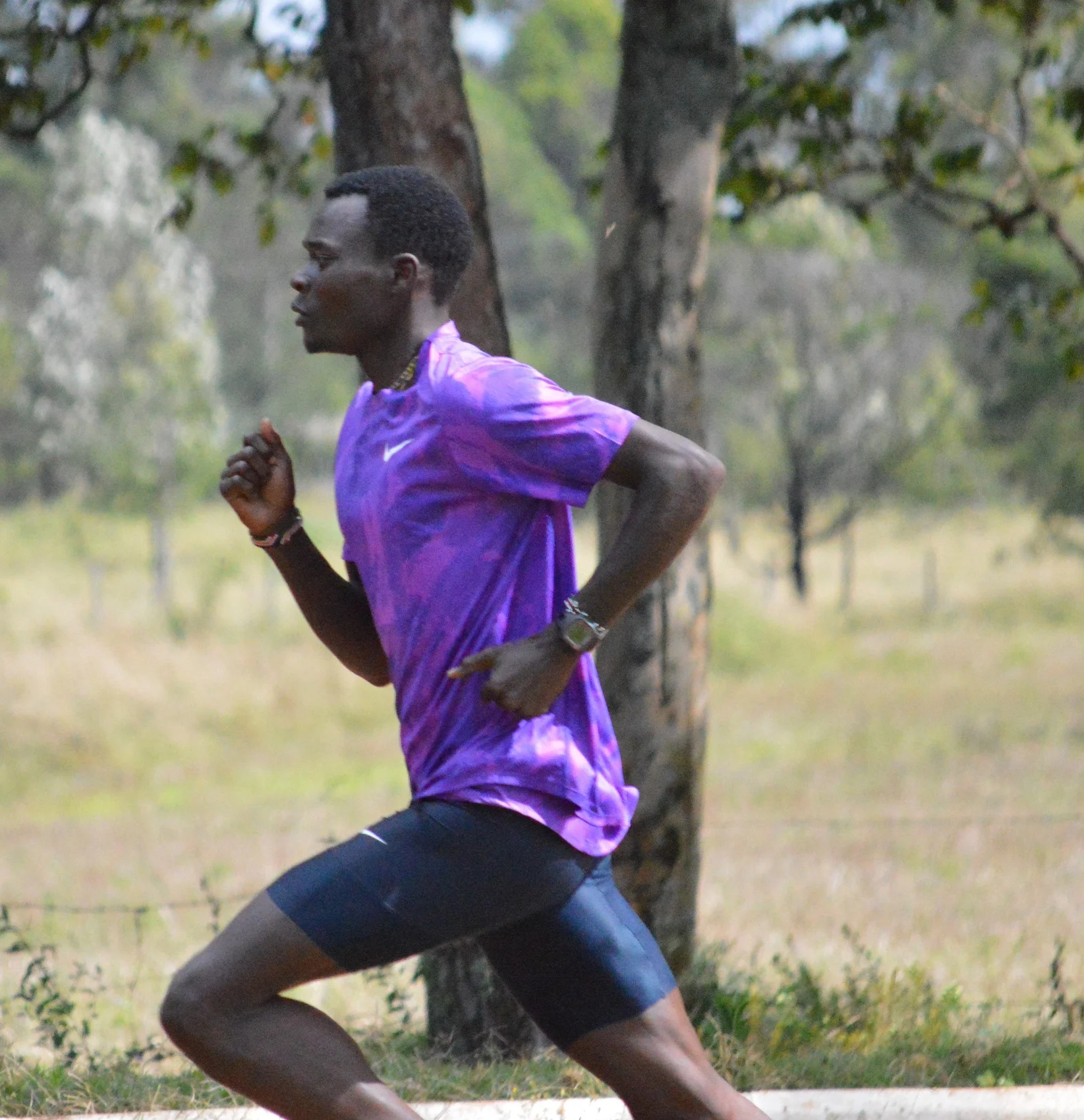
It’s not every morning you get out of bed and go for a run, half-expecting to see a world champion or two. Plus, an Olympic silver medalist.

Justin Lagat took me out of Eldoret to Kaptagat township. Just past the town, there’s a dirt road that appears to missing a sign that reads “Watch Out – Olympians at Training.” The lack of a sing might just signal a sense that the people here expect to dominate in the distance events but, for a foreigner, it’s an eye-popping eye-opener when literally some of the best runners in the world rush by.

Rush is my word, not theirs. They were doing easy mileage at a relatively high rate of speed.

After Justin and I got our runs in, Justin doing the out lap, and me pulling the return, we went and visited friends of his. These were all young men still training to break into the running world as paid professionals. As with most individuals dedicated to a specific vision, they work, live, sleep to make that vision a reality.

They live a very Spartan existence, sleeping in small rooms, cooking for themselves on a kerosene stove. Still, they’re remarkably kind, offering the odd American a cup of tea despite the fact they likely don’t have a pair of shillings to rub together.

Twice a day, they go on training runs, except for the days where they add a third run into the mix. These young men certainly understand how to work hard.

Helping them along the way is Wilson Kiprop who sponsors this particular group of young men. It’s not the sort of thing that you see highlighted in his Wikipedia article, but he, along with quite a few other champion runners, work hard to bring opportunities to the next generation. It would be nice if these activities were as celebrated as their athletic achievements.

On to Eldoret

New Year’s Day is an eventful holiday in Kenya. The families travel back to their traditional homes to celebrate the day. In my case, I ended up joining a gentleman I met on the plane over. We touched base after we got settled, and Njuguna invited me to join him and his wife, Celia, on a trip into the Central Highlands. He promised me a potluck and a chance for me to learn a bit about the Kikuyu lands.

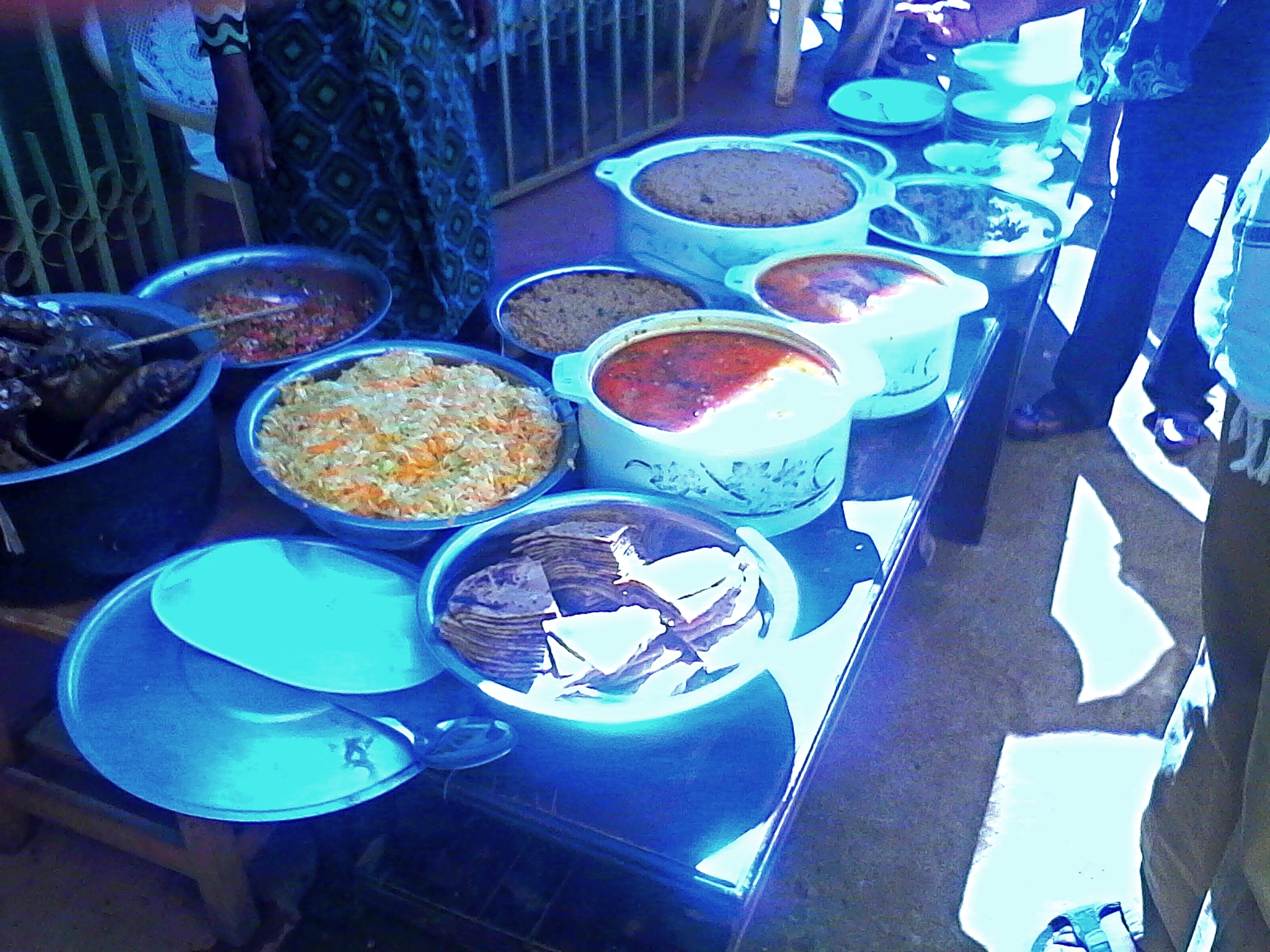
Roast goat, chapata, a Kenyan version of cole slaw, beans, potatoes, and more.

Roast goat, chapata, a Kenyan version of cole slaw, beans, potatoes, and more.

Njuguna was actually serious when he mentioned that it would be a potluck. At every house that we visited, the families offered us food. It is part of the cultural pattern throughout Kenya, where they treated guests as family, feeding them and offering tea.

Celia came to my rescue. She had taught her European students a phrase, ne meh she ba, (spelling phonetically here, folks. Could well have a different proper spelling.) The phrase means “I am now full.” I suspect that phrase, along with ‘thank you very much’—assante sana,—are going to be in my permanent repertoire. Po le, too. I’m sorry. It actually has a wide and varied meaning from I’m sorry I stepped on your foot to I’m sorry your car has a flat tire. The range of expression of this one word will appeal to my youngest daughter.

Kenyan gatherings, at least this one, are quiet relative to a comparable American party. I liked the difference as I’ve never been much for trying to shout over a group.

The next day, Saturday, marked my trip to Eldoret. Immediate impression – absolute relief at the breezes and the drop in humidity. Also, my allergies are fading which is great. Still a bit of a sniffle but that is fading fast.

Justin met me at the airport, and he drove us to his home, where I’ll be staying. He and his wife have been most welcoming, though I think they worry over me. They shouldn’t as I’m pretty adaptable. After settling in, Justin took me on a walk, pointing out the houses of Olympic gold medalists and other notaries. The views are expansive and I plan on getting out during dawn and dusk to capture some of the images. That will remain a work in progress for now but once I get them, I’ll put them up.

After the walk, we had dinner - traditional food that was very tasty, with Kenyan tea, and then sat talking. For Justin and I, it was a lot of about writing. Running periodically enters into the conversation, too. There are a couple of major races coming up, so I'll have a chance to watch outstanding runners as they go head to head.

Update: Sunday morning. Went for a four mile-ish run/walk with Justin. Still can process enough oxygen but that is something that time will take care of. The terrain reminds me a lot of home. Took a goodly number of pictures along the way.

Today, we’re headed out to Kapkeringon Village to visit Justin’s family.

Yes the gaps are big enough to fall through.

Yes the gaps are big enough to fall through.

Justin Lagat, looking stylish.

Justin Lagat, looking stylish.

A Visit to the Giraffe Center

The Giraffe Center has surprisingly little information about the animal it's protecting, but made for a pleasant visit anyway. I had expected to have some type of guided tour of the grounds which have a tourist visiting section to get people close to the animals and nature walk.

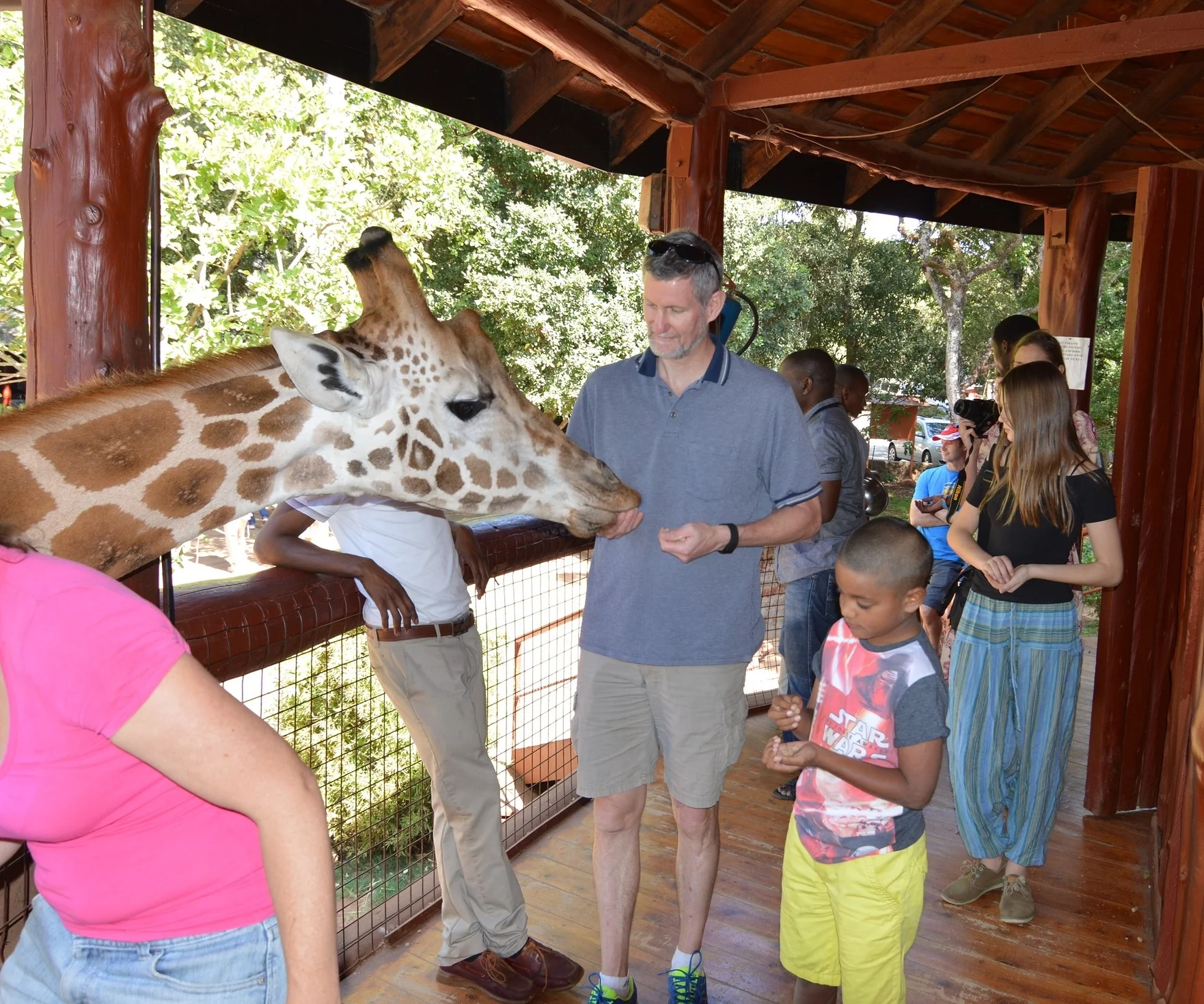
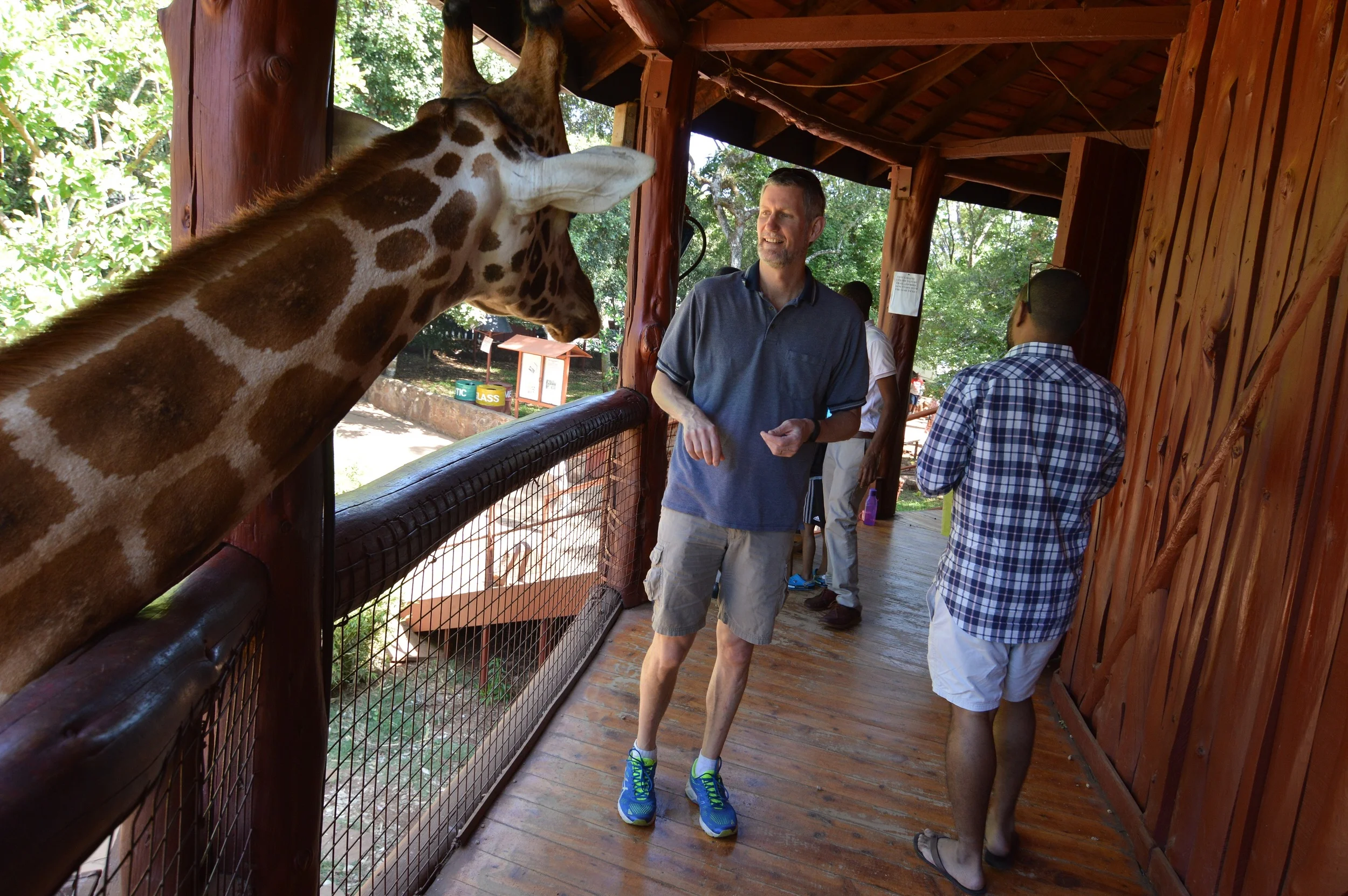
The petting zoo, since that effectively is what it is, had a pavilion where you could feed a giraffe pellets. The signage provided amply instructions on how to feed then (be holding the pellet between the fingers) and admonitions on what not to do (don't feed from the palm of your hand, don't lean into the giraffe as they like to head butt, do not tease the giraffe.) A key points, personnel was positioned to observe and, apparently, ignore the mishandling by the people.

The remainder of the grounds in the compound was given over to a gift shop. A quick perusal before I left confirmed that it met the basic standards of all gift shops, having a single minded display of items designed to separate cash from the rubes. It was a tad on the spendy side, shall we say.

What was missing was any sort of information booth, book, video, guide, or sign meant to impart the slightest bit of  knowledge regarding the giraffe. I thought the interior of the pavilion would have this kid of information, but it contained children's drawing from a contest. Some of those were quite well done and creative, but not what I was hoping for.

The walking trail on the other side had more appeal to me. The official trail was 1.6 kilometers around, though there are numerous side trials, especially when you get to the Gogo River.

The Gogo River is like the San Diego River or the Todd in Alice Springs, It's more a seasonal trickle of water than a body of swift flowing current.

On the other side of the river, past the 'Do Not Enter' signs there is a ton of single track maintained by the giraffes as they meander. I could've gotten joyfully lost for hours over there, but violating the laws of a host nation seems foolish. I played nice and explore several miles of trail before heading back to the main park. I think I was the only tourist that headed down into that part of the exhibit.

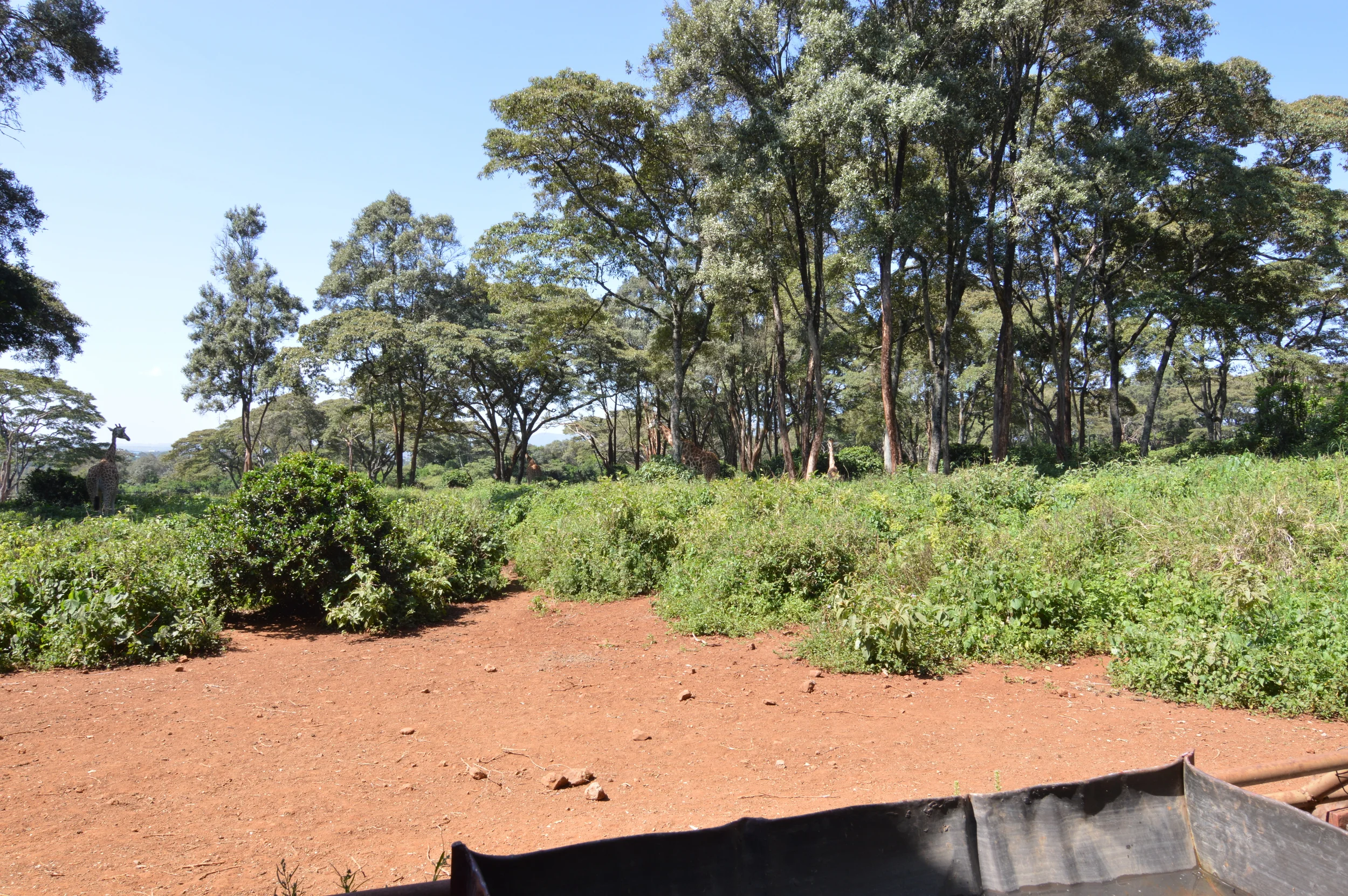
Ever done those "Find the Cat" photos? How many giraffes can you find in the picture below?

Feel free to share the "Count the Giraffes" on Facebook and Twitter-

The next two picture are from the nature walk. My computer is being balky in resizing them and it's almost three in the morning here, so I'm leaving the big. By the way, there are scary things that shriek in the night in Kenya, at least here. Discourages one from night running.

The Gogo River

The Gogo River

A long walk to the Karen Blixen Museum

I gather, from the looks that I got, that white people don't go for miles long walks in Nairobi. Also, the fact that I saw not another single white person while running and walking nearly sixteen miles suggests that it's an activity low on the list for tourists.

That's a shame, because I enjoyed both the scenery during my walk and by the people that I met along the way. (The run left me gasping and with a sore foot. I stayed focused and completed.)

Nairobi, by the way, is a place where you only rarely need to check the weather as it stays very consistently in a narrow, warm band. The sun is also abundant, leading a certain knucklehead to get burned. Sunscreen and a hat are on the list to acquire today.

I ended up taking the scenic route to Karen, named for Karen Blixen. For those who don't know, she was the author of Out of Africa, a terrific book later made into a movie starring Robert Redford and Meryl Streep. The movie won a total of seven academy awards.

Nairobi123015 (18).JPG

The town, reputed to be named after Karen Blixen, is affluent, especially in relation to some of the other neighborhoods that I passed. Since I left from the mall, the route was considerably longer than if I had left from the hotel. Walking along Langata Road, the sidewalk gives way pretty quickly to an unpaved shoulder more like a single track trail than a city walking route. The early part of my trek led me through a business district and near a nursery. I found it entertaining to watch a worker from the nursery shoo cows away from the young plants and onto the road, much to the consternation of the drivers. They eventually meandered to the other side of the road and began mowing the grasses there.

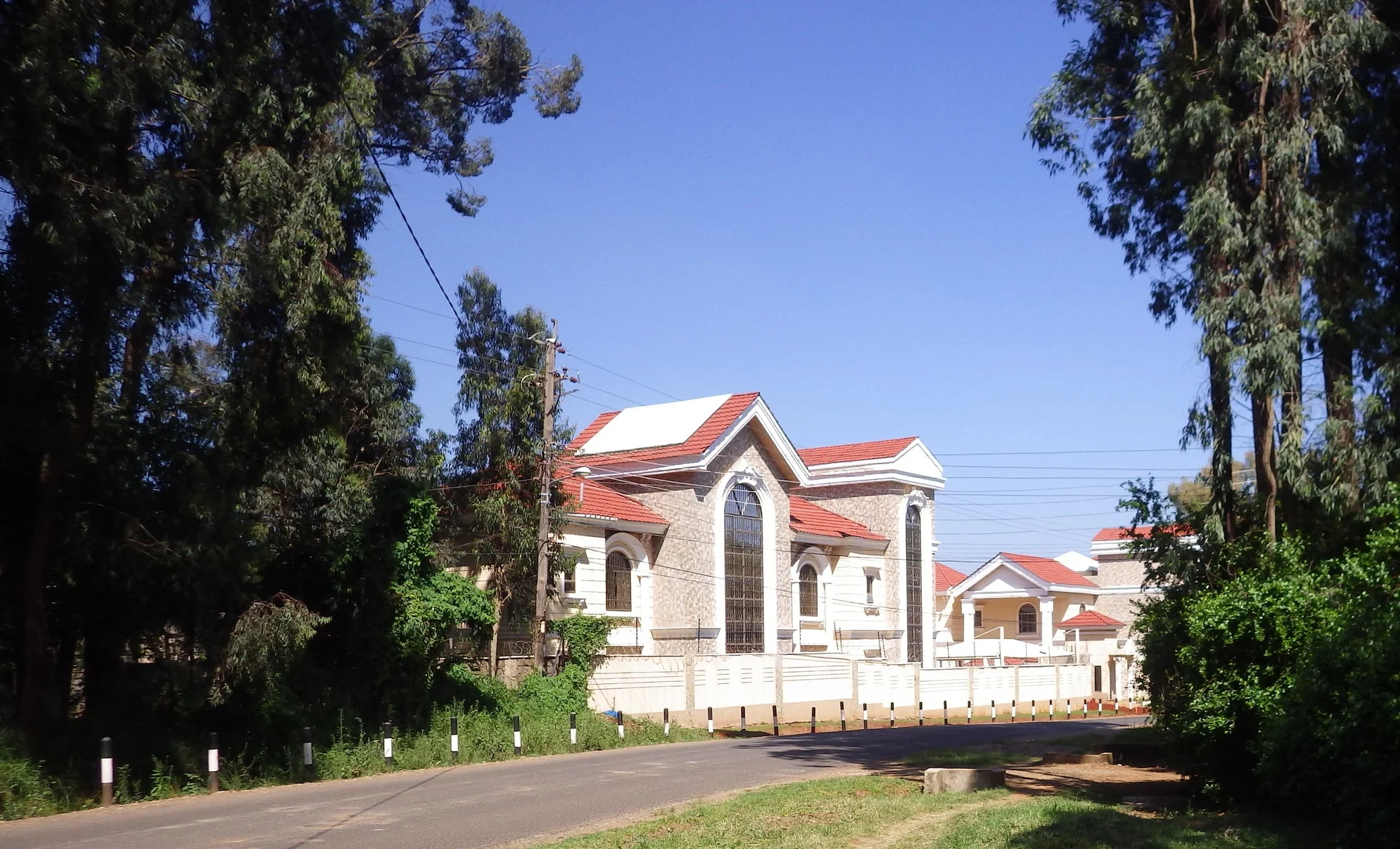
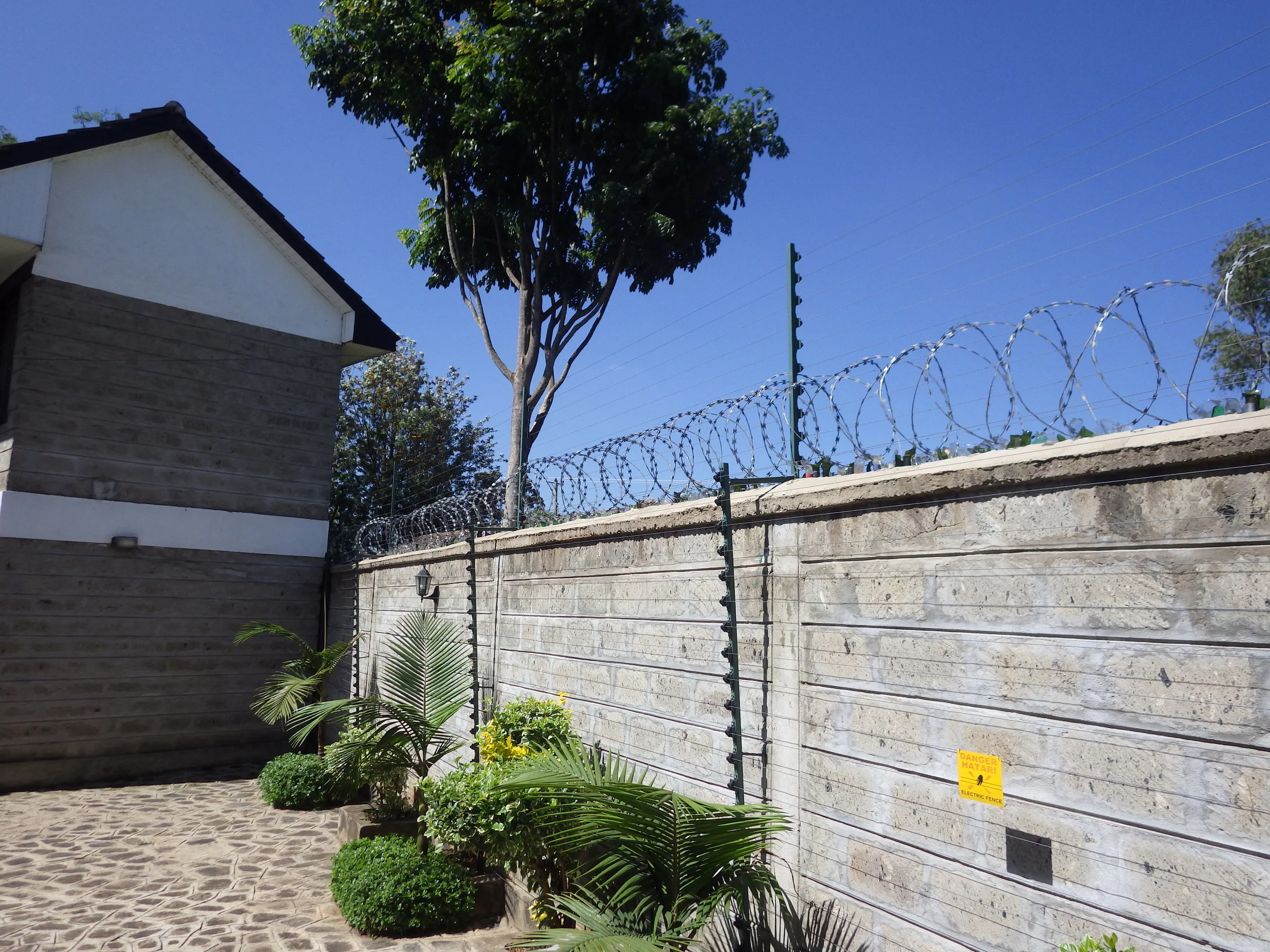
The road is also populated by a number of schools, many of them religious, and all sequestered behind tall walls topped with razor wire and, as often as not, electrified wires.

This points to one of the dichotomies of Nairobi. The people are wonderfully welcoming. I've had several long conversations with complete strangers. As a Mr. Kipkiror said, "We are a very hospitable people." And they are. Hellos from weird Americans walking to nowhere are greeted with smiles and hello's back, or just a smile and 'Yes!'.

Yet the fences are real, as are the guards. Most of the upscale communities are gated and have guards, as does my hotel. The Galleria has an armed presence and they perform a security check on all vehicles entering the premises. Pedestrians likewise get screened.

The two types of security serve two different purposes. The malls and schools fear more violence that left 50 westerners dead at the Westgate shopping mall several years ago, and 147 dead students at a university in northwestern Kenya in April of this year. Both maintain high levels of visible security to dissuade possible repetitions of those atrocities.

The fences point to a separate problem. Kenya, while performing well relative to its neighbors, remains a country with considerable poverty. Property crime is relatively high, enough so that companies advertise the electric fences as a means of controlling the grounds for the house.

This became more evident as I got closer to Karen. Hedges disguised the walls and the wires but they were there, along with the heavy metal gates at the driveways. The properties morphed to estates as I made the turn down Karen Road.

The Karen Blixen Museum occupies the old homestead and grounds, while the Karen Country Club sits where the coffee used to be grown. Apparently, coffee is ill-suited to the area as the humidity is too high, a fact I didn’t know. Blixen was from Denmark rather than England and earned the ire of the ruling colonial class by treating the Massai and Kikiyu as people. She provided a degree of education and health care for her workers that was remarkable for the period.

Much of this was explained to me by an articulate young man named Ephraim. The fee for the Museum includes a personal tour which starts with a chat in the front lawn, in the shade of the trees. The tour of the house itself does not take long and photography is not permitted – having visited Monticello, I expected this. Most of the furniture is original to the home though, disappointingly, the books were donated by Universal Studios during the movie.

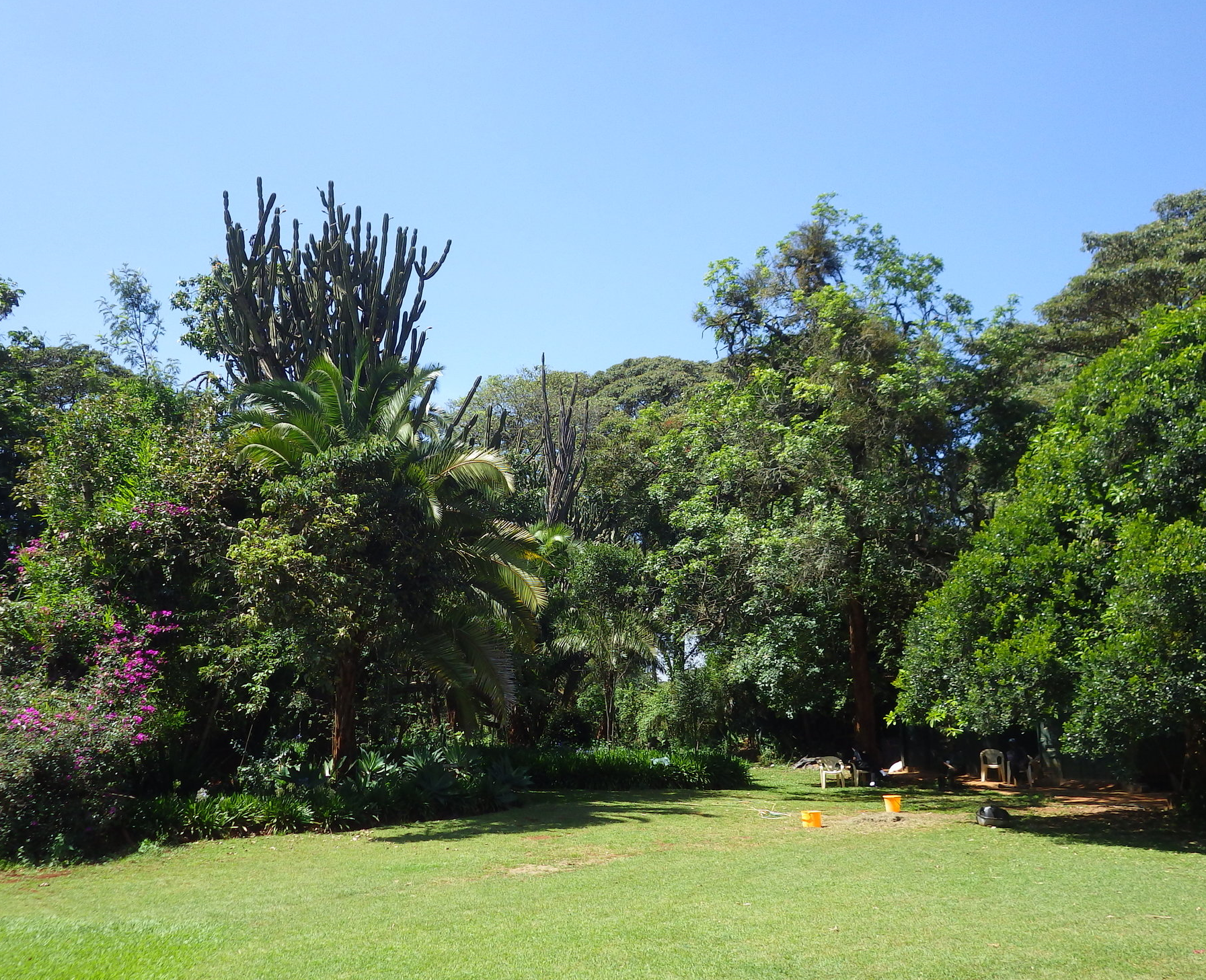
In a surprise, I noted two 40 foot towering cactus in the back lawn. Ephraim had already left to serve another sightseer so I didn’t have a chance to ask if they were original to the home or not. Still, they are the tallest cactus I recall having seen.

The return trip went much faster as I took the short route. On the way, I saw the signage for the Giraffe Center. Looking it up on a map, it’s within walking distance, too. I think I’ll take a cab, though, as I want to use the Nikon for pictures there.

I need to get a baggie, too. I had a very cool young lady that I used to coach ask if I would collect a sample of dirt from Kenya. She apparently has samples from all over the world. It sounded like a neat idea, so I’ll get some at the Giraffe Park. Later, I’ll get some from Iten. She’s a runner – she’ll get a kick out of that.

If you tweet, you can follow me at @paulduffau – I’ll be tweeting from various spots along the way during my trip. Also, the audiobook version of Finishing Kick is out – and already out-selling both print and ebook, which I expected.

Take care and run gently.

Pictures from Kenya

I'll have more as I go. Here are a few from yesterday. Today's missed opportunity was of a pair of vervet monkeys that came onto the grounds. By the time I fetched the camera, they had disappeared. Moral of the story - take the camera everywhere, including the patio during breakfast.

I went for a short run. It turns out that I'm not just slow at sea level - at altitude, I'm really slow. Also, the pain in my foot that I thought was healed, isn't. I'll try a different pair of shoes and see if that makes any difference. Still, I covered three miles. I did catch sight of a tall, lanky fellow headed the opposite way, laying down sub-six minute miles like it was nothing. Beautiful to watch. I waved, but he was already gone.
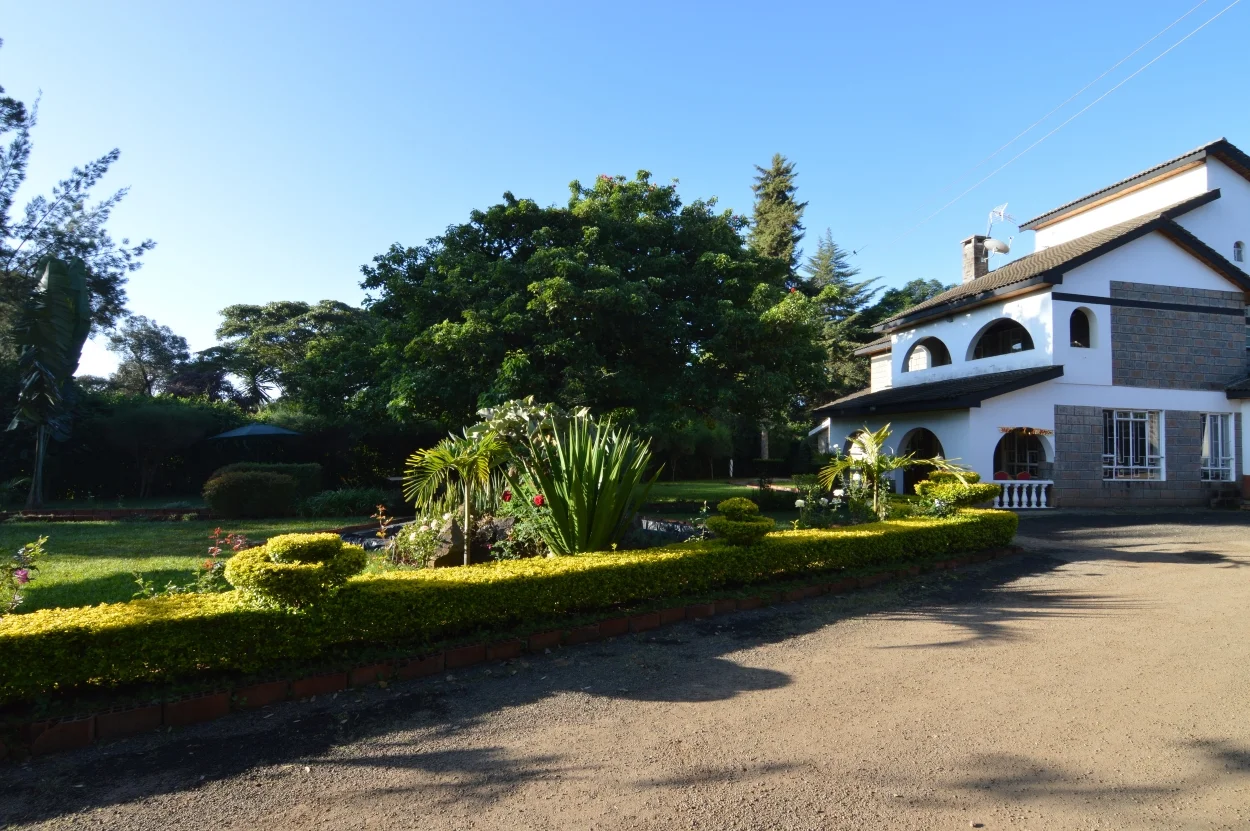
The Hotel Troy-Nairobi. A bit spartan but the staff - Cecile, Chris, Joseph - are very pleasant and helpful.
The Hotel Troy-Nairobi. A bit spartan but the staff - Cecile, Chris, Joseph - are very pleasant and helpful.

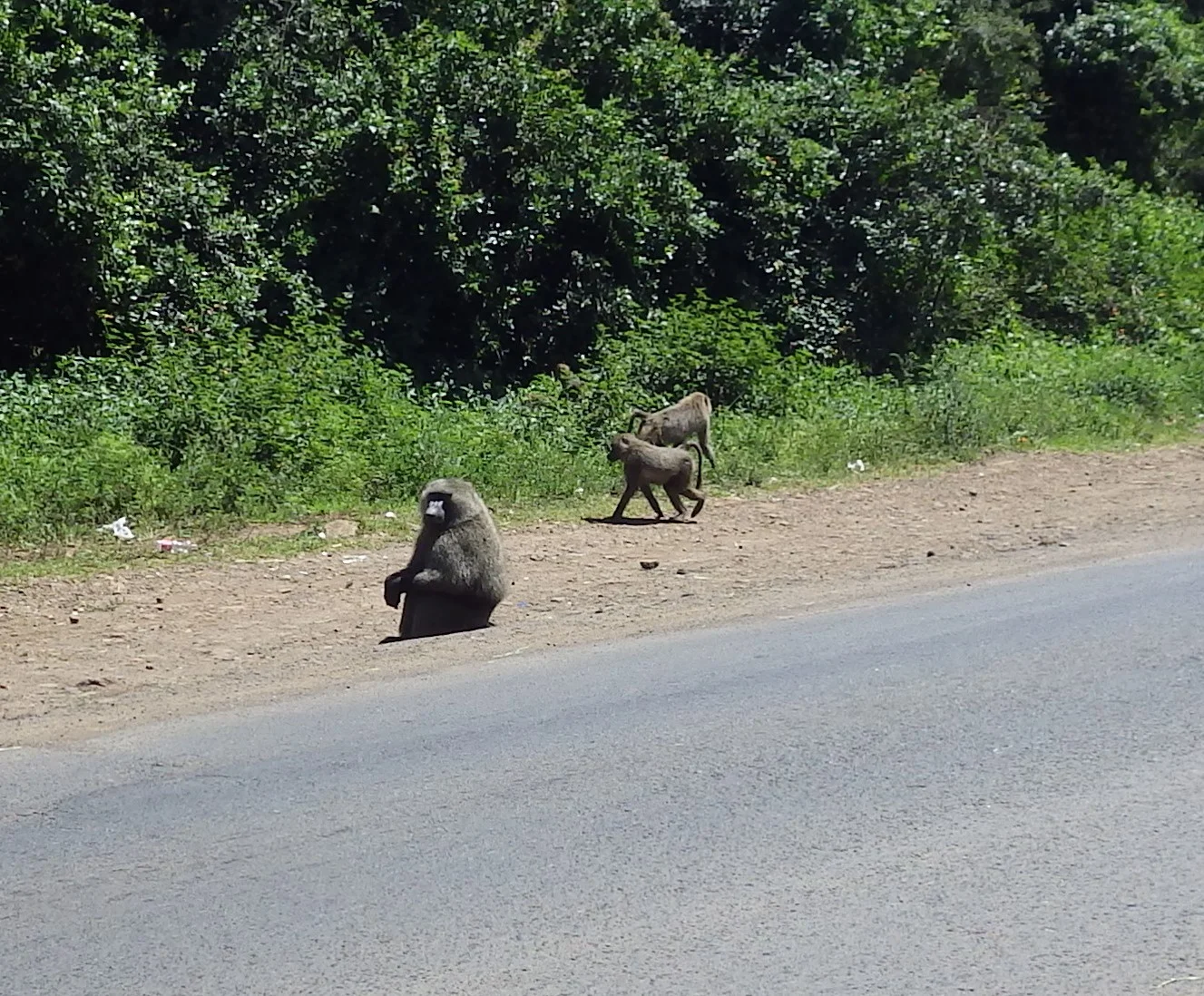
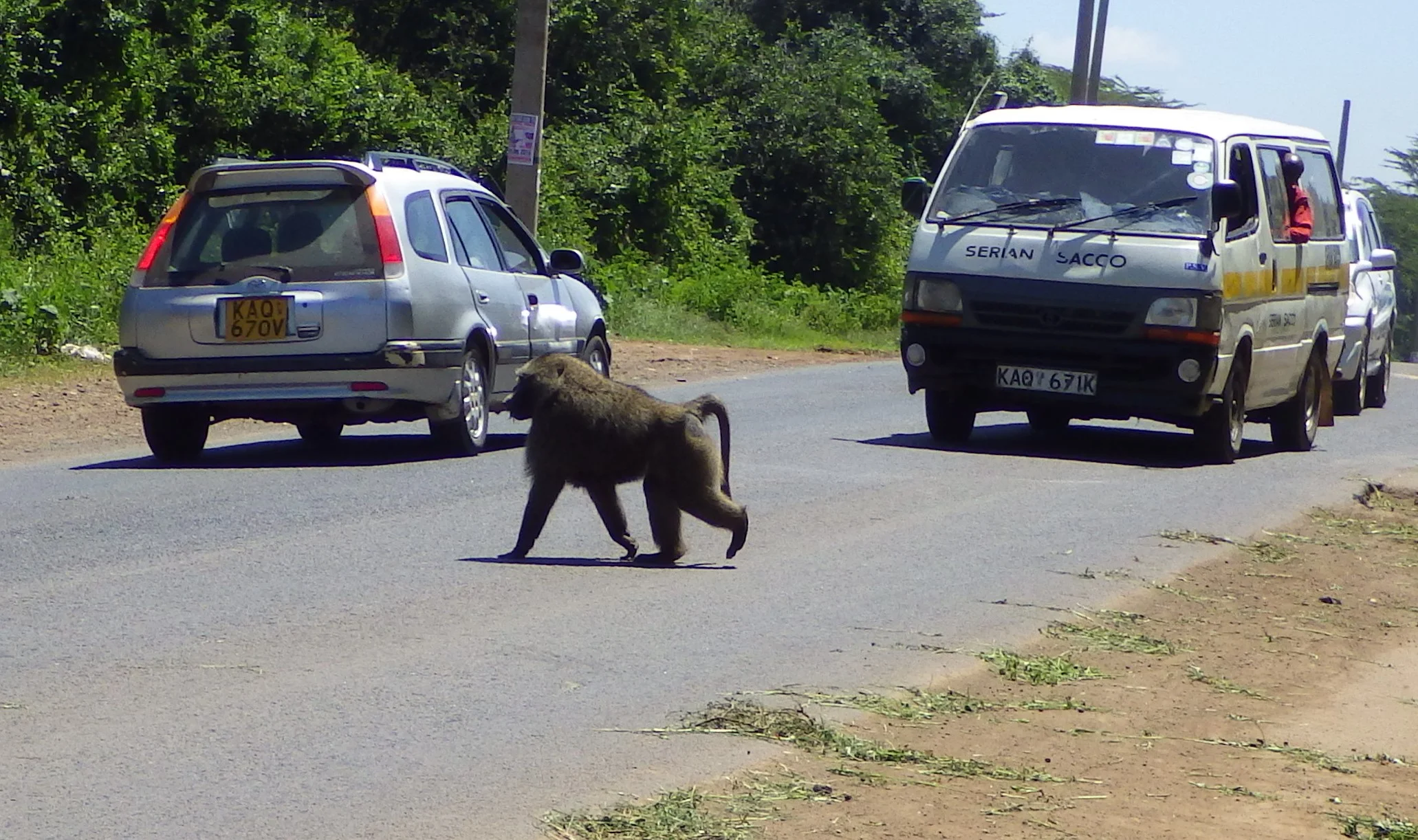
As I mentioned, I came across a troop of baboons on the way to lunch. When I'm out walking, I'm carrying my work camera. It's nearly indestructible and takes pretty competent pictures.

As I mentioned, I came across a troop of baboons on the way to lunch. When I'm out walking, I'm carrying my work camera. It's nearly indestructible and takes pretty competent pictures.

I figured this male baboon did not want me intruding so I yielded right of way.

I figured this male baboon did not want me intruding so I yielded right of way.

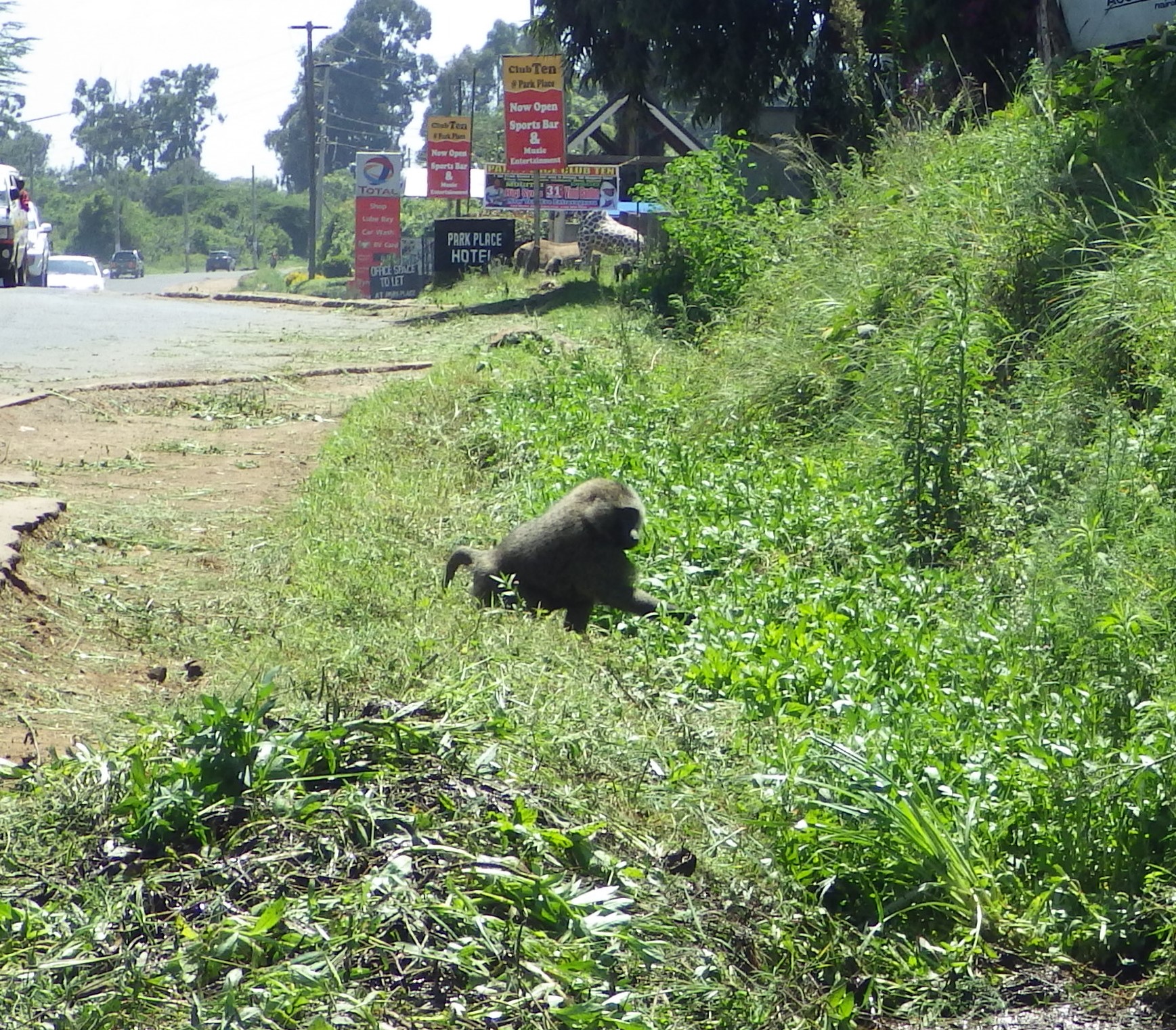
I was right - he expected cars to give way, too. I didn't get a picture but a young female with a baby on her back just missed getting hit as she jaywalked at high speed across this highway.

I was right - he expected cars to give way, too. I didn't get a picture but a young female with a baby on her back just missed getting hit as she jaywalked at high speed across this highway.

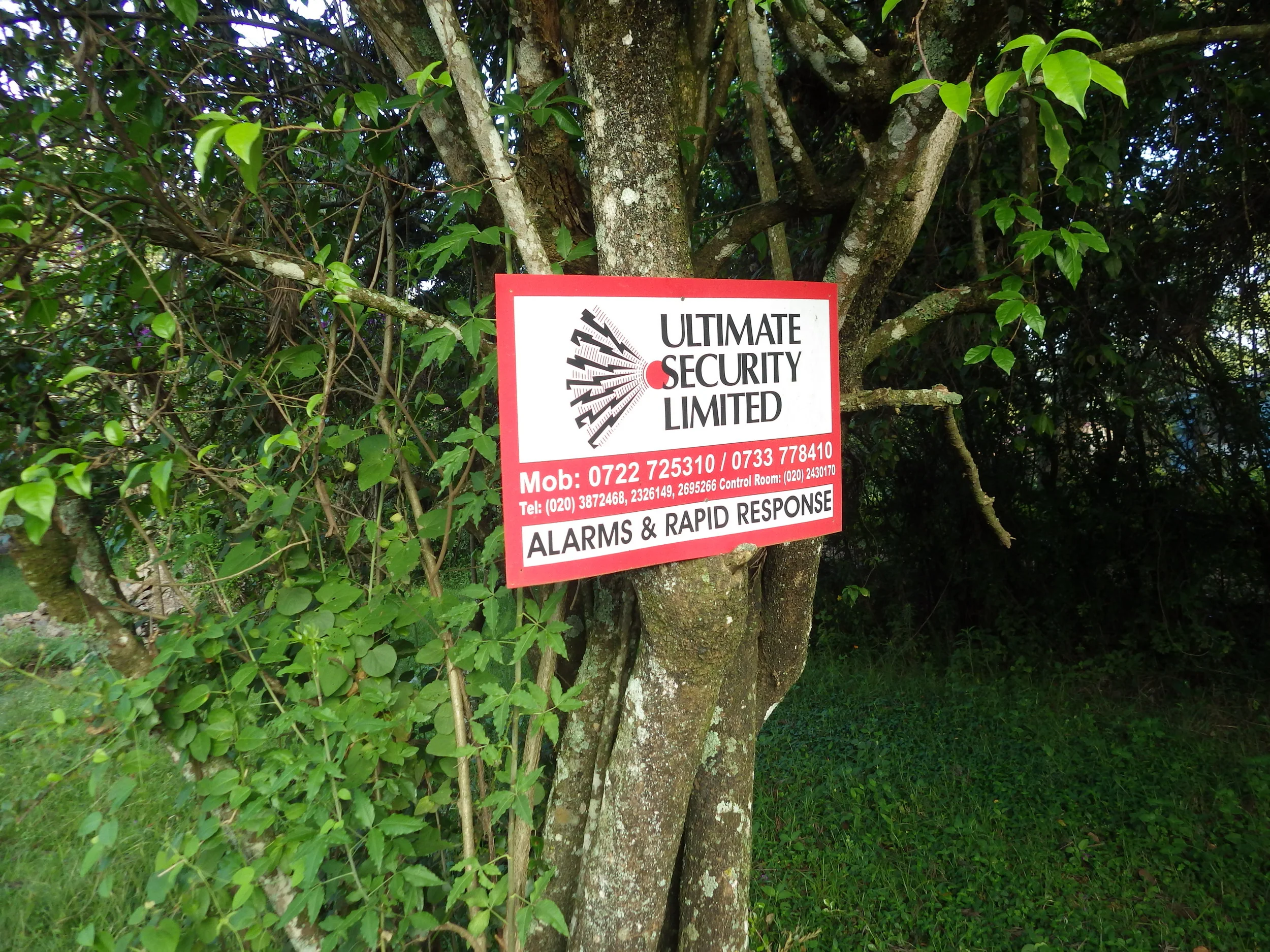
This sign cracked me up. Is the Ultimate Security limited? Not so ultimate, then. (I know, it's the corporate organization of the company - it just funny.)

This sign cracked me up. Is the Ultimate Security limited? Not so ultimate, then. (I know, it's the corporate organization of the company - it just funny.)